Table of Contents
ToggleKey Takeaways
What is biryani masala made of?
Biryani masala is made from whole aromatic spices such as cumin, coriander, cardamom, cloves, cinnamon, bay leaves, mace, nutmeg, star anise, and black pepper.
Is homemade biryani masala healthier than store-bought?
Yes. Homemade biryani masala is 100% preservative-free, chemical-free, and allergy-safe, making it far healthier than commercial packets with additives.
Is biryani masala naturally gluten-free and vegan?
Yes. Pure biryani masala made from only spices is naturally gluten-free, vegan, dairy-free, nut-free, and soy-free.
How long does homemade biryani masala last?
When stored in an airtight container away from heat and light, homemade biryani masala stays fresh for 6–12 months without preservatives.
Can garam masala be used instead of biryani masala?
No. Garam masala lacks the floral aroma and layered spice complexity required for authentic biryani. Substitution results in flatter flavor.
Can biryani masala be used for other dishes?
Yes. It works beautifully in pulao, tahiri, spiced rice, grilled meats, curries, and even vegetable gravies when used lightly.
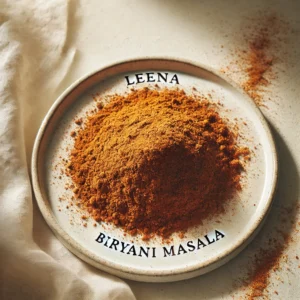

Impu Irani is the cookbook author behind Leena Spices , where he shares easy homemade spice blend recipes and practical cooking tips. Read more about him at the end of this post.
What Spices Are Traditionally Used in a Biryani Spice Blend?
A biryani spice blend is a carefully layered mix of warming, aromatic, floral, and earthy spices. Each ingredient plays a precise role in building the rich depth of flavour that makes biryani one of the most celebrated rice dishes across South Asia and the wider Asia-Pacific region.
While recipes vary by region and family tradition, a classic biryani masala typically includes the following core spices and herbs:
Essential Whole & Ground Spices in Biryani
- Allspice – Adds gentle warmth with clove-like and peppery notes.
- Bay Leaves – Provide subtle herbal depth during slow cooking.
- Black Pepper – Brings sharp heat and balance.
- Caraway – Adds a slightly sweet, earthy complexity.
- Green Cardamom – Delivers floral freshness and sweetness.
- Cinnamon – Gives warmth and soft woody sweetness.
- Cloves – Add bold intensity and spicy richness.
- Coriander Seeds – Bring citrusy warmth and fullness.
- Cumin – Adds earthy depth and savoury backbone.
- Mace – Offers delicate floral warmth.
- Nutmeg – Adds mild sweetness and aromatic richness.
- Paprika – Contributes colour and gentle smoky sweetness.
- Star Anise – Adds subtle liquorice-like sweetness.
- Turmeric – Provides golden colour and earthy bitterness.
- Saffron – The signature luxury spice for aroma, colour, and elegance.
Fresh & Dried Herbs Used in Biryani
- Fenugreek Leaves – Add a mild, bitter-sweet herbal note.
- Mint – Gives freshness and aroma that cuts through richness.
- Cilantro (Coriander Leaves) – Brings brightness and balance.
- Kaffir Lime Leaves – Add citrusy fragrance and complexity (used in select regional styles).
Why These Spices Matter in Biryani
Biryani is not defined by heat but by balance, layering, and aroma. The magic of biryani lies in how sweet spices (cardamom, cinnamon, nutmeg) blend with warm spices (cloves, pepper, cumin) and fresh herbs (mint, cilantro) to create a dish that is bold yet elegant.
Each spice is carefully chosen to:
- Enhance the aroma of basmati rice
- Deepen the richness of meat or vegetables
- Balance fat, acidity, and heat
- Create the unmistakable identity of biryani
How to Make Homemade Biryani Spice Blend Without Preservatives
Making your own biryani spice blend at home is one of the best ways to enjoy pure flavour, full aroma, and complete control over quality, without relying on artificial colours, additives, or preservatives. This homemade version delivers restaurant-style depth with clean, natural ingredients, perfect for home cooks and professional chefs alike.
Ingredients for Preservative-Free Homemade Biryani Masala
All measurements are in grams for consistency and accuracy:
Allspice – 1 g
Bay Leaves – 2 g
Black Pepper – 1 g
Caraway – 1 g
Green Cardamom – 11 g
Cilantro (Coriander Leaves, dried) – 1 g
Cinnamon – 2 g
Cloves – 3 g
Coriander Seeds – 40 g
Cumin Seeds – 16 g
Fenugreek Leaves – 3 g
Kaffir Lime Leaves – 1 g
Mace – 2 g
Mint – 3 g
Nutmeg – 2 g
Paprika – 5 g
Saffron – 1 g
Star Anise – 2 g
Turmeric – 3 g
Step-by-Step Method to Make Biryani Spice Blend at Home
1. Dry the Leafy Ingredients First
Before grinding, ensure the mint, fenugreek leaves, cilantro, bay leaves, and kaffir lime leaves are fully dry. If they feel soft or moist:
- Sun-dry for a few hours
- Or air-dry indoors overnight
2. Dry Roast Whole Spices (Low Heat Only)
On a heavy pan, dry roast the following on very low flame until fragrant:
Coriander seeds
Cumin seeds
Black pepper
Caraway
Cardamom
Cloves
Cinnamon
Star anise
Mace
Nutmeg
Allspice
Stir constantly. Do not burn the spices.
Let everything cool fully before grinding.
3. Grind into a Fine Powder
Once cooled:
- Blend roasted spices into a fine powder
- Add turmeric and paprika at this stage
- Finally, blend in the dried leafy herbs and saffron
Sieve the powder once for a professional-grade smooth texture.
How Much Biryani Masala to Use
For best flavour balance:
- Chicken biryani: 1½ to 2 teaspoons per kg
- Mutton biryani: 2 to 2½ teaspoons per kg
- Veg biryani: 1 to 1½ teaspoons per kg
Always adjust based on marination time and spice tolerance.
Why Homemade Biryani Masala Is Better Than Store-Bought
- No preservatives or fillers
- No artificial red colour
- No hidden starch or cheap extenders
- Stronger aroma and cleaner heat
- Customisable to your taste
- Safer for long-term health
CHICKEN BIRYANI RECIPE
Chicken Biryani Recipe (Authentic Homemade Style)
Chicken biryani is a timeless rice dish loved for its layered aromas, rich spices, and perfectly balanced flavours. This recipe delivers a restaurant-style chicken biryani using simple, natural ingredients.
This version follows the classic dum-style layering method that locks in moisture and flavour while keeping the rice fluffy and the chicken juicy.
Ingredients for Chicken Biryani
For the chicken and marination:
1 kg chicken pieces
4 teaspoons chopped ginger
4 teaspoons chopped garlic
2 teaspoons biryani masala
1 teaspoon red chilli powder (optional, adjust to taste)
2 cups thick yogurt
Salt to taste
For the rice and layering:
500 g basmati rice, washed and soaked for 30 minutes
1 onion, finely chopped
4 medium tomatoes, chopped
5 tablespoons oil
25 g butter
3 tablespoons cooking oil
Step-by-Step Chicken Biryani Method
1. Marinate the Chicken
In a large bowl, combine the chicken with ginger, garlic, biryani masala, chilli powder, yogurt, and salt. Mix thoroughly so every piece is well coated. Let the chicken marinate for at least 1 hour. For deeper flavour, you can refrigerate it for up to 4 hours.
2. Parboil the Rice
Bring a large pot of water to a rolling boil. Add the soaked basmati rice and cook until it is about 70% done. The grains should still have a slight bite. Drain immediately and set aside.
3. Prepare the Tomato-Onion Base
Heat oil in a heavy pan over medium-high heat. Add the chopped onion and fry until golden brown. Stir in the chopped tomatoes and cook for about 5 minutes, until soft and slightly glossy.
4. Cook the Chicken
Add the marinated chicken to the pan. Stir well and cook until the chicken is tender and fully cooked, and the oil begins to separate slightly from the gravy. This step ensures the masala is properly infused into the meat.
5. Layer the Biryani
In a heavy-bottomed saucepan, begin layering:
- First layer: a portion of rice
- Second layer: a portion of chicken gravy
- Add a few small pieces of butter
Repeat until all the rice and chicken are used. Finish with rice on top.
6. Dum Cook (Final Steaming)
Cover the pot very tightly with a lid to trap the steam. Cook on very low heat for 10 to 15 minutes, allowing the flavours to merge and the rice to finish cooking through gentle steam.
How to Serve Chicken Biryani
Serve hot with:
- Fresh salad
- Cucumber raita or plain yogurt
- Lemon wedges for brightness
Expert Tips for Perfect Chicken Biryani
- Always use aged basmati rice for long, separate grains.
- Never overcook the rice before layering. It must finish cooking on steam.
- Thick yogurt prevents watery gravy and gives a rich mouthfeel.
- Rest the biryani for 5 minutes after cooking before opening the lid for the best aroma release.
Can You Use Biryani Masala for Dishes Other Than Biryani?
Best Non-Biryani Dishes to Use Biryani Masala
1. Rice Dishes
Biryani masala adds instant depth to:- Vegetable pulao
- Fried rice
- Jeera rice
- One-pot rice dishes like tahiri and spiced khichdi
2. Curries & Gravies
You can use biryani masala as a stronger alternative to garam masala in:- Chicken curry
- Mutton curry
- Paneer masala
- Mixed vegetable curries
- Kormas and rich gravies
3. Marinades for Grilling & Roasting
Biryani masala works exceptionally well in marinades for:- Chicken tikka
- Paneer tikka
- Fish kebabs
- Tandoori-style vegetables
4. Eggs, Mince & Proteins
Use biryani masala to upgrade:- Egg curry
- Egg bhurji
- Keema (minced meat)
- Stir-fried chicken strips
5. Lentils, Soups & Stews
A small pinch enhances:- Dal tadka
- Lentil soups
- Vegetable stews
- Pressure-cooked mixed dals
6. Roasted & Stuffed Vegetables
Sprinkle lightly over:- Roasted potatoes
- Cauliflower
- Eggplant
- Stuffed capsicum or bharwan baingan
7. Snacks & Fusion Foods
Biryani masala also works beautifully in:- Samosa or cutlet fillings
- Pakora batter
- Roasted nuts
- Indian-spiced pasta
- Fusion grain bowls
How Much Biryani Masala to Use in Other Dishes
Because biryani masala is more intense than garam masala, always start small:- Use ½ teaspoon per serving for curries and marinades
- Use ¼–½ teaspoon for rice dishes
- Adjust gradually based on your heat and aroma preference
Why Biryani Masala Works So Well Beyond Biryani
- Contains a complete spice profile in one blend
- Adds warmth, sweetness, heat, and aroma together
- Saves time by replacing 10–15 individual spices
- Creates restaurant-style depth in everyday cooking
Naturally Integrated SEO Search Terms
- uses of biryani masala
- biryani masala for curries
- can biryani masala be used for other dishes
- cooking with biryani masala
- biryani masala for marinades
- biryani masala for rice dishes
Where Can I Buy Pure Biryani Masala Online?
You can buy Pure and Authentic Biryani Masala From Amazon
You’ll find several reputable brands offering pre-made blends in both small jars and bulk packs.
CLICK HERE
What Is the Shelf Life of Homemade Biryani Masala Powder?
The shelf life of homemade biryani masala powder depends almost entirely on how well it is dried, ground, and stored. Because it contains no preservatives, no anti-caking agents, and no artificial stabilisers, proper storage is critical for maintaining aroma, flavour strength, and food safety.
Shelf Life by Storage Method
1. At Room Temperature (Airtight, Cool & Dark Place)
- Average shelf life: 6 to 8 months
- Peak flavour: First 3 to 4 months
- After 8–10 months, the masala usually remains safe to use, but the aroma and intensity will noticeably weaken.
This is the most common storage method for everyday home cooking.
2. In the Refrigerator (Airtight Container)
- Shelf life: 12 to 18 months
- Slows down oxidation and essential oil loss
- Best for humid climates where pantry storage causes faster degradation
Always allow the jar to reach room temperature before opening to avoid moisture condensation.
3. In the Freezer (Fully Airtight & Moisture-Proof)
- Shelf life: 2 to 3 years
- Best option for long-term storage
- Preserves colour, aroma, and volatile spice oils most effectively
For convenience, freeze in small portions so only what you need is exposed to air.
4. Whole Unground Spices (Before Grinding)
If you store spices whole and grind only when needed:
- Shelf life: 2 to 3 years
- Retains maximum flavour potential when freshly ground
This is ideal for spice purists and professional kitchens.
How to Tell If Biryani Masala Has Gone Bad
Discard your masala immediately if you notice:
- Loss of aroma (flat or dusty smell)
- Colour dulling or greying
- Dampness, clumping, or stickiness
- Sour, musty, or off-smell
These are signs of moisture exposure and oxidation, not preservation failure.
Related Posts You May Want to Read
The Ultimate Guide to Garam Masala: How to Use, Make, and Benefit from This Indian Spice Blend
10 Flavor-Packed Tips of Using Butter Chicken Spice Blend at Home
How to Make Tandoori Masala at Home With 1 Easy Chicken Recipe
what is postpartum spice? Traditional Herbs and Healing Practices After Childbirth
How to Store Biryani Masala to Keep It Fresh for the Longest Time
Proper storage is the single most important factor in preserving the aroma, colour, flavour strength, and shelf life of biryani masala.
Step-by-Step Best Storage Method for Maximum Freshness
1. Cool the Masala Completely Before Storing
After roasting and grinding:
- Let the masala cool fully at room temperature
- Never seal warm spice powder as trapped heat creates condensation and causes spoilage
2. Choose the Right Container (Critical Step)
Use only:
- Airtight glass jars
- Food-grade stainless steel containers
Avoid:
- Plastic containers
Best option:
- Dark-coloured glass jars (they block light and protect volatile oils)
- Small jars are better than large ones because they reduce repeated air exposure
3. Add a Natural Moisture Absorber (Optional but Powerful)
To control humidity inside the jar, add only one of the following:
- 2–3 dried bay leaves
- 5–6 uncooked rice grains
- A food-grade silica gel pack (only if properly sealed and food-safe)
This step dramatically improves shelf life in humid climates.
4. Store in the Right Location
Always store biryani masala in a:
- Cool
- Dark
- Dry cupboard or pantry
Never store:
- Near the stove
- Above the oven
- Near windows
- In direct sunlight
Heat and light rapidly destroy spice oils and flatten flavour.
5. Always Use a Dry Spoon
Every time you open the jar:
- Use a completely dry spoon
- Never allow steam, water droplets, or wet hands near the jar
Moisture causes:
- Clumping
- Mould growth
- Rapid aroma loss
6. Label the Date of Grinding
Always label your jar with:
- Grinding date
- Optional: batch number if you make masala often
This helps you track peak freshness and rotate batches correctly.
Long-Term Storage for 12 Months or More
Refrigerator Storage
- Store in an airtight jar in the main fridge compartment (not the door)
- Shelf life: 18 months or longer
- Always allow the jar to return to room temperature before opening to prevent condensation
Freezer Storage (Best for Bulk Batches)
- Use fully airtight freezer-safe containers or vacuum-sealed pouches
- Shelf life: 2–3 years
- Divide into small portions so only what you need is exposed to air
Pro Storage Strategy for Large Batches
- Divide your masala into multiple small jars
- Keep one jar for daily use
- Keep backup jars sealed in the fridge or freezer
- This method prevents repeated air exposure and preserves peak aroma longer
How Long Will Biryani Masala Stay Fresh Using These Methods?
- At room temperature (perfect storage): 8–12 months
- In the refrigerator: 18+ months
- In the freezer: Up to 3 years
- Peak aroma window: First 3–4 months
How to Tell When Storage Has Failed
Discard immediately if you notice:
- Faded colour
- Loss of aroma
- Damp clumping
- Musty or sour smell
These indicate moisture and oxidation damage.
Key Takeaway
If you:
- Cool it properly
- Store it in the right container
- Protect it from air, heat, light, and moisture
- Use dry spoons
- And label your batches
Your biryani masala will stay bold, aromatic, and powerful for up to 12 months at room temperature or even longer in cold storage.
Is Biryani Masala Gluten-Free and Suitable for Special Diets?
Yes. Pure, traditional biryani masala made only from whole and ground spices is naturally gluten-free and suitable for most special diets. Spices such as cumin, coriander, cardamom, cloves, cinnamon, nutmeg, mace, star anise, black pepper, bay leaf, and turmeric do not contain gluten by nature.
However, store-bought biryani masala, using commercial processing can introduce additives or cross-contamination.
Gluten-Free Status of Biryani Masala
✅ Homemade Biryani Masala (Pure Spices Only)
If your biryani masala is made at home using only whole or freshly ground spices, it is:
- 100% gluten-free
- Free from wheat, barley, rye, and oats
- Naturally allergen-free (when sourced from clean, single-ingredient spices)
This is the safest and most reliable option for anyone with:
- Coeliac disease
- Gluten intolerance
- Wheat allergies
⚠️ Store-Bought Biryani Masala (What to Check)
Most reputable brands are technically gluten-free, but always check the label carefully for:
- Anti-caking agents or fillers
- Wheat-based starch
- Wheat-containing asafoetida (hing)
- “May contain gluten” cross-contamination warnings
Even when gluten is not listed as an ingredient, shared manufacturing facilities can pose a risk for highly sensitive individuals.
✅ Best practice for coeliac safety:
Choose certified gluten-free products or make it at home.
Is Biryani Masala Suitable for Special Diets?
When made with only pure spices, biryani masala is compatible with the following diets:
✅ Vegan & Vegetarian – 100% plant-based
✅ Gluten-Free – Naturally gluten-free
✅ Dairy-Free – No milk or derivatives
✅ Nut-Free – No tree nuts in traditional blends
✅ Soy-Free – No soy ingredients
✅ Keto / Low-Carb – Extremely low carbohydrate
✅ Paleo – All natural spices allowed
✅ Whole30 – Approved when free from additives
✅ Low-FODMAP (generally) – Most spices are tolerated in small amounts
Important: While spices are low-FODMAP, individual tolerance may vary, especially with chilli, clove, or onion-containing blends.
Special Medical & Sensitivity Considerations
You may need to adjust or avoid biryani masala if you have:
- Nightshade sensitivity → Avoid blends with red chilli or paprika
- Histamine intolerance → Some spices may act as triggers
- Sodium-restricted diets → Do not use pre-mixed masalas that include salt
Best Safety Recommendation
If you have:
- Coeliac disease
- Severe food allergies
- Autoimmune conditions
- Or strict therapeutic diets
👉 Homemade biryani masala is the safest option.
It takes only 10 minutes, gives you full control over ingredients, and guarantees zero additives, zero gluten, and zero contamination risk.
What is the difference between biryani masala and garam masala?
Biryani Masala vs Garam Masala: What’s the Difference?
While both biryani masala and garam masala are iconic Indian spice blends, they serve distinct purposes, differ in composition, and create unique flavor profiles. Understanding the differences is key to achieving authentic, restaurant-quality results in your cooking.
1. Purpose and Usage
Aspect | Biryani Masala | Garam Masala |
Primary Purpose | Specifically designed for biryani and layered rice dishes. Adds deep aroma and complexity. | General-purpose spice blend for curries, dals, vegetables, and tandoori dishes. Adds warmth and finishing flavor. |
When to Add | During cooking, layered with meat and rice to infuse the entire dish. | Typically added at the end of cooking or in the last 5 minutes to preserve aroma. |
Typical Dishes | Biryani, pulao, tahiri | Curries, sabzi, dal, tandoori, gravies |
2. Spice Composition
Aspect | Biryani Masala | Garam Masala |
Core Spices | All garam masala spices plus bay leaves, star anise, mace, nutmeg, stone flower (dagad phool), fennel, shahi jeera, dried mint | Black cardamom, cloves, cinnamon, cumin, coriander, black pepper, cardamom |
Unique Aromatics | Floral and aromatic spices for layering aroma: mace, star anise, nutmeg, stone flower | Focused on warming spices, fewer aromatic/floral additions |
Complexity | Complex, multi-layered, 10–15+ spices including whole and ground | Simpler, 5–8 core spices |
3. Flavor Profile
Aspect | Biryani Masala | Garam Masala |
Aroma | Strong, floral, slightly sweet, earthy, with depth | Warm, pungent, slightly sweet, less floral |
Heat Level | Mild to medium (rarely includes chili) | Moderate to hot (black pepper and cloves dominate) |
Rice Fragrance | Intensely aromatic, ideal for layering rice | Minimal impact on rice aroma |
✅ Frequently Asked Questions (FAQs)
Can I make biryani masala without saffron or star anise?
Yes. While saffron and star anise enhance aroma, you can skip them if unavailable. Your biryani will still be flavourful, though slightly less floral.
Which grinder is best for making biryani masala at home?
A heavy-duty dry mixer grinder or spice grinder works best. For ultra-fine powder, grind in short bursts to avoid heat buildup.
Should spices be washed before grinding for masala?
No. Washing introduces moisture and reduces shelf life. Instead, dry-roast spices to remove impurities and enhance aroma safely.
Why is my biryani masala turning bitter?
Over-roasting spices especially cloves, cumin, or fenugreek causes bitterness. Always roast on low flame with constant stirring.
Why does store-bought biryani masala smell stronger than homemade?
Commercial blends often use artificial aroma enhancers. Homemade masala has a natural fragrance that deepens during cooking.
Can I mix fresh herbs directly into biryani masala powder?
Fresh herbs contain moisture and will cause spoilage. Always use fully dried mint, cilantro, or fenugreek leaves only.
Can I reuse the same masala for both chicken and mutton biryani?
Yes. The same base masala works for chicken, mutton, beef, fish, and vegetarian biryani with only minor quantity adjustments.
Medical Disclaimer:
The information provided in this article is for educational and informational purposes only and is not intended as medical advice. Always consult a qualified healthcare provider before starting any new dietary supplement, herbal remedy, or wellness routine, especially if you have underlying health conditions, are pregnant or breastfeeding, or are taking prescription medications.
Impu Irani is a cookbook author behind Leena Spices, where he shares practical, easy-to-follow guides on homemade spice blends, herbs, and natural cooking. His work helps home cooks create fresh, flavorful meals using simple ingredients and traditional methods. Download his free Spice Blending eBook and start your journey to cleaner cooking today!
Disclosure Note
We are committed to creating high-quality, helpful content for our readers. We do not accept payment in exchange for writing our articles, and we personally cover the costs of running this website, including hosting, tools, and maintenance.
To support the site, we display ads and may earn a small commission from affiliate links if you choose to make a purchase—at no extra cost to you.
Your support helps us continue sharing valuable content with the community.
If you’d like to support us, here are a few simple and free ways:
- Share our content with your friends and family
- Engage with us on social media
- Follow us on Facebook
You can also learn more by visiting our disclaimer page:
https://leenaspices.co.nz/disclaimer/
As a thank you, feel free to download our Free Spice Recipe eBook.
Download a Free Leena Spices Recipes Cookbook