Replacing refined white sugar with traditional jaggery is a simple way to add deeper flavor and a more natural sweetness to everyday cooking and baking. However, many home cooks quickly discover that jaggery does not behave exactly like regular sugar. Its natural moisture content, rich molasses notes, and varying textures can affect everything from the consistency of a cake batter to the flavor of a cup of tea.
That is why using recipes specifically designed for jaggery is so important. Instead of relying on trial and error, the following eight recipes provide proven methods that help you get consistent, delicious results every time. Whether you are preparing a warming beverage, making traditional Indian sweets, or experimenting with jaggery in modern baked goods, these recipes will help you confidently work with this versatile unrefined sweetener and make the most of its distinctive caramel-like flavor.
Want to adapt your own family recipes instead of following these exactly? Keep our Jaggery Conversion Calculator handy while you cook. It makes it easy to adjust ingredient quantities, convert sugar-to-jaggery measurements, and maintain the right balance of sweetness, moisture, and texture.
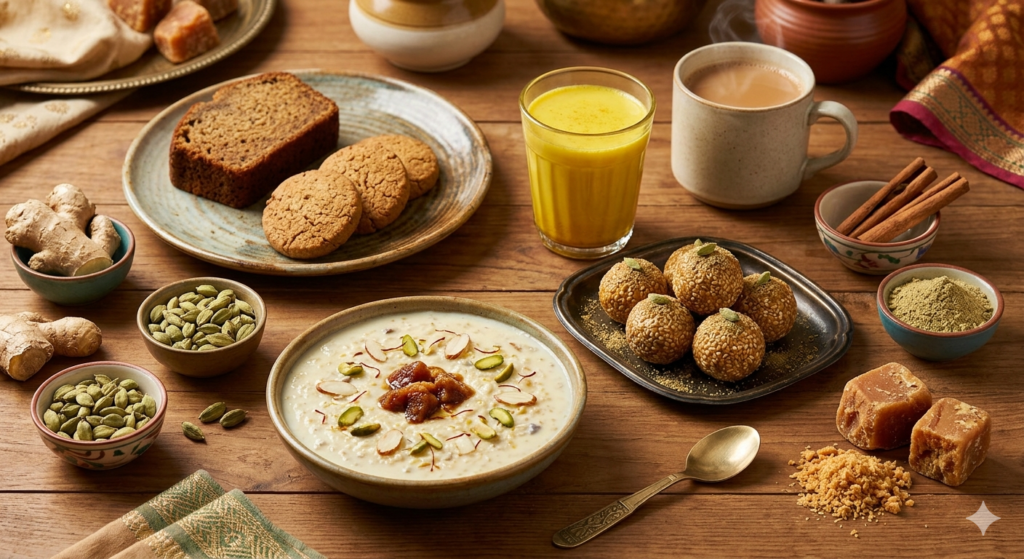
Table of Contents
ToggleWarming Drinks
Few sweeteners can match the rich, complex flavor that jaggery brings to a hot beverage. Unlike refined white sugar, which primarily contributes sweetness, jaggery adds layers of caramel, toffee, and subtle molasses-like notes that enhance the overall drinking experience. Its deep, earthy character pairs exceptionally well with warming spices such as ginger, cinnamon, cardamom, and cloves, creating beverages that are both comforting and flavorful.
Whether stirred into tea, blended into traditional drinks, or used in seasonal recipes, jaggery adds a depth of flavor that refined sugar simply cannot replicate. This unique combination of sweetness and complexity is one of the reasons jaggery has remained a staple ingredient in kitchens across Asia for generations.
1. Authentic Jaggery Masala Chai
The combination of robust black tea, aromatic spices, creamy milk, and traditional jaggery creates a rich, satisfying drink that has been enjoyed across India for generations. Unlike refined sugar, jaggery contributes a deeper sweetness with subtle caramel and molasses notes, giving the chai a fuller body and more complex flavor.
The Jaggery Rule for Smooth Chai
When preparing jaggery chai, timing is essential. Jaggery should not be boiled directly with milk. Because unrefined jaggery contains natural minerals and organic compounds, adding it to actively boiling milk can sometimes cause the milk to separate or develop an undesirable texture.
For the best results, first brew the tea with your preferred spices and milk. Once the chai is fully cooked, remove the pan from the heat and allow it to cool slightly for a minute or two. Stir in grated or powdered jaggery only at the end, mixing until completely dissolved. This simple step helps preserve the smooth, creamy texture of the tea while allowing the jaggery’s rich flavor to shine.
The Perfect Spice Pairing
Jaggery’s warm, earthy sweetness pairs beautifully with traditional chai spices such as cardamom, cinnamon, ginger, cloves, black pepper, and fennel. A well-balanced chai spice blend enhances the natural caramel notes of jaggery while adding warmth and aroma to every sip.
For an authentic café-style experience at home, use a freshly ground chai masala blend made from high-quality whole spices. Freshly milled spices release more essential oils, creating a more fragrant and flavorful cup of masala chai.
2. Traditional Golden Haldi Milk (Turmeric Latte)
Golden haldi milk also known as turmeric latte is a time-honored warming drink traditionally enjoyed in many Indian households as a soothing night-time beverage. Its appeal lies in its simplicity: earthy turmeric, warm spices, and natural sweetness coming together in a calming cup. When jaggery is used instead of refined sugar, the drink develops a richer, more rounded flavor with gentle caramel undertones that complement turmeric beautifully.
The Jaggery Rule for Smooth Texture
For the best texture and taste, jaggery should be added in a form that dissolves easily. Crystalline jaggery powder or finely grated jaggery works best, typically used in a 1:1 replacement for regular sugar.
When using plant-based milks such as almond, oat, or coconut milk, jaggery can be gently dissolved during low heat warming since these milks are generally more stable than dairy and less likely to curdle. However, if using cow’s milk, it is still safer to remove the drink from heat before adding jaggery to maintain a smooth, consistent texture.
The Perfect Spice Match
Turmeric is the star ingredient in haldi milk, but its flavor becomes more balanced when paired with supporting spices. A pinch of black pepper is especially important, as it enhances the natural properties of turmeric and adds a subtle heat. Additional spices such as cinnamon, ginger, or cardamom can also be included depending on preference.
For best results, use a high-quality turmeric powder with strong natural color and aroma. Combined with jaggery’s deep sweetness, it creates a comforting golden drink that is both flavorful and grounding.
Modern Baking Ratios
Baking with jaggery can completely transform both the flavor and texture of your baked goods. Unlike refined sugar, jaggery adds a deep caramel-like aroma and a warm, earthy sweetness that makes cookies, cakes, and breads feel more rustic and flavour-rich. It also contributes natural moisture, which often results in softer, more tender bakes.
However, because jaggery is unrefined and retains more natural molasses and moisture than white sugar, it behaves differently in baking recipes. These differences can affect structure, spread, and browning. Without the right adjustments, baked goods may spread too much, become overly dense, or brown faster than expected.
To get consistent results, it’s important to treat jaggery not just as a sweetener, but as an ingredient that influences texture and moisture balance. Once you understand how it interacts with flour, fat, and heat, you can confidently use it to create bakery-style treats with deeper flavor and a more complex sweetness profile.
3. Jaggery & Ginger Spiced Cookies
Jaggery and ginger are a naturally powerful pairing, especially in baking. These spiced cookies deliver a warm, comforting flavor with a chewy centre and lightly crisp edges. The natural moisture and molasses content in jaggery help create a softer, more tender texture compared to cookies made with refined white sugar, while also adding a deeper caramel warmth that enhances every bite.
The Jaggery Rule for Perfect Cookie Texture
Because jaggery introduces extra moisture into cookie dough, the mixture tends to be softer and more relaxed than traditional sugar-based doughs. To prevent excessive spreading during baking, chilling the dough is essential.
Once your cookie dough is mixed, cover it tightly and refrigerate it for at least 1–2 hours before shaping and baking. This step allows the fats to firm up and gives the flour time to absorb the moisture from the jaggery. The result is a more stable dough that bakes into cookies with defined edges, a soft centre, and no unwanted flattening.
The Perfect Spice Match
Ginger is the hero spice in this recipe, adding a sharp, warming kick that balances the natural sweetness of jaggery. Fresh or finely ground ginger powder works beautifully, especially when used in combination with other warming spices like cinnamon or cloves for a more festive flavour profile.
4. Cinnamon Jaggery Banana Bread
Cinnamon jaggery banana bread is a rich, moist upgrade to the classic banana loaf. Ripe bananas already bring natural sweetness and softness, but replacing refined sugar or even brown sugar with jaggery adds a deeper, more complex caramel-molasses flavor. The result is a loaf that feels more rustic, aromatic, and indulgent, perfect for breakfast or a comforting snack.
The Jaggery Rule for a Light, Even Crumb
Jaggery behaves similarly to dense brown sugar, which means it can create a heavier crumb if not handled correctly. To avoid a dense or gummy texture, it is best to finely grate or powder the jaggery before measuring. This helps it blend smoothly into the batter.
For better rise and structure, cream the jaggery thoroughly with butter or oil at the beginning of the recipe. This step incorporates air into the mixture, which supports a lighter loaf and improves overall texture. Once the wet base is properly aerated, gently fold in the dry ingredients to avoid overmixing, which can further affect the crumb.
The Perfect Spice Match
Cinnamon is the ideal spice for banana bread, naturally enhancing the sweetness of ripe bananas while complementing jaggery’s caramel depth. A generous amount of high-quality cinnamon powder adds warmth, aroma, and a subtle sweetness that brings the entire loaf together.
5. Cardamom Apple Muffins
Cardamom apple muffins bring together the bright tartness of fresh apples with the warm, floral sweetness of cardamom and the deep caramel notes of jaggery. The result is a soft, fluffy muffin with a naturally rich aroma that feels perfect for autumn mornings, tea-time snacks, or wholesome lunchbox treats.
When jaggery replaces refined sugar, it doesn’t just sweeten the batter—it adds complexity. The subtle molasses undertones enhance the apples’ natural fruitiness while giving the muffins a more rustic, bakery-style depth of flavor.
The Jaggery Rule for Even Baking
Jaggery contains natural unrefined sugars that caramelize faster than white sugar. This means baked goods can brown more quickly, sometimes before the inside is fully cooked.
To avoid over-browning, reduce your oven temperature by about 10°C (for example, from 180°C to 170°C). This gentler heat allows the muffins to bake evenly from the inside out. You may also need to extend the baking time by 3–5 minutes, depending on your oven and muffin size. This simple adjustment ensures soft, evenly baked muffins with golden tops rather than overly dark crusts.
The Perfect Spice Match
Cardamom is the defining spice in this recipe. Its sweet, slightly citrusy aroma pairs beautifully with apples and enhances the caramel richness of jaggery. Freshly ground cardamom powder delivers the most vibrant flavor, turning simple muffins into something fragrant, elegant, and deeply satisfying.
Traditional Sweets & Savory Balance
Jaggery holds a central place in traditional South Asian cuisine, especially in confectionery and sweet-and-sour condiments. Unlike refined sugar, which delivers a one-dimensional sweetness, jaggery brings depth, warmth, and complexity thanks to its natural molasses content and unrefined structure.
This makes it particularly valuable in recipes where balance is essential. Jaggery sweetens, rounds out sharp acidity, softens the intensity of chili heat, and enhances the nuttiness of roasted spices and seeds. In chutneys, pickles, and traditional sweets, it acts as a natural flavor bridge, tying together bold, contrasting ingredients into a harmonious whole.
6. Quick Jaggery Kheer (Rice Pudding)
Jaggery kheer is a timeless South Asian dessert that transforms simple rice pudding into something deeply comforting and aromatic. When sweetened with jaggery instead of refined sugar, the kheer takes on a soft golden-caramel hue and develops a richer, more layered sweetness. The result is a creamy, fragrant dessert that feels both traditional and indulgent.
The Jaggery Rule for Creamy, Unsplit Kheer
One of the most important techniques in making jaggery kheer is timing. Jaggery should never be added to actively boiling milk, as its natural minerals and unrefined compounds can cause the dairy to curdle, breaking the smooth texture of the pudding.
For best results, cook the rice and milk mixture fully until it reaches a thick, creamy consistency. Once done, turn off the heat and move the pot to a cool surface. Allow it to rest for about a minute before gently stirring in grated or powdered jaggery until fully dissolved. This simple step preserves the silky texture while allowing the jaggery’s caramel notes to infuse evenly.
The Perfect Spice Match
Kheer is traditionally elevated with warm, aromatic spices, and cardamom is the most essential among them. A pinch of freshly crushed cardamom enhances the sweetness and adds a floral depth that complements jaggery beautifully. Saffron strands can also be added for a luxurious aroma, color, and festive finish, turning a simple rice pudding into a truly royal dessert.
7. Sweet Tamarind & Jaggery Chutney (Imli Chutney)
Sweet tamarind chutney, also known as imli chutney, is a classic staple in South Asian street food. It is the essential dipping sauce for samosas, pakoras, chaats, and countless snacks. What makes it so distinctive is the perfect balance of sharp tamarind sourness and the deep, caramel-like sweetness of jaggery. Together, they create a glossy, tangy-sweet condiment that enhances every bite it touches.
When jaggery is used instead of refined sugar, the chutney gains a richer body, a deeper color, and a more complex flavor profile that feels closer to traditional homemade versions.
The Jaggery Rule for Perfect Consistency
Unlike dairy-based recipes, tamarind chutney is highly forgiving when it comes to cooking jaggery. Since there is no risk of curdling, jaggery blocks or grated jaggery can be added directly to the tamarind pulp and water mixture.
Simmer everything over medium heat, stirring occasionally until the jaggery fully dissolves. As it melts, it naturally thickens the chutney, creating a smooth, sticky glaze with a balanced sweet-and-sour finish. Adjust the consistency by adding a little water if needed, or simmering longer for a thicker texture.
The Perfect Spice Match
The magic of imli chutney lies in its seasoning. Cumin powder adds earthy depth, while a touch of chili brings gentle heat that balances the sweetness of jaggery. Together, these spices create a bold, addictive flavor profile that elevates even the simplest snack into something memorable.
8. Sesame Jaggery Ladoos (Til Ladoo)
Sesame jaggery ladoos are one of the simplest yet most nourishing traditional Indian sweets. Made by combining toasted sesame seeds with melted jaggery, these bite-sized treats are rich, nutty, and naturally energizing. Often enjoyed during winter months, they are valued not only for their taste but also for their traditional reputation as a warming, high-iron snack that provides long-lasting energy.
When jaggery is used instead of refined sugar, the ladoos develop a deeper caramel flavor that binds beautifully with the earthy richness of sesame seeds.
The Jaggery Rule for Perfect Binding
The key to perfect ladoos lies in achieving the correct jaggery syrup consistency. Start by melting jaggery with a small amount of water over low heat. Allow it to gently bubble until it transforms into a thick syrup.
To test readiness, drop a small amount of the hot syrup into cold water. If it forms a soft, rollable ball that holds its shape without dissolving, it has reached the ideal stage. At this point, quickly mix in the toasted sesame seeds and shape the mixture into ladoos while it is still warm and pliable. Timing is crucial, as the mixture will harden as it cools.
The Perfect Spice Match
While sesame and jaggery are already a classic pairing, a subtle addition of nutmeg enhances the flavor profile beautifully. A small amount of freshly ground nutmeg adds warmth and depth, rounding out the nutty sweetness and giving the ladoos a more aromatic, festive finish.
Frequently Asked Questions About Cooking with Jaggery
Can I use jaggery instead of white sugar in any recipe?
Yes! You can substitute white or brown sugar with jaggery in almost any recipe, usually at a 1:1 ratio by weight. However, because jaggery contains natural moisture and unrefined plant acids, you will need to make minor adjustments—such as slightly reducing liquid ingredients in baking, or keeping it away from boiling dairy milk to prevent curdling.
What is the difference between block jaggery and jaggery powder?
Block jaggery is the traditional form where the boiled sugarcane juice is cooled and solidified into hard molds. It retains its flavor beautifully but must be grated or shaved before use. Jaggery powder is simply dried, crystalline jaggery that has been ground down. It is much easier to measure out for baking and dissolves instantly into morning drinks.
How do I store jaggery so it doesn't get hard or moldy?
Because jaggery is unrefined and contains natural moisture, it can absorb humidity from the air. Store your jaggery blocks or powder in an airtight glass jar or container in a cool, dark, and dry pantry. If you live in a very humid climate, keeping it in the refrigerator will prevent it from turning sticky or attracting moisture.
Ready to Transform Your Cooking with Jaggery?
Switching from highly processed white sugar to unrefined jaggery is a simple but powerful way to elevate everyday cooking and baking. It adds depth, warmth, and natural caramel undertones that refined sugar cannot replicate, turning ordinary recipes into more authentic, flavour-rich experiences.
Because jaggery behaves differently in heat, moisture, and texture, small technique adjustments make all the difference. Simple practices—such as lowering oven temperature slightly, avoiding boiling milk when adding jaggery, or dissolving it off-heat—help you prevent common issues like curdling, over-browning, or uneven texture. Once you understand these fundamentals, working with jaggery becomes intuitive and consistently rewarding.
However, technique is only one part of the equation. The true depth of flavour comes from the quality of your ingredients. To fully unlock the heritage taste of traditional drinks, desserts, and baked goods, it is essential to pair jaggery with equally pure, aromatic spices that enhance its natural complexity rather than overpower it.
Happy cooking!
For more detail, recipes, and practical guidance, check out my full-length cookbooks.


Impu Irani is a cookbook author behind Leena Spices, where he shares practical, easy-to-follow guides on homemade spice blends, herbs, and natural cooking. His work helps home cooks create fresh, flavorful meals using simple ingredients and traditional methods. Download his free Spice Blending eBook and start your journey to cleaner cooking today!
Disclosure Note
We are committed to creating high-quality, helpful content for our readers. We do not accept payment in exchange for writing our articles, and we personally cover the costs of running this website, including hosting, tools, and maintenance.
To support the site, we display ads and may earn a small commission from affiliate links if you choose to make a purchase—at no extra cost to you.
Your support helps us continue sharing valuable content with the community.
If you’d like to support us, here are a few simple and free ways:
- Share our content with your friends and family
- Engage with us on social media
- Follow us on Facebook
You can also learn more by visiting our disclaimer page:
https://leenaspices.co.nz/disclaimer/
As a thank you, feel free to download our Free Spice Recipe eBook.
Download a Free Leena Spices Recipes Cookbook
Medical Disclaimer:
The information provided in this article is for educational and informational purposes only and is not intended as medical advice. Always consult a qualified healthcare provider before starting any new dietary supplement, herbal remedy, or wellness routine, especially if you have underlying health conditions, are pregnant or breastfeeding, or are taking prescription medications.