Table of Contents
ToggleIntroduction
Sumac spice is one of the most vibrant and versatile ingredients used in Middle Eastern and Mediterranean cooking, yet many home kitchens still overlook it. Known for its deep red color and tangy, lemon-like taste, sumac seasoning adds a fresh, zesty kick to food without being overpowering. It also has a mild fruity flavor that makes dishes taste brighter and more exciting.
You can use sumac spices in many ways. Sprinkle it over salads, mix it into creamy dips, or add it to grilled meats and roasted vegetables. It instantly lifts the flavor and even makes your dishes look more appealing. Whether you are cooking a simple meal or experimenting with traditional recipes, sumak spices can bring something special to your plate.
One of the biggest advantages of sumac spice is that it adds sourness without adding liquid. Unlike lemon juice or vinegar, it keeps your food dry and perfectly textured. That’s why it works so well in dry rubs, spice blends, and as a finishing sprinkle. It is also commonly used in recipes like sumac toum, where it enhances the garlic sauce with a subtle tangy twist.
Beyond cooking, sumac seasoning can even be used in refreshing beverages. Many people are now exploring sumac drinks and sumac soda, which offer a unique, slightly tart flavor that’s both cooling and delicious, perfect for warm days or as a natural alternative to sugary drinks.
Sumac also has a long and rich history. For centuries, it has been used as a natural souring agent in traditional dishes. It remains a key ingredient in classics like fattoush salad and the famous za’atar blend. Today, sumac spices continue to gain popularity around the world as more people discover their unique taste and versatility.
Pressed for time? Here is the culinary blueprint for using and substituting sumac in your kitchen:
- The Core Substitution Ratio: Replace 1 Tablespoon of fresh lemon juice with 1 Teaspoon of ground sumac (approx. 2.5 grams or 0.088 ounces).
- When to Use Sumac: Choose ground sumac when you want sharp, fruit-forward tartness and a rich burgundy color without adding pooling liquid or extra moisture to your dish (perfect for dry rubs, popcorn, and raw onion garnishes).
- When to Use Lemon: Stick to fresh lemon juice when your recipe requires clean, liquid acidity to emulsify a wet dressing, deglaze a pan, or tenderize a wet marinade.
- Buying Checklist: Premium sumac should always look deep brick-red and feel slightly moist/clumpy from natural berry oils. Avoid bright neon-pink powders, which usually indicate cheap added salt and chemical fillers.
Key Takeaways About Sumac Spice
What is sumac spice seasoning?
Sumac is a tangy, lemony spice made from the dried and ground berries of the Rhus coriaria shrub, native to the Mediterranean and Middle East.
Where does sumac spice come from?
Sumac spice seasoning primarily comes from Turkey, Iran, Lebanon, Syria, and other Mediterranean countries.
What does sumac taste like?
Sumac has a bright, tart, citrus-like flavor with subtle fruity, earthy, and slightly astringent notes — like lemon without the liquid.
How is sumac used in cooking?
Sumac can be sprinkled over salads, dips, grains, roasted vegetables, or eggs as a finishing spice, used in marinades and dry rubs for meats and fish. It remains a key ingredient in classics like fattoush salad and the famous za’atar blend.
Sumac vs. Lemon Juice
Sumac offers a dry, tangy flavor with added antioxidants, while lemon juice provides fresh acidity and vitamin C.
Both enhance taste without extra calories, but sumac is more convenient for seasoning blends and storage.
Can sumac go bad?
While it won’t spoil like perishable foods, sumac loses potency, color, and aroma over time. Ground sumac is best within 1–2 years; whole berries can last 3–4 years.
How should sumac be stored?
Keep it in an airtight container in a cool, dark, and dry place. Avoid heat, light, and moisture to maintain its color, aroma, and tangy flavor.
How to Revive or Use Older Sumac?
If sumac has lost its aroma, lightly toast it or mix it with a little lemon juice or olive oil to bring back its tangy flavor. Older sumac works best in marinades, dressings, or cooked dishes where freshness is less noticeable.
How can I tell if sumac is authentic?
Authentic sumac is deep red, smells tangy and fruity, lists only sumac as an ingredient, and often comes from traditional Mediterranean or Middle Eastern regions.
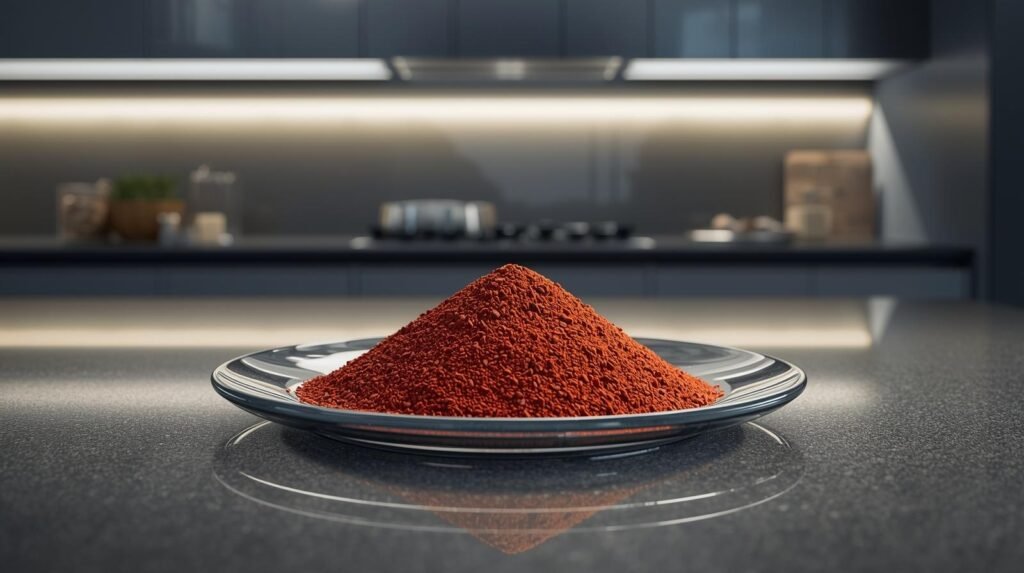
What Is Sumac Spice? The Tangy Essential of Mediterranean Cooking
Sumac is a vibrant, tangy spice made from the dried and ground berries of the Rhus coriaria shrub, a plant native to the Mediterranean and parts of the Middle East. The spice is easily recognized by its deep red to burgundy color and its bright, lemony aroma.
In flavor, sumac delivers a clean, tart acidity similar to lemon juice, yet softer and slightly fruity, with subtle earthy undertones. It’s often used as a natural souring agent or finishing spice, adding both color and zest to food without overwhelming it.
A staple in Middle Eastern and Mediterranean cuisines, sumac enhances dishes like grilled meats, rice, roasted vegetables, salads, and dips such as hummus. It plays a key role in traditional spice blends like za’atar, where it balances herbs and sesame with a citrusy lift. It also adds the extra pep of lemony taste to seasonings like Lemon Pepper Seasoning.
Unlike the toxic varieties of wild sumac found in some regions, culinary sumac is completely safe to eat. The berries are harvested when ripe, sun-dried, and ground into a coarse powder that preserves their distinctive tart flavor and rich color.

Impu Irani is the cookbook author behind Leena Spices , where he shares easy homemade spice blend recipes and practical cooking tips. Read more about him at the end of this post.
Good Sumac vs Bad Sumac
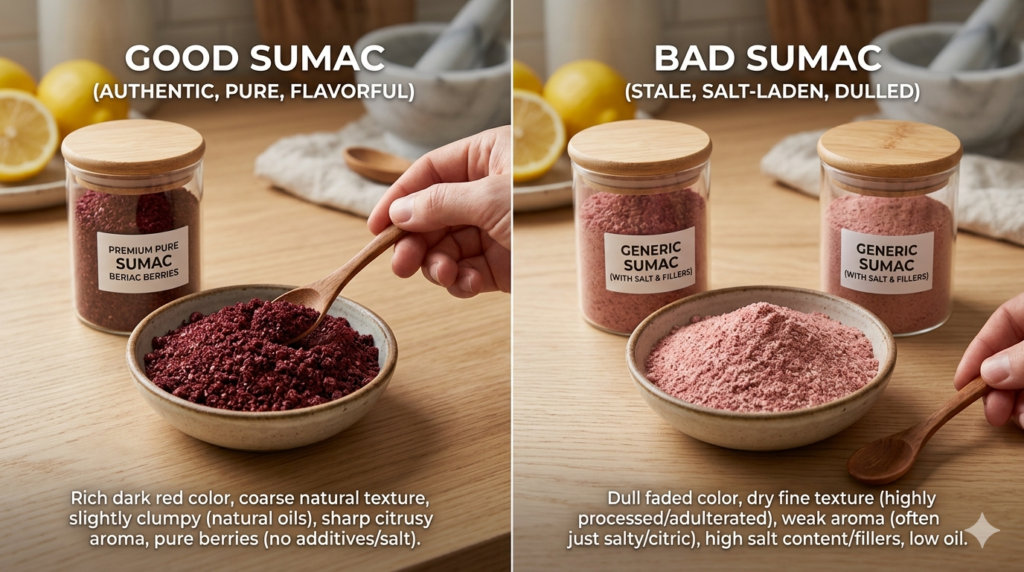
Premium Sumac Checklist | Leena Spices NZ
🔴 The 5-Step Sumac Quality Checklist
Before you buy or cook, use this quick visual and sensory checklist to ensure you are using pure, authentic sumac berries instead of cheap, salt-laden imitations.
1. The Color Visual Test
Pure Quality: Deep, rich burgundy, maroon, or brick-red. It should look natural and slightly dark.
Adulterated: Bright neon pink or vibrant crimson. This usually indicates artificial food dyes used to mask old, faded berries.
2. The Ingredient Label Inspection
Pure Quality: The label should state exactly one ingredient: 100% Ground Sumac Berries (or Rhus coriaria).
Adulterated: Sodium Chloride (Salt) or Citric Acid listed near the top. Cheap brands cut sumac with up to 50% salt to pad the weight cheaply.
3. The Texture & Clump Test
Pure Quality: Coarse grind that naturally retains a small amount of native berry oils, causing it to form soft, moist clumps when pressed.
Adulterated: Bone-dry, completely free-flowing powder that behaves like table salt or fine sand. This means it has been over-processed or stripped of oils.
4. The Aroma Profile
Pure Quality: An immediate hit of sharp, fruity, zesty, and deeply citrusy fragrance the second you open the jar.
Adulterated: A dull, dusty, or metallic scent or completely odorless. This is a clear sign the spice is stale and flat.
5. Check for White Spec Adulteration
Pure Quality: A completely uniform, dark ruby hue throughout the entire batch of powder.
Adulterated: A heavy dusting of visible white crystals mixed into the red powder. This is highly processed filler salt or citric acid crystals added for weight.

Tired of Flat, Salty, Store-Bought Spices?
Most commercial spice packets sit on shelves for months, losing flavor and packing hidden fillers. In my masterclass ebook, Homemade Spice Secrets, I reveal the precise roasting methods, shelf-life hacks, and secret ratios to create over 200 preservative-free global blends completely from scratch.
What Does Sumac Taste Like?
Sumac has a bright, tangy, and lemony flavor that brings a clean, refreshing acidity to food. It is similar to lemon zest but without the sharp bite of citrus or vinegar. Its tartness is gentle and balanced, offering a fruity, slightly earthy note that adds depth rather than dominance.
This spice is also mildly astringent, a quality that gives it a dry, mouth-cleansing feel similar to a sip of red wine. That subtle tannic edge makes it particularly effective for cutting through the richness of meats, oils, or creamy dishes.
Unlike liquid souring agents such as lemon juice, sumac adds a dry, concentrated form of acidity, making it ideal for rubs, marinades, or as a finishing sprinkle. It enhances the natural flavors of grilled meats, salads, dips, and roasted vegetables, lending both a pop of color and a zesty lift.
What Is Sumac Spice Used For?
One of the most popular ways to use sumac is as a finishing touch. When sprinkled over dishes just before serving, it instantly enhances both flavor and appearance. Its bright, tangy taste adds a fresh lift that makes simple meals feel more vibrant.
Sumac is a key ingredient in fattoush, a traditional Middle Eastern salad, and is often sprinkled over hummus, baba ganoush, grilled meats, and kebabs. Just a small pinch can bring a zesty, citrus-like brightness that balances rich and savory flavors.
Sumac works beautifully in marinades and dry rubs for chicken, lamb, and fish and vegetables. Its gentle tang helps balance the richness of the dish, giving a fresh, well-rounded taste.
You can also mix sumac into yogurt, dressings, and sauces to add a mild citrusy kick. It pairs especially well with roasted vegetables, rice, and grain dishes, bringing a pop of color and a bright, refreshing flavor to everyday meals.
Beyond savory dishes, sumac can also be used in desserts and drinks, where it adds a light, fruity tang. Its gentle sourness works surprisingly well in sweet recipes, giving them a unique twist.
In some Middle Eastern regions, sumac is even used to make a refreshing drink often called sumac lemonade, valued for its naturally bright and tangy flavor.
Sumac is also a key ingredient in the popular spice blend za’atar. In this mix, it balances perfectly with thyme, sesame seeds, and other herbs, helping create one of the most loved and iconic seasonings in Mediterranean cooking.
How do I use sumac spice in cooking?
Sumac is one of those rare spices that can instantly brighten a dish with just a sprinkle. Its dry, citrus-like tartness makes it an excellent substitute for lemon juice or vinegar when you want to add acidity without moisture. Because of its versatility, sumac can be used in both cooking and finishing to enhance flavor, color, and aroma.
1. As a Finishing Spice
This is the most common and easiest way to use sumac. Sprinkle it on dishes just before serving to add a burst of tangy freshness and a pop of color.
- Salads: A must-have for fattoush and tomato- cucumber salads.
- Dips: Dust over hummus, baba ghanoush, or labneh with a drizzle of olive oil.
- Eggs and Avocado Toast: Add a pinch for a bright, zesty lift.
- Roasted Vegetables: Sprinkle on hot potatoes, cauliflower, carrots, or eggplant for a tart contrast.
- Rice and Grains: Finish off pilafs, couscous, or quinoa for added depth and color. If you want to complement sumac’s tart profile on rice dishes with an aromatic, floral fragrance, check out our guide on making Persian Advieh spice at home.
2. In Marinades and Rubs
Sumac holds its flavor under heat, making it perfect for marinades or dry rubs. Its acidity helps tenderize meat while balancing richness.
- Chicken and Lamb: Mix sumac with olive oil, garlic, cumin, and paprika for a flavorful rub.
- Fish: Use as a dry coating for salmon or white fish before grilling or baking to create a citrusy crust.
- Vegetables: Toss root vegetables with olive oil and sumac before roasting for a tangy, savory glaze.
3. In Spice Blends
Sumac is a signature ingredient in za’atar, the classic Middle Eastern spice blends of sumac, thyme, sesame seeds, and salt. Use za’atar to season meats, vegetables, or flatbreads like manakeesh.
4. In Dressings, Dips, and Sauces
Stir sumac into yogurt, tahini, or olive oil-based dressings for a mild acidity that balances creamy or nutty flavors. It works beautifully in vinaigrettes, replacing part of the lemon juice or vinegar. You can be more creative with Sumac. Use it with sumac butter, sumac sour cream, sumac yogurt, sumac syrup, and blending with spices to make a spicy sumac sauce.
5. In Unique and Creative Uses
Sumac’s tang pairs wonderfully with both savory and sweet foods:
- Sumac Onions: Toss thinly sliced red onions with sumac, salt, and parsley for a sharp, colorful condiment — perfect with kebabs or wraps.
- Popcorn and Snacks: Sprinkle sumac over popcorn or roasted nuts for a citrusy twist.
- Desserts: Add a pinch to fruit salads, baked goods, or even ice cream for a subtle, tart accent.
🍳 Flavor Masterclass: Don’t let stale store packets ruin your dinner. Learn how to unlock deep restaurant-style depths from whole seeds using the step-by-step blueprints inside Homemade Spice Secrets.
Souring Agents: How Sumac Compares
Souring Agent | Flavor Profile | Moisture Impact | Best Application |
Ground Sumac | Fruity, sharp, dry tartness | None (Dry Powder) | Finishing sprinkle, dry rubs, popcorn, raw onion salads |
Fresh Lemon Juice | Clean, bright, sharp acidity | High Liquid Volume | Vinaigrettes, pan deglazing, seafood finishes |
Amchur (Mango Powder) | Earthy, deeply sour, musky | None (Dry Powder) | Indian curries, stir-fries, northern-style marinades |
Tamarind Paste | Sweet-sour, deeply complex | Medium Paste | Pad Thai, rich stews, dipping chutneys |
Sumac vs. Lemon Juice
Sumac and lemon juice are both used to add a fresh, tangy taste to food, but they work in different ways.Because sumac is dry, it adds flavor without changing the texture of your dish.
Lemon juice, on the other hand, is a liquid squeezed from fresh lemons (Citrus limon). It has a stronger, sharper sour taste that comes mainly from citric acid. It also adds moisture, which can slightly change the consistency of sauces, dressings, or marinades.
Both ingredients can brighten up a dish, and they are sometimes used as substitutes for each other, especially in Middle Eastern and Mediterranean cooking. However, the best choice depends on what your recipe needs.
The Acid Test: Sumac vs. Lemon Juice
| Culinary Metric | Ground Sumac Spice | Fresh Lemon Juice |
| Moisture Impact | Completely dry; seasons without adding liquid. | Adds high liquid volume and moisture. |
| Flavor Profile | Earthy, astringent, complex fruity-tartness. | Bright, sharp, pure citrus acidity. |
| Best Kitchen Use | Perfect finishing dust, marinades, dry rubs. | Great for deglazing, pan sauces, instant bright hits. |
| Heat Stability | Holds its flavor integrity under intense heat. | Acidity can diminish or turn bitter when boiled. |
When to Use Sumac vs Lemon Juice
🍋 Sumac & Lemon Juice Substitution Calculator
Need to swap dry tartness for fresh citrus? Use our culinary converter to swap ground sumac and fresh lemon juice accurately across weights (grams, ounces) and volumes.
Equivalent Substitution:
Excellent for finishing dishes. Ground sumac will add a beautiful ruby hue and sharp, dry acidity without introducing extra pooling liquid to your plates.
Want to master complex flavor balancing without diluting your dishes? Check out our Digital Cookbooks & Spice Guides.
Choosing between sumac and lemon juice depends on what your dish needs which is flavor, texture, or moisture.
- Choose sumac when you want a tangy taste without adding any liquid. It gives a beautiful deep red color and a more complex, layered flavor. It works especially well in Middle Eastern dishes, grilled foods, and even some baked recipes where you want to keep the texture dry.
- Choose lemon juice when you need fresh, bright citrus flavor along with moisture. It is ideal for dressings, marinades, sauces, and any recipe where liquid plays an important role.
- Use both together for the best of both worlds. Many cooks add sumac for a deep, tangy base and finish with a squeeze of lemon juice for extra freshness and aroma.
Important Cooking Tips
- Texture matters: You cannot replace sumac with lemon juice in dry rubs for grilled meats and vegetables. Lemon juice adds moisture and can cause the meat to steam instead of forming a nice crust.
On the other hand, sumac cannot replace lemon juice in baking, because liquid and acidity are needed to activate ingredients like baking soda. - Keep it crisp: If you are seasoning foods that should stay more crunchy, like fried chickpeas or pita chips then sumac is the better choice. It adds tangy flavor without making the food soggy.
- Presentation: Sumac is often used as a finishing touch because of its rich red color. Lemon juice, however, is usually mixed into dishes to enhance flavor without being seen.
Quick Guide: When to Use Each
Use Sumac For:
- Garnishing: Sprinkle over salads like fattoush, creamy labneh, or even avocado toast for a fresh, tangy finish
- Dry rubs: Coat chicken, lamb, or fish before grilling to add flavor without extra moisture
- Color boost: Add a beautiful deep red touch to dishes like hummus, dips, or roasted vegetables
Use Lemon Juice For:
- Vinaigrettes & dressings: Perfect when you need acidity and liquid to balance oils and create a smooth texture
- Seafood dishes: Helps cut through rich or oily flavors, making the dish taste lighter and fresher
- Baking: Provides the acidity needed to activate baking soda, helping baked goods rise properly
The “Secret” Pro Tip
Professional chefs rarely choose between sumac and lemon juice. They layer them for better flavor.
While sumac delivers a bright, sharp burst of dry citrus acidity, it plays a very different role from warm, aromatic spice blends. If you are looking to add depth, gentle sweetness, and layers of earthy warmth to savory bakes, explore the versatility of a traditional Baharat spice blend. Its balanced combination of spices can transform breads, roasted vegetables, meat dishes, and baked recipes with a richer, more complex flavor profile.
Does Sumac Spice Go Bad?
Like most dried spices, sumac doesn’t “go bad” in a way that makes it unsafe to eat, but it does lose its flavor, aroma, and color over time. The real concern isn’t spoilage — it’s losing that signature tangy, lemony brightness that makes sumac special.
When fresh, sumac has a deep red color, a pleasantly tart aroma, and a zesty, fruity taste. As it ages, exposure to light, air, and moisture causes it to fade in both color and flavor.
Shelf Life of Sumac
- Ground Sumac: Best used within 2 to 3 years. After that, it’s still safe, but the flavor will be noticeably weaker.
- Whole Sumac Berries: Can retain their quality for 3 to 4 years or longer, since less surface area is exposed to air.
How to Tell If Sumac Has Lost Its Potency
- Smell Test:
Fresh sumac should have a tangy, citrusy aroma with subtle fruity notes. If it smells faint, stale, or dusty, it has likely lost its flavor. - Color Test:
Authentic, fresh sumac appears deep red or burgundy. If it looks dull, brownish, or faded, it’s past its prime. - Taste Test:
Rub a small pinch between your fingers and taste it. If it no longer delivers that bright, tart zing, it’s time to replace it.
How to Store Sumac for Best Freshness
Proper storage of fresh sumac is essential to preserve its vibrant color, tangy flavor, and fruity aroma. Like all spices, sumac is sensitive to air, light, heat, and moisture. These are the four main factors that cause spices to lose their quality over time. Many people ask does sumac expire, does sumac go bad, or does sumac go off? The truth is, while it doesn’t spoil like fresh food, it can lose its potency if not stored correctly. Here are best ways to store sumac spice for metabolism boost
1. Use an Airtight Container
To keep sumac fresh, always store in a tightly sealed container, such as a glass jar or metal spice tin with a secure lid. This prevents air from dulling its flavor and helps retain the natural oils that give sumac its signature tang.
2. Keep It Cool, Dark, and Dry
- Temperature: Store sumac in a cool location, away from heat-producing appliances such as the stove, oven, or dishwasher.
- Light: Avoid direct sunlight or bright kitchen light, which can fade its rich red-purple color and reduce its potency. A pantry, drawer, or cupboard is ideal.
- Moisture: Keep the area dry. Moisture is one of the biggest enemies of ground spices and can lead to clumping or even mold growth.
Important: Do not refrigerate ground sumac. Frequent temperature changes when opening the container can cause condensation, which ruins the spice.
3. Handle With Care
Always use a clean, completely dry spoon when scooping sumac to prevent introducing moisture or contaminants. Even a small amount of water can cause spoilage or clumping, which is one reason people think does sumac go bad faster than expected.
4. Buy the Right Amount
If you use sumac regularly, it’s best to buy it in small quantities and replace it once a year to ensure maximum freshness. Freshness depends not just on time, but also on how it’s stored.
For longer shelf life, consider buying whole sumac berries and grinding them as needed . Whole spices naturally retain their flavor and aroma longer than pre-ground ones.
Sumac Shelf Life and Freshness Check
- Ground Sumac: Best within 1 to 2 years when stored properly.
- Whole Sumac Berries: Can last 3 to 4 years or longer with minimal loss of quality.
So, how long does sumac last in practical terms? It stays safe to use for a long time, but its flavor gradually fades.To check freshness, look for bright color, a citrusy aroma, and a sharp tangy taste. If the spice appears dull, smells faint, or tastes flat, it may not have “expired,” but it has likely lost its quality and should be replaced.
To keep your sumac spice fresh, potent, and long-lasting, follow these best ways to store sumac spice for metabolism boost.
How to Revive or Use Older Sumac
If your sumac has lost some of its brightness or tang, don’t throw it away just yet. While you can’t fully restore its original punch, there are a few ways to make the most of older sumac.
1. Toast It Lightly
Place the spice in a dry skillet over low heat for a few seconds. Gently warming sumac can help release any remaining essential oils and revive its aroma. Be careful not to overheat it, as excessive heat will destroy what’s left of its delicate flavor compounds.
2. Combine With Acidic Ingredients
Even if the flavor has faded, older sumac can still enhance dishes when paired with lemon juice, vinegar, or tamarind. These ingredients bring back some of the tart brightness that fresh sumac naturally provides.
3. Use in Marinades and Rubs
Older sumac can still contribute mild color and background flavor when used in marinades, dry rubs, or seasoning blends for meats, fish, or vegetables. It won’t dominate the dish, but it will add a subtle depth that complements other spices.
4. Blend Into Spice Mixes
If your sumac isn’t as vibrant as before, try blending it into Za’atar, Baharat, or other spice blends. Mixed with herbs and sesame seeds, it still lends mild acidity and color without overpowering the mix.
5. Taste and Adjust
Before adding older sumac to a dish, taste a small pinch. If the flavor seems weak, simply use a bit more than the recipe calls for. However, if it has a musty or dusty smell, it’s best to replace it entirely.

Frequently Asked Questions About Sumac
Can sumac be used in sweet dishes?
Yes! While sumac is best known for savory applications, its mild tartness and fruity notes can complement desserts like fruit salads, baked goods, or even ice cream. It adds a subtle citrusy flavor without overpowering sweetness.
Is sumac gluten-free and safe for special diets?
Absolutely. Pure sumac is naturally gluten-free, vegan, and free from common allergens, making it suitable for a wide range of diets. Just check that pre-blended mixes, like some za’atar products, don’t contain wheat or other additives.
Can I grind whole sumac berries at home to make tea?
Yes. Grinding whole sumac berries just before use preserves the spice’s aroma and tang. Use a mortar and pestle or spice grinder for the freshest flavor, especially if you buy in bulk.
How does sumac compare to other souring agents like lemon or vinegar?
Sumac offers a dry, mild tartness that enhances flavor without adding liquid. Lemon juice or vinegar provide stronger, wet acidity, which is better for dressings, sauces, or beverages where moisture is needed.
Can sumac be used in beverages?
Yes. In some Middle Eastern regions, sumac is steeped in water with sugar or honey to make a refreshing, tart drink similar to lemonade, often served cold.
Does cooking affect sumac’s flavor?
Prolonged heat can diminish sumac’s tangy brightness. For best results, use it as a finishing spice or add it toward the end of cooking. It can withstand brief exposure to heat in marinades or rubs without losing too much flavor.
Can sumac be mixed with other spices?
Definitely. Sumac pairs beautifully with thyme, sesame seeds, paprika, cumin, garlic, and chili flakes. It’s an essential ingredient in za’atar and works well in custom spice blends for meats, vegetables, and dips.
How do I know if sumac has gone bad?
While it won’t become unsafe, sumac loses its tang, aroma, and vibrant color over time. Signs it has weakened include dull red-brown color, faint scent, or a flat, tasteless zing.
Conclusion
Sumac is more than just a spice. It is a versatile, flavor-enhancing ingredient that can transform everyday dishes with its tangy, lemony brightness and subtle fruity undertones. From sprinkling it over salads and dips to incorporating it into marinades, rubs, and spice blends, sumac adds depth, color, and a refreshing zing without overpowering your food. Understanding its origin, flavor profile, and proper storage ensures you get the most out of this vibrant spice, while knowing how to spot authentic, high-quality sumac guarantees consistent results in your cooking. Whether you’re exploring Middle Eastern flavors for the first time or looking to elevate familiar recipes, sumac offers a simple yet powerful way to brighten every meal.
Impu Irani is a cookbook author behind Leena Spices, where he shares practical, easy-to-follow guides on homemade spice blends, herbs, and natural cooking. His work helps home cooks create fresh, flavorful meals using simple ingredients and traditional methods. Download his free Spice Blending eBook and start your journey to cleaner cooking today!
Disclosure Note
We are committed to creating high-quality, helpful content for our readers. We do not accept payment in exchange for writing our articles, and we personally cover the costs of running this website, including hosting, tools, and maintenance.
To support the site, we display ads and may earn a small commission from affiliate links if you choose to make a purchase—at no extra cost to you.
Your support helps us continue sharing valuable content with the community.
If you’d like to support us, here are a few simple and free ways:
- Share our content with your friends and family
- Engage with us on social media
- Follow us on Facebook
You can also learn more by visiting our disclaimer page:
https://leenaspices.co.nz/disclaimer/
As a thank you, feel free to download our Free Spice Recipe eBook.
Medical Disclaimer:
The information provided in this article is for educational and informational purposes only and is not intended as medical advice. While Sumac Spice has been associated with health benefits, it should not be used as a substitute for professional medical care, diagnosis, or treatment. Always consult a qualified healthcare provider before starting any new dietary supplement, herbal remedy, or wellness routine, especially if you have underlying health conditions, are pregnant or breastfeeding, or are taking prescription medications.
🍳 Flavor Masterclass: Don’t let stale store packets ruin your dinner. Learn how to unlock deep restaurant-style depths from whole seeds using the step-by-step blueprints inside Homemade Spice Secrets.