Impu Irani | Culinary Educator specializing in spices and global flavors. With over 20 years of experience testing spice blends and recipes, Impu helps home cooks create authentic dishes using simple techniques and easy-to-follow recipes.
Table of Contents
ToggleWhy the Right Spice Balance is the Soul of Rendang
When I first started making rendang paste, I thought it was as simple as adding everything to a pot and letting it cook. My first batch turned out watery instead of rich and caramelized. After years of testing spice blends and cooking methods, I learned that the real secret is having the patience to let the coconut milk slowly separate and release its natural oil. That is what gives authentic rendang its deep flavor and signature texture. This guide is based on those lessons, so you can avoid the mistakes I made and make delicious rendang with confidence.
Handling Tough Roots: How to Prep Galangal Ginger and Lemongrass Safely
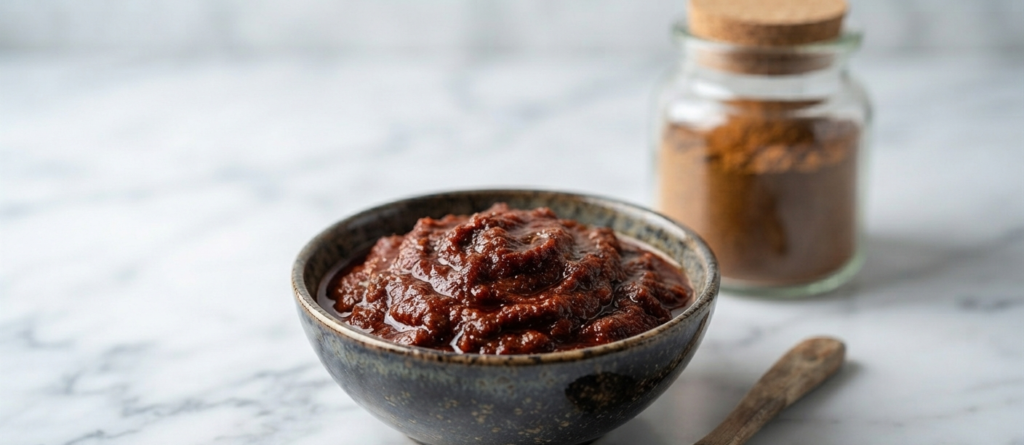
If you have ever sliced fresh galangal with a dull knife, you know it can feel more like cutting wood than preparing a root vegetable. Galangal is naturally firm and fibrous, which is why proper preparation matters when making an authentic rendang bumbu.
Avoid adding large chunks straight into a food processor. Instead, slice the galangal very thinly against the grain and remove the tough outer layers of lemongrass before blending. These small steps help prevent stringy fibers, protect your equipment, and create a smoother, more evenly textured spice paste.
Safety First: Always secure your galangal on a stable cutting board before slicing. Keep your fingertips curled inward in a “claw” position to protect them, and never force the knife if it catches. A sharp blade and controlled movements are the safest way to prepare tough roots like galangal. A slip here can easily lead to a nasty kitchen injury.
How to Prep Galangal Like a Pro
- Slice, don’t chop: Avoid cutting galangal into large chunks. Place the root firmly on the board and slice it into thin, coin-shaped rounds across the grain. This helps break up the tough fibers and allows it to blend more smoothly into your rendang bumbu.
- Use the right knife: A heavy, sharp chef’s knife or cleaver works best for slicing firm galangal. If the skin is very thick, you can remove the outer layer with a small paring knife, but there is no need to peel every small curve. Galangal skin is edible and much less fibrous than the outer skin of some other roots.
- Blend in stages: Add the thin galangal slices to your food processor gradually along with shallots and garlic. The moisture from these fresh aromatics helps the blades process the roots more evenly, creating a smoother and more consistent spice paste.
When preparing fresh aromatics for rendang bumbu, remember that ginger and lemongrass each have their own challenges. Fresh ginger may be softer than galangal, but its stringy fibers can still create a rough, uneven paste if cut into large pieces. Slice the ginger thinly across the grain before blending. This helps shorten the fibers and allows the food processor to break it down more smoothly.
Lemongrass requires a different approach. The outer layers are tough and woody, so remove the dry outer stalks and use the tender inner core. Slice the stalk into thin rounds before processing. Adding whole stalks or large pieces can cause the fibers to wrap around the blades instead of breaking down properly, leaving unwanted threads in your rendang paste.
These preparation steps may seem small, but they make a noticeable difference. Properly sliced ginger, galangal, and lemongrass release their aromatic oils more evenly, creating a smoother bumbu with a deeper, more balanced flavor.
How to Make Rendang Spice Paste from Scratch
While many recipes use pre-ground spices for convenience, traditional Minangkabau cooks prefer making the spice Rendang paste (bumbu) fresh with a stone mortar and pestle. This is not just about tradition, but to change the flavor. The slow grinding process helps break down the tough fibers of ingredients like lemongrass and galangal, releasing more of their natural oils and aromas.
If you use a blender at home, you can still achieve great results. Add a small splash of coconut milk while blending to help create a smoother mixture and prevent the spices from heating up too much, which can reduce their fresh aroma.
From Raw Pungency to Deep Mahogany: Cooking Down the Bumbu
When Rendang paste ingredients such as the freshly blended bumbu of shallots, garlic, lemongrass, and chilies first hits the warm wok with oil, your kitchen will quickly fill with a sharp, intense aroma. This raw pungency is completely normal. It is the first stage of the flavor transformation.
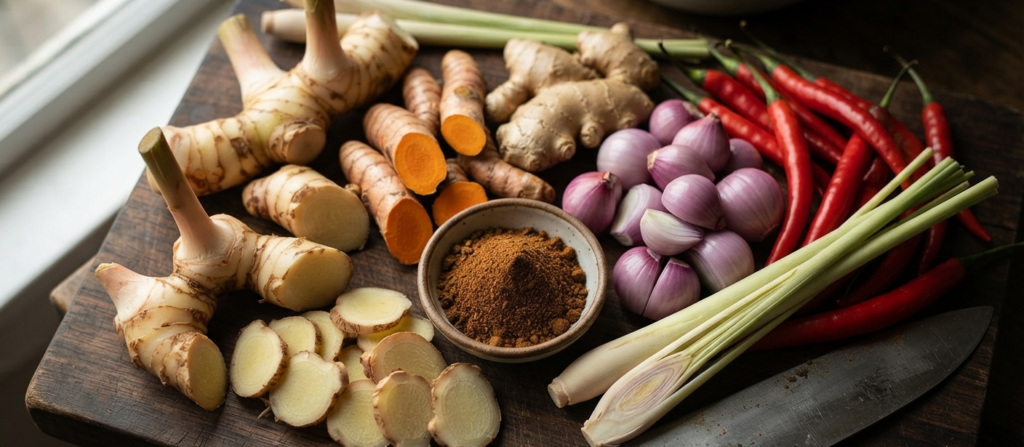
Stay patient and keep stirring as the moisture slowly cooks away. After around 10 minutes, the harsh onion-like notes begin to mellow, the bright red color develops into a deeper, glossy mahogany shade, and the aroma changes from sharp and raw to rich, sweet, and deeply toasted.
Pro Tip from the Leena Spices Kitchen:
Never rely on the clock to know when your rendang paste is ready. As the paste cooks, the sharp, raw smell will change into a rich, earthy, nutty aroma. You will also notice the red oil separating from the dark brown paste. This is the sign that the spices have fully bloomed and you’ve built the rich flavor base that makes authentic rendang so special.
Before you combine your fresh roots and alliums, you need the essential earthy, warming backbone built from toasted whole seeds. Read our blog step-by-step dry Rendang spice blend
Rendang Paste Recipe
Materials
- 1 tsp coriander seeds
- 1 tsp cumin seeds
- 2 - 3 pieces candlenuts or macadamia nuts (optional, for richness)
- 1/2 tsp ground cinnamon
- 2 pieces cloves
- 1 pod cardamom (seeds only)
- 1 piece star anise (optional)
- 10 -12 piece dried red chilies (soaked in hot water for 20 minutes; deseed for less heat)
- 2 stalks lemongrass (white part only, chopped)
- 2 inch piece galangal peeled and chopped
- 1 inch piece ginger peeled and chopped
- 1 inch piece turmeric, peeled (or 1 tsp ground turmeric)
- 4 - 5 shallots
- 3 - 4 cloves garlic
- 1 - 2 Tbsp water or little oil (to help blend)
Instructions
- Toast the Spices:Dry-toast coriander seeds, cumin seeds, cloves, and star anise (if using) in a pan over medium heat for 1–2 minutes until fragrant. Let them cool slightly.
- Prepare the Paste:In a blender, food processor, or mortar and pestle, combine: soaked chilies, lemongrass, galangal, ginger, turmeric, shallots, garlic, candlenuts, toasted spices, cinnamon, and cardamom seeds.
- Add 1–2 tablespoons of water (or a little oil) to help form a smooth paste.
- Blend to Desired Consistency:Blend until smooth, or leave slightly coarse for texture. Adjust water sparingly if needed.
- Optional Sauté (for deeper aroma): Heat a little vegetable oil in a pan over medium-low heat. Sauté the paste, stirring constantly, until fragrant and the oil separates from the paste (“pecah minyak”).
- Store or Use:Use immediately as the aromatic base for your rendang. Store in an airtight container in the fridge for up to 1 week, or freeze for up to 3 months.
Notes
- The secret to a deeply flavorful rendang is the toasting step. Dry-roasting coriander and cumin until they become fragrant helps release their natural oils, creating a richer aroma and deeper flavor. This simple technique is one of the biggest differences between a good rendang and an exceptional one.
📚
Unlock 200+ Global Spice Secrets
Don’t stop here. Learn how to master the flavor profiles, roasting techniques, and perfect pairings for over 200 global spices in our comprehensive eBook.
Pro Tip from the Leena Spices Kitchen:
During my early testing, I made the mistake of adding a generous splash of water to the blender just to help the blades move more easily. It seemed like a simple solution, but it created a watery spice paste. It does not fry properly; it steams and boils instead.
After testing multiple batches, I learned that the best approach is to rely on the natural moisture from the shallots and other fresh aromatics. If your blender needs help, add only a small amount of oil or coconut cream to keep the paste moving while maintaining a thick, concentrated texture.
A properly prepared rendang bumbu should be rich and dense, allowing the spices to slowly fry, release their aromas, and develop the deep flavors that define authentic rendang.
The Three-Phase Heat Strategy for Authentic Rendang Bumbu
Once your thick bumbu hits the hot wok with oil, heat control becomes the single most important factor in its success. Turn the heat too high, and the natural sugars in the shallots and garlic will caramelize too quickly before the moisture has a chance to evaporate, eventually scorching on the bottom of the pan and leaving an acrid, bitter flavor that cannot be rescued. Keep the heat too low, and the paste will simply simmer in its own released moisture instead of frying, preventing the flavors from concentrating and delaying the all-important pecah minyak stage, where the oil naturally separates from the paste.
This is a strong framework, but there is one technical issue: “raw starches” isn’t the best description for a rendang bumbu. Shallots, garlic, chilies, lemongrass, and galangal contain relatively little starch. The transformation is mainly driven by moisture evaporation, cell breakdown, enzyme deactivation, Maillard browning, and oil extraction, not by cooking out starch.
The Three-Phase Heat Strategy
- Phase 1 (The Initial Moisture Release – Medium Heat): As soon as the bumbu hits the hot oil, the goal is to drive off excess surface moisture. Keep the heat at medium, stirring constantly to prevent sticking. You should see a steady stream of steam rising from the wok as water evaporates, while the paste softens and begins to fry rather than boil. Avoid excessive heat at this stage, as the shallots and garlic can brown too quickly before enough moisture has escaped.
- Phase 2 (The Flavor Concentration – Medium-Low Heat): As the steam begins to subside, the bumbu will noticeably thicken, tighten, and cling to your spatula. Reduce the heat slightly and continue stirring. During this stage, the aromatics fully soften, the raw flavors disappear, and the spices meld into a richer, sweeter, and more concentrated paste. The moisture continues to evaporate, allowing gentle caramelization and Maillard browning to build the deep mahogany color that defines an authentic rendang base.
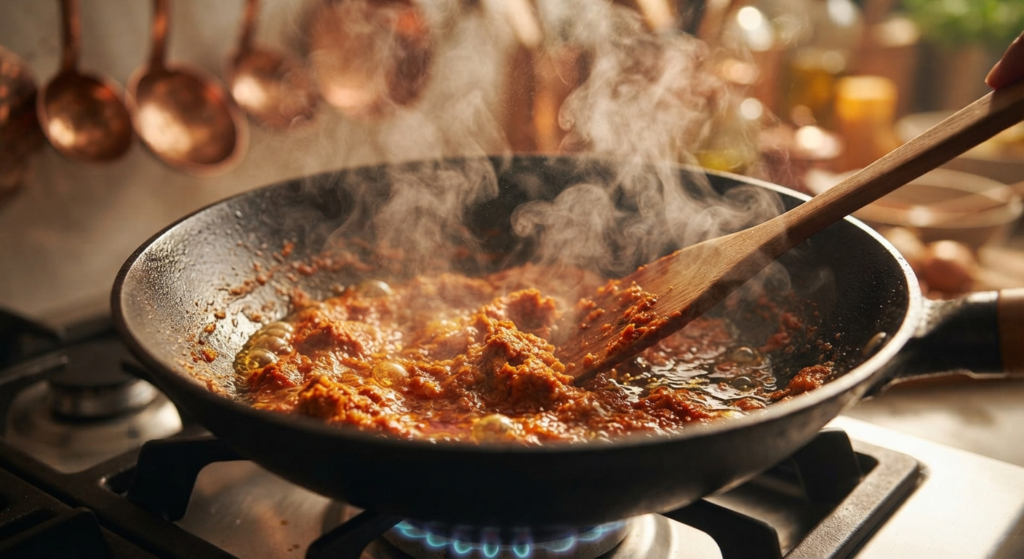
- Phase 3 (The Pecah Minyak Stage – Low Heat): Once the paste becomes dense and glossy, reduce the heat to low. Gentle, sustained cooking allows the oil to gradually separate from the concentrated paste. You’ll notice tiny pools of clear, golden-red oil appearing around the edges and glistening across the surface. This is the unmistakable sign of pecah minyak—the point at which excess moisture has evaporated, the aromatics are fully cooked, and the bumbu has reached its deepest, richest flavor without scorching the delicate spices.
The Ultimate Test: Achieving Pecah Minyak (Oil Separation)
Through countless test batches in our Leena Spices kitchen, I learnt that you simply cannot rush pecah minyak. It is the moment when the oil naturally separates from the paste. As it cooks, the bumbu will suddenly tighten, become thicker, and may even look slightly dry. Do not panic, and resist the temptation to add water. Instead, watch the edges of the pan closely. Tiny pools of clear, golden-red oil will begin to emerge and glisten around the paste. This is your unmistakable visual cue that the aromatics have fully cooked, excess moisture has evaporated, and the spices have melded into a rich, concentrated bumbu. At this stage, your Rendang paste has developed its signature depth of flavor and is ready to use immediately or cool and store for short-term preservation.
What is the Difference Between Indonesian and Malaysian Rendang Spice Blends?
In my experience, choosing between these two rendang styles depends on the occasion. I enjoy the Indonesian version when hosting guests because its rich, dry texture and deep flavors make it a memorable centerpiece. For a cozy weeknight meal, I often turn to the Malaysian style for its comforting, saucier texture. I recommend trying both versions to discover which one best suits your taste.
Indonesian vs. Malaysian Rendang Spice Blends
| Feature | Indonesian Rendang (Minangkabau, West Sumatra) | Malaysian Rendang |
| Spice Profile | Hotter, spicier; more dried chilies, turmeric, galangal, lemongrass, kaffir lime leaves | Milder, sweeter; more emphasis on aromatics like cinnamon, cloves, fennel, and star anise |
| Key Ingredients | Candlenuts, kerisik (toasted coconut), coriander, cumin, asam kandis for tanginess | Tamarind, palm or brown sugar, kerisik (less dominant), sometimes kecap manis |
| Flavor | Bold, earthy, tangy, and intensely spiced | Rich, aromatic, creamier, with a sweet-savory balance |
| Texture | Drier; coconut milk fully reduced; meat caramelized with spices | Wetter; thicker sauce consistency; cooked for a shorter time |
| Cooking Style | Long, slow cooking until curry is nearly dry | Shorter cooking, leaving more coconut milk in the sauce |
| Cultural Influence | Strongly rooted in Minangkabau tradition, showcasing bold flavors | Influenced by Indian and Malay cooking, emphasizing aromatics and sweetness |

Frequently Asked Questions (FAQ)
Can I use store-bought pre-minced garlic and ginger to save time?
While jarred minced garlic and ginger are convenient, they will compromise the flavor and texture of an authentic Rendang bumbu. Most commercially prepared pastes contain added water, acids such as citric acid, and preservatives to extend shelf life. This extra moisture makes it harder for the paste to fry properly, causing it to steam instead of reaching pecah minyak.
Why is my rendang paste turning brown too quickly before the oil separates?
If your Rendang paste is darkening before reaching pecah minyak, your heat is likely too high. Shallots and garlic contain natural sugars that can brown quickly when exposed to excessive heat. Lower the heat, stir more frequently, and allow the bumbu to slowly tighten until the oil naturally begins to separate.
Can I make this Rendang spice paste ahead of time and freeze it?
Yes, absolutely. In fact, preparing a large batch of Rendang bumbu ahead of time is one of the best meal-prep strategies for saving time while preserving authentic flavor. Once your paste has successfully reached pecah minyak (the stage where the oil naturally separates and the aromatics are fully cooked), allow it to cool completely before storing. Transfer the bumbu into clean, airtight glass jars or freezer-safe bags, portioning it into amounts you will use for future meals.
Stored properly, the paste will keep its rich aroma and deep spice profile for up to 5 days in the refrigerator or around 3 months in the freezer. For best results, freeze in small portions so you can thaw only what you need without repeatedly exposing the remaining paste to air and temperature changes.
What is the exact difference between a dry spice powder and a wet spice paste?
The dry spice powder (such as our foundational Leena Spices Rendang blend) acts as the earthy, warm architectural backbone—providing dried elements like coriander, cumin, fennel, and star anise. The wet paste (bumbu), on the other hand, supplies the fresh, moisture-rich organic components—shallots, galangal, ginger, lemongrass, and chilies. Combining the dry powder directly into the freshly sautéed wet paste creates the ultimate, multi-layered foundation for authentic Rendang.

Impu Irani is a cookbook author behind Leena Spices, where he shares practical, easy-to-follow guides on homemade spice blends, herbs, and natural cooking. His work helps home cooks create fresh, flavorful meals using simple ingredients and traditional methods. Download his free Spice Blending eBook and start your journey to cleaner cooking today!
Disclosure Note
We are committed to creating high-quality, helpful content for our readers. We do not accept payment in exchange for writing our articles, and we personally cover the costs of running this website, including hosting, tools, and maintenance.
To support the site, we display ads and may earn a small commission from affiliate links if you choose to make a purchase—at no extra cost to you.
Your support helps us continue sharing valuable content with the community.
If you’d like to support us, here are a few simple and free ways:
- Share our content with your friends and family
- Engage with us on social media
- Follow us on Facebook
You can also learn more by visiting our disclaimer page:
https://leenaspices.co.nz/disclaimer/
As a thank you, feel free to download our Free Spice Recipe eBook.
Download a Free Leena Spices Recipes Cookbook