Table of Contents
ToggleWhat is Red Capsicum?
One question I get asked a lot is how to add a touch of sweetness to savory dishes without reaching for sugar. My answer is almost always the same: red capsicum. Its natural sweetness brings balance to soups, sauces, curries, and roasted vegetables without overpowering the other flavors.
One of the reasons I always keep red capsicum in my kitchen is its versatility. Unlike chili peppers, it has no heat at all, so it adds sweetness, color, and fresh flavor without making a dish spicy.
Many people wonder whether red capsicum is different from green capsicum. The truth is, they are the same vegetable at different stages of ripeness. A red capsicum is simply a green capsicum that has been left on the plant long enough to fully mature.
Scroll down to work out the capsicum substitution calculator.

Impu Irani is a cookbook author behind Leena Spices, where he shares practical, easy-to-follow guides on homemade spice blends, herbs, and natural cooking. His work helps home cooks create fresh, flavorful meals using simple ingredients and traditional methods. Download his free Spice Blending eBook and start your journey to cleaner cooking today!
Download a Free Leena Spices Recipes Cookbook
The Journey from Green to Red: How Capsicums Ripen
| Capsicum Color | What Makes It Different? |
|---|---|
| 🟢 Green Capsicum | Picked before it’s fully ripe, green capsicum has a crisp texture and a fresh, slightly bitter flavor. It’s less sweet than the other colors, making it perfect when you want a brighter, more savory taste. |
| 🟡 Yellow Capsicum | As the capsicum ripens, it turns sweeter and milder. Yellow capsicum sits right in the middle, offering a nice balance of sweetness and crunch without being overly sweet. |
| 🟠 Orange Capsicum | Orange capsicum is also in the later stages of ripening. It’s juicy, mildly sweet, and has a smooth flavor that works well in salads, roasting, and everyday cooking. |
| 🔴 Red Capsicum | Red capsicum stays on the plant the longest, giving it time to develop its natural sweetness. It also contains higher levels of Vitamin C, Vitamin A, and antioxidants, making it the sweetest and most nutritious of the four colors. |
| Why does red capsicum cost more? | Growing a red capsicum takes patience. Depending on the variety and weather, it usually needs 60 to 90 days to reach full ripeness. Farmers leave it on the plant much longer than green capsicums, which means more time, more care, and a greater risk of crop loss. That extra growing time is one of the main reasons red capsicums usually cost more at the grocery store. |
If you want to try cultivating these vibrant sweet peppers right in your backyard, check out our companion guide on 7 Exciting Ways to Grow, Harvest, and Freeze Red Capsicum Bell Peppers.
Red Capsicum vs. Bell Pepper: Are They the Same?
One question that comes up quite often is whether red capsicum and bell pepper are actually the same thing. The short answer is yes. They are the same vegetable, just called by different names depending on where you are in the world.
In the United States and Canada, you’ll usually hear them called “bell peppers.” In places like the United Kingdom, Australia, New Zealand, India, and much of Asia, they’re more commonly known as “capsicums.”
The name bell pepper comes from its rounded, bell-like shape, while capsicum comes from the plant’s botanical family name, Capsicum.
Nutritional Benefits Table
| Capsicum Stage | Ripeness | Nutritional Highlight (per 100g) | Flavor Profile | Best Use in Cooking |
|---|---|---|---|---|
| 🟢 Green | Unripe | Vitamin C (60 mg) • Low sugar | Crisp, slightly bitter | Stir-fries, hearty curries |
| 🟡 Yellow / Orange | Mid-stage ripeness | Vitamin C (183 mg) • Moderate sugar | Mild, gently sweet, crunchy | Salads, light sautés |
| 🔴 Red | Fully ripe | Vitamin C (190 mg) • High sugar (4.2 g) | Sweet, rich, full-bodied | Roasting, spice bases, raw eating |
How to Select Red Capsicum?
When choosing red capsicum, look for ones that are firm, smooth, and brightly colored. Avoid peppers with soft spots, wrinkles, or blemishes, as these can indicate overripeness or spoilage. Selecting fresh, high-quality capsicums ensures the best flavor, texture, and nutritional value for your dishes.
How do I Store Red Capsicum?
Proper storage helps red capsicums stay fresh, flavorful, and crisp for as long as possible. Here’s how to store them:
Whole Capsicums
Refrigerate: Keep unwashed in the crisper drawer of your refrigerator. They can last up to 1–2 weeks.
Room Temperature: If you plan to use them within 2–3 days, storing them on the counter away from direct sunlight is fine.
Sliced or Prepped Capsicums
Place cut pieces in an airtight container lined with a paper towel to absorb moisture.
Use within 3–4 days to maintain freshness and prevent spoilage.
Freezing for Long-Term Storage
Slice the capsicums and blanch in boiling water for 2 minutes.
Cool them quickly in ice water, then freeze in a single layer on a tray.
Once frozen, transfer to a freezer bag for use in soups, sauces, or stir-fries. Frozen capsicums retain color and texture remarkably well.
Pro Tips for Maximum Freshness
Avoid moisture traps: Loose storage in a paper bag or perforated plastic allows airflow and prevents mold.
Don’t wash until ready to use: Excess moisture shortens shelf life.
Keep prepped capsicums dry: Always use a paper towel in the container to absorb any lingering moisture.
Freeze smart: Blanching before freezing preserves both nutrients and color.
By following these storage tips, you’ll reduce waste and always have crisp, sweet red capsicums ready for your recipes.
What Spices Pair Best with Red Capsicum?
Red capsicums are naturally sweet, which makes them a great match for spices that bring balance and contrast. Earthy spices like ground cumin help ground that sweetness and add depth, especially in curries and roasted vegetables. Smoked paprika works beautifully alongside capsicum because it enhances the pepper’s natural flavor while adding a gentle smoky edge. Garlic powder brings a savory warmth that softens the sweetness and blends easily into marinades, sautés, and spice rubs. A pinch of cracked black pepper adds just enough sharpness to lift the overall flavor without overpowering it. When used together, these spices turn red capsicum into something richer, more layered, and far more interesting in everyday cooking.
While sweet bell peppers offer a mild profile, home cooks looking to introduce genuine, smoky complexity should explore 7 Tips for Perfect Gochugaru Use in Korean Cooking or learn How to Adjust Kashmiri Chili Heat to perfectly balance a curry base
Instant Kitchen Conversion Tool
As a cookbook author, one of the most common questions I hear from home cooks is how to swap fresh capsicums for dried flakes or how to use different colors without throwing off the balance of a recipe.
So to make things easier, I put together a simple Capsicum Substitution Calculator. Just choose what you have on hand, enter your recipe needs, and it gives you a quick, practical conversion you can actually use while cooking.
Capsicum Substitution Calculator
Easily convert fresh bell peppers to dried flakes or ground paprika
Your Calculated Substitutions
~150g chopped weight
~10g dry weight
~4g ground weight
Leena Spices Culinary Guide:
Dehydrating sweet bell peppers concentrates natural sugars. If substituting dried flakes back into quick-cooking dishes or stir-fries, we recommend soaking the flakes in warm water for 10 minutes to restore a plump, tender texture.
Want to master spice blending? Download our Free Cookbook Ebook for complete blending ratios!
If you love getting the most flavor and value from premium ingredients like vanilla, cinnamon, and exotic cardamoms, we’ve gathered our best kitchen secrets into our collection of eBooks. From foolproof weeknight curries to artisan baking foundations, explore our digital shelf and discover recipes, techniques, and tips designed to help you cook with confidence.
Explore Our eBooks Collection →How do I Cook With Red Capsicum?
Easy Cooking Table
Cooking Method | Tip / How to Use |
Raw | Slice into salads, sandwiches, or dipper sticks |
Roasted | Roast at 200°C (400°F) until soft; peel for silky texture |
Sautéed | Cook with onions, garlic, or protein for stir-fries or sauces |
Stuffed | Hollow and fill with grains, veggies, or meat; bake |
Grilled | Skewer with other vegetables or grill whole halves |
Blended | Puree for soups, sauces, or curries |
Are there any easy recipes or tips to use Red Capsicum?
With so many options for raw, roasted, sautéed, grilled, stuffed, or blended, red capsicums are a kitchen staple that can adapt to countless recipes, adding flavor, color, and nutrition.
1. Quick Snack Hack
Slice red capsicum into sticks and serve with hummus, guacamole, or your favorite dip. The natural crunch pairs perfectly with creamy textures, making it a healthy, satisfying snack.
2. Roasted Delight
Halve the capsicums, toss with olive oil, salt, and herbs, and roast at 200°C (400°F) for 20–25 minutes. Peel off the skin for soft, silky peppers , perfect for sandwiches, pastas, or antipasto platters.
3. Stir-Fry Star
Dice red capsicum and add it to a stir-fry with onions, garlic, and your choice of protein, like chicken, shrimp, or tofu. Its subtle sweetness balances savory flavors while adding vibrant color to the dish.
4. Stuffed Pepper Recipe
Hollow out a red capsicum and fill it with a mix of cooked quinoa, black beans, corn, cheese, and spices. Bake at 190°C (375°F) for 30 minutes for a nutritious, one-dish meal that’s as hearty as it is flavorful.
Pro Tips
Avoid sogginess: Cook just until tender-crisp for the best texture.
Meal prep friendly: Chop extra capsicums and freeze them for up to six months — perfect for soups, stews, or stir-fries.
Experiment freely: Red capsicum works in salads, sauces, roasted dishes, or even grilled skewers — a simple way to boost flavor and nutrition in everyday meals.
What is Dried Red Capsicum?
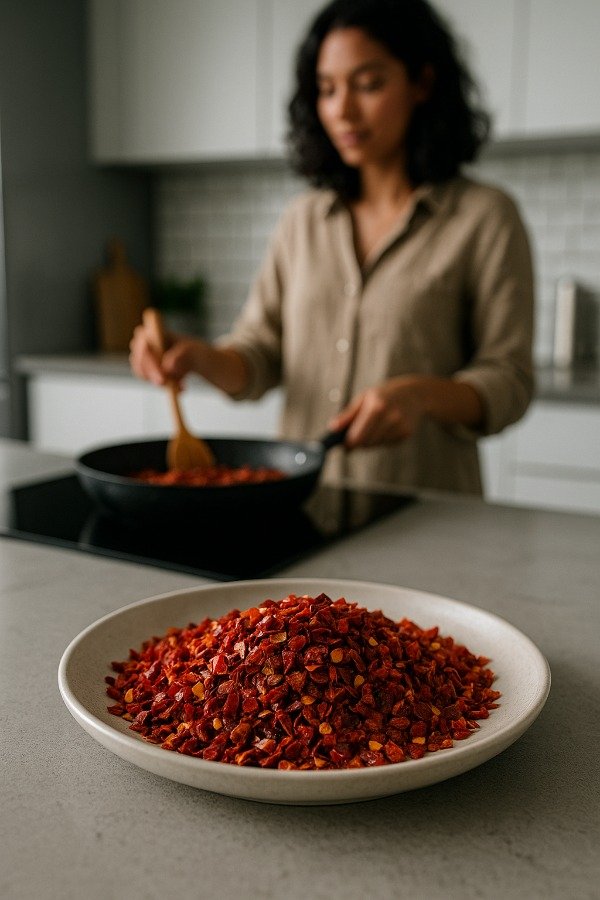
Dried red capsicum flakes is made by dehydrating fresh red capsicum, also known as red bell pepper, until its moisture is removed. This simple process intensifies the natural sweetness, locks in its bright red color, and extends its shelf life for months. The result is a lightweight, shelf-stable ingredient that adds both flavor and color to dishes without spoiling quickly.
In our kitchen, we have noticed something simple but really useful: when you dehydrate red capsicum, its natural sugars become more concentrated. What you get is a deeper, more intense sweetness that works beautifully in slow-cooked curries.
The best part is that you don’t add all that extra moisture you’d get from fresh peppers. So instead of watering down your sauce, you keep it rich, thick, and full of flavor while still getting that gentle natural sweetness from the capsicum.
What’s the difference between dried red capsicum and paprika?
| Feature | 🌶️ Dried Red Capsicum | 🌶️ Paprika |
|---|---|---|
| Form | Flakes or small dried pieces | Fine, smooth powder |
| Texture | Retains a bit of bite and structure | Completely powdery, no texture |
| Cooking behavior | Can be rehydrated in sauces and curries | Blends instantly into dishes |
| Flavor | Mild, naturally sweet pepper flavor | Can be sweet, smoky, or mild depending on type |
| Best use | Curries, stews, spice blends with texture | Seasoning, rubs, garnishes, color enhancement |
| Key difference | Feels like a “real ingredient” in the dish | Works more like a finishing spice or flavor dust |
Dried red capsicum → adds substance
It keeps a bit of body and texture, so it feels like an actual ingredient in the dish (especially in curries, stews, and sauces).Paprika → adds depth
It blends smoothly into food and works more like a seasoning that builds flavor, color, and aroma without changing texture.
So in simple terms:
capsicum = texture and bite (substance)
paprika = background flavor and richness (depth)
How to Use Dried Red Capsicum?
Dried red capsicum is incredibly versatile and can enhance both the flavor and appearance of many dishes:
- Soups and Stews: Add whole or chopped dried capsicum to soups, stews, and casseroles for a natural sweetness and vibrant color.
- Seasoning: Grind into flakes or powder to create flavorful spice blends, rubs, or marinades.
- Rehydrated Recipes: To rehydrate dried capsicum flakes for sauces or savory baking, soak them in boiling water at a 1:2 ratio for 10 minutes, then drain thoroughly before using. Use in stuffed vegetables, stir-fries, or pasta dishes for a fresh-like texture.
- Flavor Boost: Incorporate into dips, sauces, or marinades to infuse a mild, sweet depth to meats, vegetables, and grains.
Whether used as a seasoning or a key ingredient, dried red capsicum adds both visual appeal and a subtle, sweet flavor to your cooking.


Frequently Asked Questions
Can I make dried red capsicum at home?
Yes, you can slice fresh red capsicum and dry it in a dehydrator or in the oven at a low temperature until crisp.
What’s the difference between dried red capsicum and paprika?
While both come from red peppers, they are not the same:
- Dried Red Capsicum: Typically available in flakes or small pieces, it retains some texture and can be rehydrated for cooking.
- Paprika: Finely ground into a smooth powder, it’s primarily used as a seasoning or garnish and often has a slightly smoky or sweet flavor depending on the variety.
How Do I Use Dried Red Capsicum in Cooking?
Dried red capsicum is versatile and easy to incorporate into many dishes:
- Direct Use: Add it straight to soups, stews, sauces, or spice blends for a natural sweetness and vibrant color.
- Rehydrating: Soak the dried pieces in warm water for 15–20 minutes before cooking to restore a softer texture, perfect for stir-fries, stuffed dishes, or sautés.
Is red capsicum spicy?
No, red capsicum is naturally sweet and mild. Unlike chili peppers, it has no heat, making it safe and enjoyable for children and anyone who prefers non-spicy foods.
Which capsicum is the healthiest?
While all capsicums offer valuable nutrients, red capsicum (red bell pepper) stands out as the healthiest. Fully ripened on the vine, it contains the highest levels of vitamin C, vitamin A (from beta-carotene), antioxidants like lycopene and zeaxanthin, and natural sugars that enhance both flavor and nutrient content.
Green, yellow, and orange capsicums are also nutritious, but red capsicums provide the greatest boost for immunity, eye health, and overall antioxidant protection.
Is dried red capsicum spicy or hot?
No, dried red capsicum is mild, sweet, and slightly fruity, unlike chili peppers. It adds natural sweetness and depth to soups, sauces, and dishes without any spiciness, making it a child-friendly and versatile ingredient in the kitchen.
Can I Eat Red Capsicum Raw?
Yes. Eating red capsicum raw preserves its vitamin C and antioxidants while delivering a satisfying crunch and natural sweetness. Slice it into sticks for snacking, toss it into salads, or use it as a colorful, healthy addition to sandwiches and dips.
Why is red capsicum more expensive than green?
Red capsicum costs more because it stays on the plant longer to fully ripen, developing its sweet flavor, higher sugar content, and nutrient-rich profile. This extended growing period increases labor and farming costs, which is reflected in the price at the store.
Final Thoughts
Red capsicum, also known as red bell pepper, is far more than just a colorful addition to your plate. Packed with vitamins, antioxidants, and natural sweetness, it is a vegetable that enhances both flavor and nutrition in countless dishes. From fresh salads and roasted sides to stuffed peppers and hearty stews, red capsicum adds crunch, color, and a subtle, sweet depth to your cooking.
No matter what you call it, capsicum or bell pepper, this versatile vegetable deserves a regular spot in your kitchen. Its vibrant taste, satisfying texture, and impressive health benefits make it an easy choice for anyone looking to cook delicious, wholesome meals. Next time you’re shopping, pick up a few red capsicums and enjoy the bright, flavorful boost they bring to your table.
The content on this blog, including information about, nutrition, and health benefits, is provided for educational and informational purposes only. It is not intended as medical advice, diagnosis, or treatment.
Always consult a qualified healthcare professional or your doctor before starting any new diet, supplement, or health regimen, especially if you are pregnant, breastfeeding, have a medical condition, or are taking medications.
Leena Spices and its team do not accept any liability for any adverse effects or consequences resulting from the use of the information provided on this blog.
Impu Irani is a cookbook author behind Leena Spices, where he shares practical, easy-to-follow guides on homemade spice blends, herbs, and natural cooking. His work helps home cooks create fresh, flavorful meals using simple ingredients and traditional methods. Download his free Spice Blending eBook and start your journey to cleaner cooking today!
Disclosure Note
We are committed to creating high-quality, helpful content for our readers. We do not accept payment in exchange for writing our articles, and we personally cover the costs of running this website, including hosting, tools, and maintenance.
To support the site, we display ads and may earn a small commission from affiliate links if you choose to make a purchase—at no extra cost to you.
Your support helps us continue sharing valuable content with the community.
If you’d like to support us, here are a few simple and free ways:
- Share our content with your friends and family
- Engage with us on social media
- Follow us on Facebook
You can also learn more by visiting our disclaimer page:
https://leenaspices.co.nz/disclaimer/
As a thank you, feel free to download our Free Spice Recipe eBook.
Download a Free Leena Spices Recipes Cookbook