Table of Contents
ToggleUnderstanding How Jaggery Works in Recipes
Before you swap jaggery for another sweetener (or replace white sugar with jaggery), it helps to understand how jaggery behaves in cooking and baking.
Jaggery is sold in several forms, including solid blocks, powdered jaggery, granules, and liquid syrups. All of them deliver a similar rich sweetness, but their texture and ease of use can differ depending on the recipe.
Compared to refined white sugar, jaggery is often seen as slightly less sweet. Because of this, some recipes may need a bit more jaggery to reach the same level of sweetness. But its value goes beyond just sweetness.
Jaggery adds a deep, caramel-like flavor with subtle molasses notes that can bring extra depth to both sweet and savory dishes. It also affects texture by adding moisture and a slight stickiness. In baked goods and desserts, this can result in a softer crumb, a chewier texture, and a richer golden-brown color.
When you substitute jaggery in a recipe, think about more than just sweetness. Consider how it will change the flavor, color, and moisture of the final dish.
- Because jaggery is an unrefined sugar made from concentrated sugarcane juice or date palm sap, it behaves quite differently in the oven than highly processed white sugar. If you’re curious about how it’s made, read our comprehensive guide on What is Jaggery and How to Use It.

Impu Irani is the cookbook author behind Leena Spices , where he shares easy homemade spice blend recipes and practical cooking tips. Read more about him at the end of this post.
The Moisture Factor
One of the main differences between jaggery and white sugar is moisture content. Refined white sugar is almost completely dry, while jaggery naturally contains some moisture because of the molasses that remains after processing. This extra moisture can affect the consistency of a recipe, especially in baking.
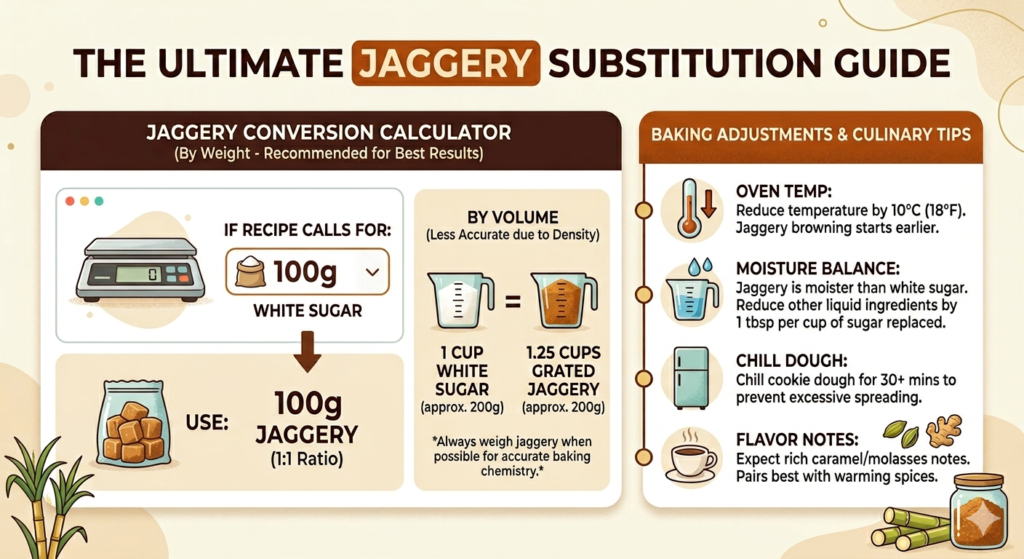
When you replace white sugar with jaggery, cake batters, muffin mixtures, and other baked goods can become slightly thinner. In some cases, this changes the texture of the final product. To keep the right balance, it’s often helpful to reduce another liquid ingredient such as milk, water, or juice by about 1 tablespoon for every cup of jaggery you use.
The Spread Factor
Jaggery behaves differently from white sugar when heated because it melts at a lower temperature. In baking especially with cookies the dough can start to soften and spread on the tray more quickly, before the structure has a chance to set. As a result, cookies made with jaggery often turn out thinner and flatter than expected.
To manage this, controlling the dough temperature before baking is key. A simple and effective technique is to chill the cookie dough in the refrigerator for about 30 minutes. This firms up the fat and slows down the melting process, giving the cookies more time to set in the oven. The result is thicker, softer cookies with a more balanced texture.
The Botanical Pairing Guide
Jaggery is not a single, uniform ingredient, and its flavor can vary depending on the plant it is made from. The two most common sources are sugar cane and date palm, and each brings its own distinct character to cooking.
Sugar cane jaggery has a warm, caramel-like sweetness with light earthy notes. This makes it versatile for everyday baking, desserts, and even savory dishes.
Date palm jaggery, on the other hand, has a deeper, more complex flavor with hints of smokiness and dried fruit. It’s especially well suited for richer recipes like traditional sweets, festive desserts, and spiced preparations.
Understanding the botanical source of jaggery helps you pair it more thoughtfully with other ingredients. Lighter sugar cane jaggery blends well with gentle spices like cinnamon or cardamom, while the stronger profile of date palm jaggery pairs beautifully with bold flavors such as cloves, nutmeg, or ginger.
Take Your Spice Knowledge to the Next Level
Don’t stop at here. Elevate your entire cooking repertoire with my comprehensive book, “Homemade Spice Secrets”. Learn the foundational chemistry of raw vs. bloomed spices for dozens of traditional dishes.
The Secret Chemistry of Baking with Jaggery
Swapping refined white sugar for raw, unrefined jaggery involves more than just adjusting sweetness. It fundamentally changes the chemical reactions that happen in your oven. Refined sugar is almost pure sucrose, which makes its melting, caramelisation, and browning more predictable under heat.
Jaggery, on the other hand, is far less processed. As a result, baked goods made with jaggery often behave differently in terms of texture, color, and overall structure compared to those made with refined sugar.
Unlike highly processed, refined sugars that lose their plant nutrients, unrefined jaggery naturally retains vital micronutrients, including calcium, phosphorus, magnesium, and iron. You can review the complete medical profile on the National Institutes of Health PMC database
- Many home cooks switch to this traditional sweetener for its natural trace minerals and lower glycemic impact. You can see the full breakdown of how it stacks up nutritionally in our deep-dive look at Jaggery vs. Sugar.
1.The Caramelization and Browning Shift
Refined white sugar begins to caramelize at around 160°C, which makes its browning behaviour relatively predictable in baking.
Jaggery, however, contains a mix of residual moisture, invert sugars, natural fructose, glucose, molasses compounds, and trace minerals from plant source. These components influence how it melts, interacts with flour and fats, and responds to oven temperatures.
This difference is important when baking. If you use jaggery in a standard cake or cookie recipe without adjusting the heat, the surface can brown too quickly. In some cases, it may even develop a slightly bitter or burnt taste before the inside is fully cooked.
The Baker’s Rule: A simple adjustment helps avoid this issue: reduce the oven temperature by about 10°C and extend the baking time by 2–4 minutes. This allows the baked item to cook evenly while still achieving a rich, golden colour without over-browning. Because unrefined sweeteners alter the pasting temperature of wheat flour and change the specific gravity of baking batters, adjustments to your recipes are essential for structural success, as detailed in food technology rheology studies.
2. The Volume vs. Weight Dilemma
One of the most common mistakes when substituting white sugar with jaggery is measuring by volume instead of weight. This small oversight often leads to inconsistent results in baking, even when the recipe seems to be followed correctly.
Refined white sugar is crystalline, dry, and relatively dense, which means it packs tightly into a measuring cup. In contrast, grated or powdered jaggery is lighter and more irregular in texture. It often contains air pockets and natural moisture from molasses, making it less dense overall.
Because of this difference, a direct 1:1 cup substitution does not provide equal sweetness or structure. In fact, replacing 1 cup of white sugar with 1 cup of grated jaggery can result in using up to 25% less sugar by weight. This imbalance can affect the chemistry of the bake, influencing browning, moisture levels, and the final texture of the product. For more consistent results, weighing ingredients rather than relying on volume measurements is far more reliable.
3. The Acidity Warning
Raw jaggery has a mildly acidic nature, which can influence how leavening agents behave in baking. This is especially important in recipes that depend heavily on baking soda for rise and structure.
When you substitute jaggery for refined sugar, its acidity can trigger a faster reaction with baking soda. This may cause the batter or dough to rise too quickly in the oven and then collapse before it fully sets, resulting in a dense or uneven texture.
To help stabilize the structure, make a small adjustment to the leavening balance. Adding a tiny pinch of baking powder can provide additional support, helping the baked goods rise more evenly and maintain their shape throughout the baking process.
The Jaggery Conversion Calculator & Sugar Substitution Guide
🍯 Jaggery Conversion Calculator
Required Jaggery Amount:
Reduce your oven temperature by 10°C and reduce liquid ingredients in your recipe by 1 tablespoon per cup to account for jaggery’s natural molasses moisture.
Put This Jaggery Chemistry into Action with 8 Easy Jaggery Recipes
Jaggery Substitution Comparison Matrix
Sweetener Being Replaced | Swap Ratio (By Weight) | Swap Ratio (By Volume) | Essential Kitchen Adjustments |
White Granulated Sugar | 1:1 (e.g., 100g sugar = 100g jaggery) | 1:1.25 (about 1 cup + 4 tbsp grated jaggery for every 1 cup sugar) | Reduce baking temperature by about 10°C, as jaggery caramelises and browns faster than white sugar. |
Dark/Light Brown Sugar | 1:1 | 1:1 (pack grated jaggery firmly into the cup) | Direct swap in most recipes. Works especially well in cookies, banana bread, blondies, and sticky baked goods. |
Coconut Palm Sugar | 1:1 | 1:1 | Jaggery is slightly more moist, but it closely matches the earthy, toffee-like flavour profile of coconut sugar. Minor texture adjustments may be needed in delicate bakes. |
Quick-Reference Jaggery Conversion Matrix
If you don’t have your exact recipe weights handy, use this standardized kitchen conversion chart to quickly swap white granulated sugar or packed brown sugar for grated/powdered jaggery.
Note: For the absolute best results in structural baking (like cakes and biscuits), always use a digital kitchen scale to measure your jaggery by grams. Because jaggery can be packed tightly or grated fluffily, volume measurements (cups) can vary wildly!
If Your Recipe Calls For: | Use This Much Jaggery (By Weight) | Approx. Volume (Grated/Powdered) | Essential Baking Adjustment |
1 Teaspoon | 4 grams | 1 Teaspoon | Direct 1:1 swap for hot drinks. |
1 Tablespoon | 12.5 grams | 1.25 Tablespoons | Great for marinades and dressings. |
¼ Cup | 50 grams | ⅓ Cup (Generous) | Chill dough for 15 minutes. |
⅓ Cup | 67 grams | 🥞 Approx. ½ Cup | Reduce other liquids by ½ tsp. |
½ Cup | 100 grams | ⅔ Cup | Reduce other liquids by 1.5 tsp. |
1 Cup | 200 grams | 1 ¼ Cups | Lower oven temp by 10°C; reduce liquid by 1 tbsp. |
2 Cups | 400 grams | 2 ½ Cups | Lower oven temp by 10°C; reduce liquid by 2 tbsp. |
Frequently Asked Questions About Cooking with Jaggery
Can I use block jaggery directly in baking, or do I need to prepare it?
You should never drop chunks or blocks of jaggery directly into a batter or dough. They won’t dissolve properly and will leave burnt, sticky pockets in your baked goods. Always prepare block jaggery first by grating it with a box grater, shaving it finely with a sharp knife, or pulsing it in a food processor until it becomes a uniform, powdery texture before measuring.
Why did my milk curdle when I added jaggery to my tea/chai?
Raw sugar cane jaggery naturally contains trace amounts of plant minerals and organic acids. If you boil jaggery directly with dairy milk over high heat, these acids will cause the milk to curdle instantly. To prevent this, always brew your tea and milk first, remove the pot completely from the heat source, and then stir in your jaggery powder at the very end.
Can I substitute liquid jaggery (Nolen Gur) for solid sugar?
Liquid jaggery behaves very differently from granulated sweeteners, and it should be treated more like honey or maple syrup than white sugar. Because it is already in syrup form, it introduces a significant amount of additional moisture into any recipe.
When substituting liquid jaggery for white sugar in baking, it is important to account for this extra liquid. Otherwise, the batter can become too thin, which affects structure, texture, and overall bake quality.
As a general guideline, reduce the other liquid ingredients in the recipe—such as milk or water—by approximately 25%. This adjustment helps restore balance, ensuring the batter remains stable and bakes evenly without becoming overly runny.
How should I store my jaggery so it doesn't go hard?
Because jaggery is unrefined and naturally contains moisture, it can dry out and harden when exposed to air for long periods. The best way to store jaggery is in an airtight glass jar or a well-sealed container, kept in a cool, dark pantry away from direct heat and humidity changes. This helps preserve its natural moisture and prevents it from becoming overly dry or brittle.
If a block of jaggery does become hard over time, it can still be softened. Place it in a microwave-safe bowl, cover it with a slightly damp paper towel, and heat it on low power for 10–15 seconds. This gentle warming helps loosen the texture, making it easier to break or grate for cooking and baking.
Medical Disclaimer:
The information provided in this article is for educational and informational purposes only and is not intended as medical advice. Always consult a qualified healthcare provider before starting any new dietary supplement, herbal remedy, or wellness routine, especially if you have underlying health conditions, are pregnant or breastfeeding, or are taking prescription medications.
Impu Irani is a cookbook author behind Leena Spices, where he shares practical, easy-to-follow guides on homemade spice blends, herbs, and natural cooking. His work helps home cooks create fresh, flavorful meals using simple ingredients and traditional methods. Download his free Spice Blending eBook and start your journey to cleaner cooking today!
Disclosure Note
We are committed to creating high-quality, helpful content for our readers. We do not accept payment in exchange for writing our articles, and we personally cover the costs of running this website, including hosting, tools, and maintenance.
To support the site, we display ads and may earn a small commission from affiliate links if you choose to make a purchase—at no extra cost to you.
Your support helps us continue sharing valuable content with the community.
If you’d like to support us, here are a few simple and free ways:
- Share our content with your friends and family
- Engage with us on social media
- Follow us on Facebook
You can also learn more by visiting our disclaimer page:
https://leenaspices.co.nz/disclaimer/
As a thank you, feel free to download our Free Spice Recipe eBook.
Download a Free Leena Spices Recipes Cookbook