Table of Contents
ToggleWhat Are Whole Dried Galangal Slices?
Dried galangal slices are thin, intensely concentrated pieces of the Alpinia galanga rhizome. Though closely related to ginger, galangal delivers a distinctly different profile. With a bright, citrusy, and subtly pine-like taste galangal is a defining aromatic in Southeast Asian cuisine.
The fresh root of galangal’s natural aromatic compounds are preserved through gentle dehydration and concentration. This shelf-stable spice develops a deeper, more resonant warmth when slowly simmered in cooking, especially in long-cooked dishes where time allows its flavors to fully unfold.
Whole dried galangal slices are the secret to building deep flavor profiles in long, slow-cooked dishes. If you are ready to put this flavor depth to the test, check out our Step-by-Step Guide to Making the Perfect Rendang Spice Blend, which relies heavily on a balanced profile of galangal, lemongrass, and warm spices.
Whether you are recreating an authentic Thai Tom Kha Gai, building rich curry pastes, or preparing a comforting herbal infusion, learning how to work with dried galangal can significantly elevate your home cooking.
The Unified Substitution Rule
Because the drying process heavily concentrates its essential oils and flavors, dried galangal is significantly more potent than fresh root. To ensure your dishes stay perfectly balanced, follow this simple galangal conversion calculator.
🌿 Dried Galangal Substitution Calculator
Your Leena Spices Substitution:
Note: Dried galangal is highly concentrated. Simmer for at least 20 mins!

Impu Irani is the cookbook author behind Leena Spices , where he shares easy homemade spice blend recipes and practical cooking tips. Read more about him at the end of this post.
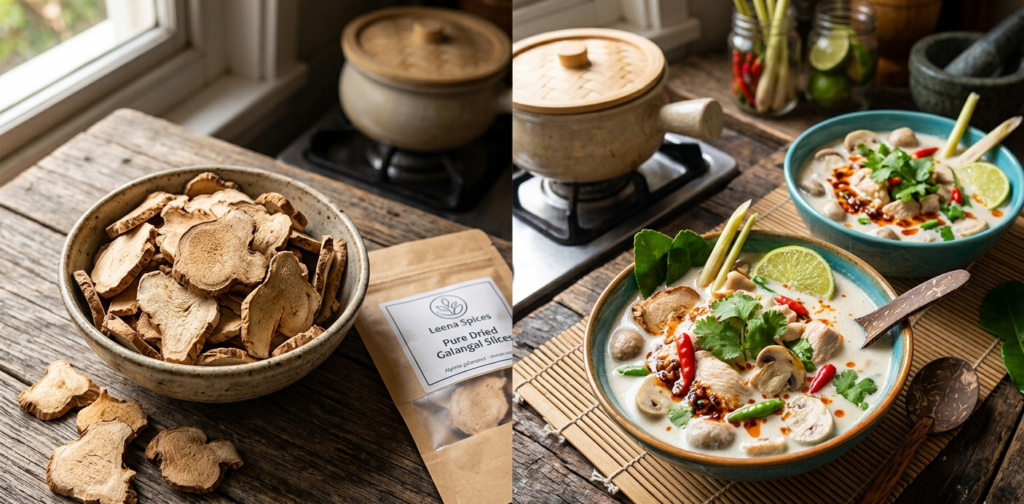
Fresh vs Dried Galangal (Comparison Table)
| Feature | Fresh Galangal Root | Whole Dried Galangal Slices |
| Flavor & Aroma | Sharp, citrusy, pine-like, and fiery with a crisp, earthy bite. | Deep, intensely concentrated, warm, with resonant woody and citrus undertones. |
| Texture & Form | Firm, fibrous, and crunchy; easy to grate or slice thinly. | Hard, woody, and dehydrated; locks in essential oils for a long shelf-life. |
| The Substitution Rule | 3 parts fresh = 1 part dried (e.g., Use a 2-inch fresh piece if a recipe calls for it) | 1 part dried = 3 parts fresh (e.g., Use 2 to 3 whole dried slices to replace a fresh piece) |
| Best Used In | Crisp stir-fries, fresh curry pastes (pounded in a mortar), and quick-cook seafood dishes. | Slow-simmered broths (Tom Kha, Tom Yum), long-braised curries, herbal teas, and infused oils. |
| Preparation Trick | Peel the thin skin and slice across the grain or finely grate. | Simmer directly into liquids for 20+ minutes, or rehydrate in hot water for 15 minutes before crushing. |
| Storage Life | 2–3 weeks in the refrigerator (wrapped tightly). | 1–2 years in an airtight container away from direct sunlight. |
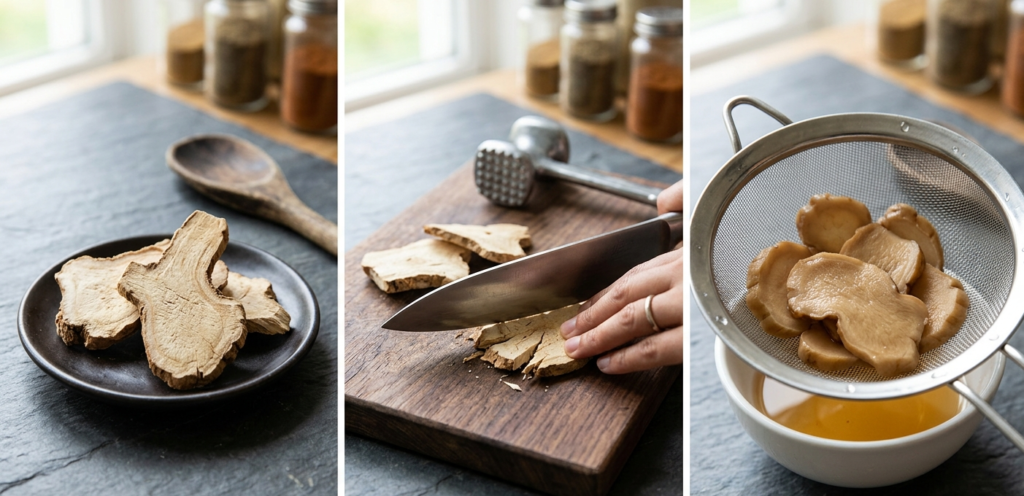
Look at the transformation in texture. When you gently smash or bruise a dried galangal slice with the flat side of a heavy knife (Panel 2), you begin to open up its tightly compressed structure. This crucial step—always done before soaking (Panel 3)—creates micro-fractures that allow liquid to penetrate more effectively.
As a result, the simmering broth can extract the spice’s deep aromatic compounds more efficiently, unlocking its full depth of flavor for curries, soups, and slow-cooked dishes.
📖 Tired of Bland, Store-Bought Flavors?
Most pre-packaged grocery store spice mixes sit on shelves for months, losing their essential oils and aroma long before they ever reach your kitchen. If you want to replicate authentic, restaurant-quality Thai curries, rich Malaysian Rendang, and aromatic masalas, the secret lies in mastering your own fresh, whole-spice ratios at home.
In my complete kitchen guide, Homemade Spice Secrets, I pull back the curtain on roasting, blending, and utilizing over 200 global herbs, botanical roots, and signature spice profiles from scratch.
Instant Digital Download • 30-Day Money-Back Guarantee
7 Secrets to Master Whole Dried Galangal Slices
Whole dried galangal is a culinary powerhouse packed with deep, aromatic flavor. When used correctly, it releases layers of warm, citrusy, and earthy complexity that fresh galangal simply cannot replicate. From proper preparation to the right cooking techniques, here is how to unlock the full potential of this traditional spice like a pro.
Secret 1: Using Whole Dried Galangal for Maximum Flavor
Whole dried galangal slices are best used as a flavor-infusing ingredient. Their tough, woody texture makes them unsuitable for eating directly, but when prepared correctly, they add earthy, peppery, and citrusy notes to soups, stews, and curries.
How to Use Whole Dried Galangal:
- Soak: Rehydrate the slices in warm water for 15–30 minutes to soften them.
- Bruise or Crack: Lightly press, smash, or crack the slices to release essential oils and flavor compounds.
- Add Early: Place the prepared slices in broths, soups, or curries at the beginning of cooking to allow full infusion.
- Simmer: Let them cook for at least 15–20 minutes, or for the entire duration in slow-simmered dishes.
Removing Dried Galangal Before Serving
Even after soaking or cooking, whole dried galangal slices remain tough and fibrous, making them unsuitable for eating. For the best dining experience, remove the slices from the dish before serving, just as you would with bay leaves or other infusing herbs. If the slices remain in the pot, it’s important to warn diners not to consume them, as their texture can be unpleasant and difficult to chew.
Secret 2: Grinding Dried Galangal for Powder or Paste
Dried galangal can be prepared as powder or paste to meet a variety of culinary needs, though its tough, fibrous texture means some care is required during processing. Grinding or soaking and pounding the slices unlocks their distinctive earthy, peppery, and citrusy flavor, making it easier to incorporate into dishes. Whether used in spice blends, marinades, curries, or slow-cooked broths, powdered or paste form provides a convenient, versatile way to add authentic Southeast Asian flavor to both traditional recipes and modern culinary creations.
- Rehydrate (Optional): Soak slices in warm water for 15–30 minutes to soften before making a paste
- Grinding into Powder (Optional):
Break the dried slices into smaller pieces and use a spice grinder or mortar and pestle to grind them into a fine powder. For an extra boost of aroma, you can lightly toast the slices in a dry pan before grinding. The resulting powder is excellent for spice blends, rubs, or marinades, and it stores well when kept in an airtight container. - Grinding into Paste:
If your recipe calls for a paste, rehydrate the slices first by soaking in warm water for 15–30 minutes. Then grind them in a mortar and pestle until smooth. Because dried galangal is fibrous, creating a paste takes some effort, but the result is a rich, aromatic base for curries, marinades, and spice rubs. Once rehydrated and finely minced, galangal acts as a major aromatic pillar for complex noodle broths. See how it works in action by following our recipe for Authentic Homemade Laksa Spice Blend and Paste to bring vibrant Malaysian flavor straight to your kitchen
Dried Galangal Spice Blend
Create a versatile and aromatic spice blend using dried galangal as the star ingredient. This blend works beautifully for seasoning meats, vegetables, or even adding a gourmet twist to snacks like popcorn.
Ingredients:
- 1 tablespoon dried galangal, ground into powder
- 2 tablespoons ground coriander
- 1 tablespoon ground cumin
- 1 teaspoon ground turmeric
- Optional: ½ teaspoon black pepper or chili powder for heat
Instructions:
- Grind the Galangal: If not already powdered, grind the dried galangal slices using a spice grinder or mortar and pestle until fine.
- Combine Spices: In a small bowl, mix the galangal powder with coriander, cumin, turmeric, and optional spices.
- Store: Transfer the blend to an airtight container and store in a cool, dark place for up to six months.
- Use: Sprinkle over roasted vegetables, mix into marinades for meats, or even dust over popcorn or rice dishes for a unique aromatic flavor.
This spice blend showcases dried galangal’s earthy, peppery, and citrusy notes, elevating everyday dishes into aromatic, flavor-packed creations. Ground or rehydrated galangal delivers the unmistakable earthy, citrusy punch that defines many Southeast Asian stir-fries, adding the warm, aromatic backbone essential for dishes like authentic Indonesian Bami Goreng.
Secret 3: Marinating Meats with Dried Galangal
Dried galangal’s bold, earthy, and slightly citrusy flavor makes it an ideal ingredient for marinating meats, particularly poultry and seafood. Beyond adding depth, galangal contains natural enzymes that can help tenderize meat, resulting in juicy, flavorful dishes.
How to Prepare Galangal for Marinades:
- Soak: Rehydrate dried slices in warm water until soft.
- Crush or Grate: Lightly crush or grate the softened galangal to release essential oils and maximize flavor infusion.
- Combine: Mix with other marinade ingredients such as garlic, lemongrass, chili, soy sauce, and a touch of citrus.
- Marinate: Coat your meat and allow it to marinate for at least 2 hours. For a stronger, more aromatic flavor, marinate overnight.
Recipe Idea: Galangal-Lemongrass Chicken Create a fragrant and flavorful marinade by combining dried galangal, lemongrass, garlic, soy sauce, and a hint of honey. Marinate chicken pieces thoroughly, then grill or bake until cooked through. The result is aromatic, tender, and deeply flavorful chicken that highlights the unique character of galangal.
Secret 4: Crafting Authentic Spice Pastes with Dried Galangal
In many Southeast Asian cuisines, spice pastes form the essential flavor foundation for curries, soups, and stews. Dried galangal is often a key ingredient, providing earthy, peppery, and citrusy notes that elevate the overall taste. The secret to a great paste lies in balancing flavors so that each ingredient complements the others without overpowering the dish.
How to Make Galangal Spice Paste:
- Soak: Rehydrate the dried galangal slices in warm water until softened.
- Combine Ingredients: Mix with fresh herbs and aromatics such as cilantro roots, shallots, garlic, lemongrass, and chilies.
- Blend: Use a food processor or mortar and pestle to grind the mixture into a smooth, fine paste.
- Store: Transfer to an airtight container and refrigerate for up to one week. For longer storage, freeze in small portions.
Recipe Idea: Thai Red Curry Paste
Combine dried galangal, red chilies, garlic, shallots, and kaffir lime leaves to create a fragrant Thai red curry paste. Use it in curries, stir-fries, or soups to impart a complex, aromatic base that is unmistakably Southeast Asian.
Read Leena Spices Post “How to make Thai Red Spice Blend”
Secret 5: Brewing Galangal Tea – A Soothing Herbal Beverage
Dried galangal slices can be transformed into a warming, aromatic tea that’s not only delicious but also supports digestion and helps soothe colds or sore throats. Its earthy, peppery, and slightly citrusy notes create a comforting herbal drink perfect for any season.
How to Make Galangal Tea:
- Boil Water: Bring a pot of water to a gentle boil.
- Add Galangal: Drop in 2–3 whole dried galangal slices.
- Simmer: Let the slices simmer for about 10 minutes to fully extract their flavor.
- Strain and Serve: Strain the tea into cups and add honey or a squeeze of lemon to enhance both taste and health benefits.
Variations:
- Add warming spices like cinnamon, star anise, or cloves for a spiced version.
- Serve the tea hot for a soothing drink or chilled for a refreshing beverage during warmer months.
This simple preparation allows you to enjoy the therapeutic and aromatic qualities of galangal in a versatile, easy-to-make herbal tea.
Secret 6: Incorporating Galangal into Desserts – A Surprising Sweet Element
Although dried galangal is commonly associated with savory dishes, its earthy, peppery, and citrusy notes can add a unique twist to desserts. When infused into creams, custards, or syrups, it introduces an exotic, aromatic flavor that complements sweetness beautifully.
How to Use in Desserts:
- Infuse: Add whole dried galangal slices to coconut milk, cream, or simple syrup and gently simmer to extract the flavor.
- Remove Slices: Strain out the galangal before combining with other dessert ingredients.
- Pair with Fruits or Cakes: Use the infused liquid as a syrup for fruit salads, drizzle over cakes, or incorporate into custards and puddings.
Recipe Idea: Galangal-Infused Coconut Custard
- Gently heat coconut milk with 2–3 dried galangal slices until aromatic.
- Remove the galangal and combine the milk with sugar and eggs to create a custard base.
- Bake or steam according to your favorite custard recipe.
The result is a delicately spiced dessert with a subtle citrusy warmth, perfect for impressing guests at a dinner party or adding an unexpected twist to everyday sweets.
Secret 7: Galangal-Infused Oils and Vinegars – Adding Flavor to Your Pantry
Whole dried galangal slices can be used to infuse oils and vinegars, creating aromatic condiments that elevate a variety of dishes. These infusions are simple to make and versatile, perfect for dressings, marinades, stir-fries, or as a finishing touch for cooked meals. The subtle, peppery, and citrusy notes of galangal lend a unique depth to both cooking and raw applications.
How to Make Galangal-Infused Oils or Vinegars:
- Heat the Base: Gently warm a neutral oil (like grapeseed or sunflower) or vinegar (such as rice vinegar) over low heat.
- Add Galangal: Drop in dried galangal slices and let them steep for 15–20 minutes, ensuring the flavors infuse evenly.
- Cool: Remove from heat and allow the mixture to cool.
- Strain: Filter out the galangal slices to leave a smooth, aromatic infusion.
- Store: Pour into a sterilized, airtight container and store in a cool, dark place.
These infused oils and vinegars are a convenient way to add complexity to your everyday cooking, allowing the unique aroma of galangal to enhance a wide range of dishes with minimal effort.
Is Galangal Good for Digestion?
Galangal has a long history as a digestive aid across Ayurvedic, Traditional Chinese, Unani, and Southeast Asian medicine. It is especially valued for easing bloating, gas, and sluggish digestion, and for supporting overall gut function.
How Galangal Supports Digestive Health
Galangal works through several well-known herbal actions that directly benefit the digestive system:
Relieves Bloating, Gas, and Digestive Discomfort
Galangal is widely recognized as a natural carminative, meaning it helps reduce gas buildup and relieve abdominal bloating. It also has mild antispasmodic properties, which can relax the muscles of the digestive tract and ease cramping or stomach discomfort.
Because of these effects, galangal can be especially helpful if you often experience:
- Bloating after meals
- Excess gas or abdominal pressure
- A heavy, slow-digesting feeling in the stomach
Improves Digestion and Nutrient Absorption
Galangal supports more efficient digestion by helping your body properly break down food. It works by naturally stimulating key digestive processes, including:
- Stomach acid (gastric secretions) – essential for initiating digestion and breaking down proteins
- Digestive enzymes – which help process carbohydrates, fats, and proteins more effectively
- Bile flow – crucial for digesting fats and preventing that heavy, greasy feeling after meals
Supports Gut Motility
Galangal may help improve gastric motility, which is the natural movement of food through your digestive tract. When this process slows down, it can lead to discomfort and inefficient digestion.
By gently supporting this movement, galangal can help:
- Reduce sluggish or slow digestion
- Prevent the uncomfortable “overly full” feeling after meals
- Ease mild constipation linked to delayed gut transit
Promotes a Healthier Gut Environment
Galangal contains powerful bioactive compounds—such as galangin, phenolic compounds, and essential oils (including 1,8-cineole)—that help support overall gut health at multiple levels.
These compounds provide:
- Anti-inflammatory benefits, which help soothe and protect the gut lining
- Antimicrobial properties, supporting a healthier balance of gut bacteria
- Antioxidant support, reducing oxidative stress that can affect digestive function
Together, these actions create a more balanced and resilient digestive environment, helping your gut function more efficiently while reducing irritation and discomfort over time.
Some early research suggests it may help inhibit harmful bacteria like Helicobacter pylori, which is linked to stomach ulcers.
Medical Disclaimer:
The information provided in this article is for educational and informational purposes only and is not intended as medical advice. While Galangal has been associated with health benefits, it should not be used as a substitute for professional medical care, diagnosis, or treatment. Always consult a qualified healthcare provider before starting any new dietary supplement, herbal remedy, or wellness routine, especially if you have underlying health conditions, are pregnant or breastfeeding, or are taking prescription medications.
Impu Irani is a cookbook author behind Leena Spices, where he shares practical, easy-to-follow guides on homemade spice blends, herbs, and natural cooking. His work helps home cooks create fresh, flavorful meals using simple ingredients and traditional methods. Download his free Spice Blending eBook and start your journey to cleaner cooking today!
Disclosure Note
We are committed to creating high-quality, helpful content for our readers. We do not accept payment in exchange for writing our articles, and we personally cover the costs of running this website, including hosting, tools, and maintenance.
To support the site, we display ads and may earn a small commission from affiliate links if you choose to make a purchase—at no extra cost to you.
Your support helps us continue sharing valuable content with the community.
If you’d like to support us, here are a few simple and free ways:
- Share our content with your friends and family
- Engage with us on social media
- Follow us on Facebook
You can also learn more by visiting our disclaimer page:
https://leenaspices.co.nz/disclaimer/
As a thank you, feel free to download our Free Spice Recipe eBook.


FAQs
What does dried galangal taste like compared to fresh?
Dried galangal has a stronger, earthier, and slightly more bitter flavor than fresh. The citrusy brightness fades a bit during drying, while its woody and peppery notes become more concentrated.
Can I eat the slices after cooking?
Not really. Even after simmering, dried galangal slices remain tough and fibrous. They’re best treated like bay leaves—used for infusion and removed before serving.
How much dried galangal should I use instead of fresh?
Since dried galangal is more concentrated, use about one-third the amount of dried slices compared to fresh. For example, 1 tablespoon of rehydrated dried galangal equals about 3 tablespoons of fresh.
What’s the best way to rehydrate dried galangal?
Soak slices in warm water for 15–30 minutes before cooking. If you’re short on time, you can drop them directly into simmering liquid, though soaking gives you better control of flavor intensity.
Can I grind dried galangal into powder at home?
Yes! Break the slices into small pieces, then grind them in a spice grinder or mortar and pestle. Toasting the slices lightly before grinding can boost their aroma.
Is dried galangal the same as ginger?
No. While they’re related, ginger is sweeter and warmer, while galangal is sharper, piney, and more peppery. Substituting one for the other changes the dish’s character, though in a pinch ginger can be used with a squeeze of lime for brightness.
What dishes benefit most from dried galangal?
Dried galangal shines in slow-cooked dishes like curries, soups, stews, broths, and marinades. It’s a staple in Southeast Asian cuisine, particularly Thai and Indonesian recipes like Tom Yum, Tom Kha Gai, and Rendang.
How should I store dried galangal slices?
Keep them in an airtight container in a cool, dark, and dry place, like a pantry or spice cabinet. Properly stored, they can last for up to two years while maintaining good potency.
Can dried galangal be used in desserts?
Yes! Its subtle citrusy and spicy notes can be infused into coconut milk, syrups, or custards, adding an exotic twist to sweets like puddings, ice creams, and fruit salads.
Conclusion
Dried galangal slices are much more than just a substitute for fresh root. They are a unique spice with bold, earthy, and slightly peppery flavors that can elevate a wide range of dishes. From rich broths and curries to teas, marinades, desserts, and infused oils, galangal brings depth and authenticity to your cooking.
When you learn how to soak, bruise, grind, or infuse dried galangal properly, you unlock its full flavor and aroma. This allows you to create dishes with greater richness and character, whether you are a home cook or an experienced chef.
Think of galangal as more than just a spice. It is a connection to tradition, flavor, and creativity in the kitchen. Once you start using it, it quickly becomes a versatile, long-lasting ingredient you’ll always want to have on hand.