Table of Contents
ToggleWhat is Pumpkin Spice?
Pumpkin spice is a warm, aromatic spice blend commonly used in baking and seasonal drinks, especially during autumn. It is a carefully balanced mixture of spices that are traditionally associated with pumpkin-based desserts like pumpkin spice pie.
The blend is designed to create a comforting flavour profile that is sweet, spicy, and slightly earthy. Each spice contributes a specific role, and together they form a smooth, layered aroma that enhances both sweet and savoury recipes.

Impu Irani is the cookbook author behind Leena Spices , where he shares easy homemade spice blend recipes and practical cooking tips. Read more about him at the end of this post.
Why Is Pumpkin Spice So Popular?
Pumpkin spice blend is so popular because of its strong connection to nostalgia and emotional comfort. Warm, familiar aroma of pumpkin brings back happy memories of home cooking, family gatherings, and festive moments. It is also deeply tied to seasonal and cultural traditions. Because pumpkin spice appears mainly during autumn, it signals the arrival of cooler weather and the start of holiday baking season.
Why Do People Love Pumpkin Spice so Much
1. Seasonal Scarcity Creates Demand
Since pumpkin spice blend is closely linked to autumn and early winter, it has seasonal time availability. This naturally drives demand. Because it only appears during a specific season, it creates a sense of scarcity and urgency.
Each year, when pumpkin spice products return, they act as a clear signal that fall has begun. This builds anticipation and excitement, encouraging people to enjoy it while it is available.
How Pumpkin Spice Triggers Emotion and Cravings
- Direct link to the emotional brain
Unlike other senses, smell goes straight to the part of the brain that controls emotion and memory. This means aromas like cinnamon or nutmeg can instantly bring back past experiences without conscious effort. - Strong sensory associations
Pumpkin spice acts as a sensory “anchor,” linking its aroma to positive, familiar environments:
- Home and comfort: the smell of baking and warm kitchens
- Social connection: family gatherings and holiday traditions
- Safety and coziness: that calm, sheltered feeling during colder months
These repeated associations make the scent feel comforting and familiar.
- Feel-good brain response
When these smells trigger happy memories, the brain may release dopamine, a chemical linked to pleasure and reward. This creates a subtle “feel-good” effect, which is why pumpkin spice often feels comforting. - Cultural influence strengthens the effect
In many cultures, spices like cinnamon, nutmeg, and cloves are closely tied to festive and holiday seasons. Because these associations are shared socially, they reinforce individual emotional responses and make the experience even more meaningful.
3. A Perfectly Balanced Flavor Profile
Pumpkin spice is so widely used because it delivers a well-balanced and layered flavor. Each spice plays a specific role:
- Cinnamon adds natural sweetness and warmth
- Ginger brings a mild, gentle heat
- Nutmeg provides earthy depth
- Cloves or allspice add a sharp, slightly bold finish
This combination creates a flavor that feels warm, rich, and rounded, without being overpowering.
- Sweet recipes: pies, cookies, cakes, and lattes
- Savory dishes: roasted vegetables, soups, and hearty stews
Very few spice blends are this flexible. That versatility makes pumpkin spice easy to use in everyday cooking, whether you’re baking, brewing, or preparing savory meals.
4. From Spice Blend to Cultural Phenomenon
In the United States, pumpkin spice has become a recognizable symbol of fall. It now represents a shared seasonal identity tied to comfort, tradition, and autumn culture.
Each year, the arrival of pumpkin spice products serves as a clear cultural signal that fall has begun, building excitement around the season.
Expansion Beyond Food
This seasonal trend now appears across many industries, including:
- Coffee drinks and seasonal lattes
- Baked goods and desserts
- Packaged snacks
- Candles and home fragrances
What began as a simple spice blend used in baking has grown into a multi-billion-dollar seasonal market. Its success is driven less by the ingredient itself and more by the emotional and cultural meaning attached to it.
When Does Pumpkin Spice Season Start?
“Pumpkin spice season” is not an official calendar season. It is driven mainly by retail launches, café menus, and seasonal marketing trends. However, it follows a fairly consistent global pattern based on geography and climate.
Northern Hemisphere (United States, UK, Europe, Asia)
In the Northern Hemisphere, pumpkin spice season typically begins in late August and peaks in October.
- Late August (Unofficial start): Major brands and coffee chains launch pumpkin spice products, marking the beginning of the season.
- September: Interest grows as temperatures cool, and pumpkin spice becomes a strong cultural trend.
- October (Peak season): Demand is highest, especially around Halloween and autumn celebrations.
- Late November: The season fades and shifts toward winter flavors like gingerbread, cinnamon, and peppermint.
Southern Hemisphere (New Zealand, Australia)
In countries like New Zealand and Australia, the seasonal pattern is reversed, but pumpkin spice still follows both climate and global marketing trends.
- March–April: Aligns with local autumn, creating a natural seasonal fit for pumpkin spice products.
- September–October: A second wave of popularity occurs due to global marketing, social media trends, and international café menus.
Regional Differences in Pumpkin Spice Trends
- North America: Strongest market, driven by coffee chains, snacks, baked goods, and seasonal home fragrances.
- Asia-Pacific: Growing popularity, especially in cafés and fusion-style desserts in countries like India and China.
- Europe: More traditional approach, focusing on baking flavors like apple, cinnamon, and caramel, though pumpkin spice is increasingly common in urban cafés.
Pumpkin spice season is not just about weather. It is a global marketing-driven experience. Its timing is shaped by both local seasonal changes and worldwide cultural influence, making it one of the most recognizable seasonal food trends in the world.
Pumpkin Spice Season Timing Around the World
| Region | When Pumpkin Spice Season Starts | Peak Period | When It Ends | Key Characteristics |
|---|---|---|---|---|
| Northern Hemisphere (USA, UK, Europe, Asia) | Late August (retail/café launches) | September–October | Late November | Strong commercial push; tied to autumn, Halloween, and fall weather changes |
| Southern Hemisphere (New Zealand, Australia) | March–April (local autumn) | March–April + secondary wave in Sept–Oct | May (local season ends) | Local seasonal alignment plus global social media influence |
| North America (focus market) | Late August | September–October (highest demand) | November | Dominated by coffee chains, snacks, baked goods, and seasonal branding |
| Asia-Pacific (India, China, etc.) | Varies; often late summer or autumn | September–October | November | Rapidly growing trend in cafés, desserts, and fusion products |
| Europe | September | October | November | More traditional baking focus; pumpkin spice used alongside apple, cinnamon, caramel flavors |
Does Pumpkin Spice Contain Real Pumpkin?
No, pumpkin spice does not contain real pumpkin. It is a spice blend made to flavor pumpkin-based foods, not a mixture made from the vegetable itself.
1. What is Pumpkin Spice Made of ?
Classic pumpkin spice is made from a combination of ground spices, typically:
- Cinnamon
- Nutmeg
- Ginger
- Cloves
- Sometimes allspice
These spices are chosen because they naturally enhance the mild, earthy flavor of pumpkin and other squash-based dishes.
2. How it became a commercial flavor
In its modern form, pumpkin spice is used as a flavor profile by food and beverage companies, especially coffee chains. Early versions were designed to mimic the taste of pumpkin pie using:
- Spice extracts
- Natural and artificial flavorings
- No real pumpkin content
The main goal was not to include pumpkin itself, but to recreate the familiar taste and feeling of pumpkin pie through spices.
3. Modern updates and consumer demand
As demand for cleaner labels and transparency increased, some brands began adding small amounts of real pumpkin purée to certain products.
However:
- The pumpkin itself contributes mostly to texture and color
- The dominant flavor still comes from the spice blend
As demand for cleaner labels and greater transparency has grown, some brands have started adding small amounts of real pumpkin purée to certain products.
Can I Make My Own Homemade Pumpkin Spice?
Yes, you can easily make your own pumpkin spice at home. As more consumers become health-conscious and ingredient-aware, there has been a growing shift toward making homemade pumpkin spice blends instead of buying pre-made versions.
Why People Are Making It at Home
Making your own pumpkin spice blend is becoming more popular because it offers simple, practical benefits:
- No added sugars or artificial flavors
- Full control over ingredient quality and freshness
- Customizable flavor to suit your taste (milder, stronger, or more balanced spice levels)
Why This Trend Is Growing
This shift is part of a bigger move toward clean eating and less processed foods. More home cooks today want simple, natural ingredients they can recognize and trust, especially when cooking everyday meals or seasonal recipes.
Homemade pumpkin spice fits this way of cooking really well because it is:
- Easy to make at home
- Uses common pantry spices
- Free from unnecessary additives
- Simple to adjust for different tastes and recipes
Homemade pumpkin spice is becoming popular not just for flavor, but because it aligns with a wider demand for natural, transparent, and healthier cooking choices.
What is the Difference Between Homemade and Store-Bought Pumpkin Spice?
Homemade vs Store-Bought Pumpkin Spice
1. Flavor and Freshness
Homemade:
Homemade blends are better than store-bought pumpkin spice because they usually taste fresher and more aromatic. You are mixing whole spices yourself, so the natural oils in spices like cinnamon, ginger, and cloves are more active, giving a stronger and healthy flavor. You can also adjust the balance to suit your taste. This is the best way for a natural pumpkin spice mix.
Store-bought:
Pre-made blends often lose some strength over time as they sit on shelves. This can result in a milder, slightly dull flavor. Many commercial versions also rely heavily on cinnamon because it is inexpensive and widely available.
2. Ingredients and Purity
Homemade:
You have full control over what goes into your clean ingredient spice mix. There are no fillers, anti-caking agents, or artificial flavors. This makes it a preferred option for people who want a preservative free pumpkin spice, natural, sugar free and low sodium spice blend.
Store-bought:
Some commercial blends include anti-caking agents or flow agents to prevent clumping. In certain cases, “pumpkin spice flavored” products may also use artificial flavoring to imitate the aroma of spices or pumpkin.
3. Cost and Value
Homemade:
If you already have basic spices in your kitchen, making your own no salt seasoning blend is more cost-effective. You can prepare only what you need, which reduces waste and avoids unused spice jars sitting in your pantry.
Store-bought:
This option is more convenient, but you typically pay more per gram. The added cost comes from packaging, branding, and convenience rather than ingredient quality.
Quick Comparison
Feature | Homemade Pumpkin Spice | Store-Bought Pumpkin Spice |
Customization | High – adjust spice levels freely | None |
Freshness | Fresher, more aromatic | Can lose strength over time |
Additives | None | May include anti-caking agents |
Cost | More economical long-term | Higher cost for convenience |
Best For | Baking, gifting, full flavor control | Quick and occasional use |
Versatility
A homemade pumpkin spice blend is highly versatile and can be adjusted for different types of cooking. You can make one version for baking, another for drinks, and even a savoury variation for dishes like soups and roasted vegetables.
This flexibility means the same basic set of spices can be used in many different recipes, making it a practical and multi-purpose addition to your kitchen.
Pumpkin Spice Ingredients List
Pumpkin spice is not a single spice, but a carefully balanced blend of warm and aromatic spices traditionally used to flavour pumpkin pie and other autumn-inspired dishes. The blend is known for its rich, comforting aroma and its ability to add warmth, sweetness, and depth to both sweet and savoury recipes.
Cinnamon
Cinnamon is the foundation of most healthy pumpkin spice mix blends and usually makes up more than half of the mixture. It delivers a naturally sweet, warm, and slightly woody flavour with subtle citrus notes that give pumpkin spice its signature comforting aroma.
Cinnamon plays an important role in balancing and blending the other ingredients together, creating the rich and cozy flavour profile commonly associated with autumn recipes, desserts, and beverages. Ground cinnamon is most often used because it mixes evenly into spice blends, baked goods, coffees, and sauces.
The type and quality of cinnamon can greatly affect the final taste of the blend. For example, pumpkin spice recipe with Ceylon cinnamon is milder, sweeter, and more delicate, while Cassia cinnamon has a stronger, spicier, and bolder flavour. Many commercial pumpkin spice blends use Cassia cinnamon because of its intense taste and affordability, while Ceylon cinnamon is often preferred for a smoother and more refined flavour.
Ginger
Ground ginger adds a gentle spicy warmth and a fresh, zesty flavour to pumpkin spice blends. Its slightly peppery and citrus-like healthy notes help balance the sweetness of spices such as cinnamon and nutmeg, preventing the mixture from becoming overly rich or heavy.
In pumpkin spice, ginger acts as a brightening spice that lifts the overall flavour profile and adds depth without dominating the blend. Even in small amounts, it contributes a warm and lively character that enhances baked goods, pumpkin pies, cookies, cakes, and seasonal drinks.
Using high-quality ground ginger is important because fresh and aromatic ginger provides a cleaner, more vibrant flavour, while older ginger powder can taste dull or overly earthy. When properly balanced, ginger gives pumpkin spice its subtle warmth and complexity, helping create the comforting taste that makes the blend so popular in autumn recipes.
Nutmeg
Nutmeg adds a warm, sweet, and slightly nutty flavour to pumpkin spice blends. It also carries a delicate earthy and mildly pungent note that gives the mixture extra depth and richness. Its naturally creamy aroma pairs especially well with dairy-based recipes such as pumpkin pie fillings, custards, cream sauces, lattes, and baked desserts.
Although nutmeg is used in smaller quantities than cinnamon, it plays an important role in creating the smooth and comforting flavour associated with pumpkin spice. Even a small amount can significantly enhance the blend, which is why nutmeg should be used carefully to avoid overpowering the other spices.
Freshly grated Nutmeg delivers a more vibrant, aromatic, and complex flavour compared to pre-ground nutmeg, which can lose its intensity over time. High-quality nutmeg contributes warmth, sweetness, and subtle richness that help round out the overall spice blend.
Cloves
Cloves are one of the most powerful and aromatic spices used in pumpkin spice blends. They provide a deep, warm, and slightly bitter flavour with an intense spicy aroma that adds richness and complexity to the mixture. Their bold character helps balance the sweetness of spices such as cinnamon and nutmeg while giving pumpkin spice its distinctive depth.
Even though cloves are used in small amounts, they have a strong impact on the overall flavour profile. A little goes a long way, and using too much can easily overpower the blend, creating an overly sharp or medicinal taste. When carefully balanced, cloves contribute warmth, spice, and a slightly smoky sweetness that enhances baked goods, pies, cookies, cakes, and seasonal beverages.
Ground Clove is commonly used in pumpkin spice mixtures because it blends evenly with the other ingredients. Fresh and high-quality cloves provide a richer and more fragrant flavour, while older cloves may lose their natural oils and aromatic intensity over time.
Allspice
Despite its name, allspice is not a blend of different spices. It is a single natural seasoning mix made from the dried berries of the tropical Pimenta dioica tree. The spice earned its name because its flavour naturally resembles a combination of cinnamon, nutmeg, and cloves.
Allspice adds warmth, sweetness, and mild peppery notes to pumpkin spice blends, giving the mixture greater richness and complexity. Its balanced flavour profile helps tie the other spices together while adding depth without becoming overpowering. This makes it especially valuable in baked goods, pumpkin pies, cakes, cookies, and seasonal drinks.
Ground Allspice has a slightly sweet, woody, and mildly spicy taste that enhances the comforting flavour associated with pumpkin spice. Although it is often used in smaller amounts, it contributes an important layer of aroma and warmth that rounds out the overall blend. Fresh and high-quality allspice provides a more fragrant and vibrant flavour, while older spice may lose its natural oils and intensity over time.
How to make pumpkin spice from scratch at home?
Best Pumpkin Pie Spice Ratio Chart
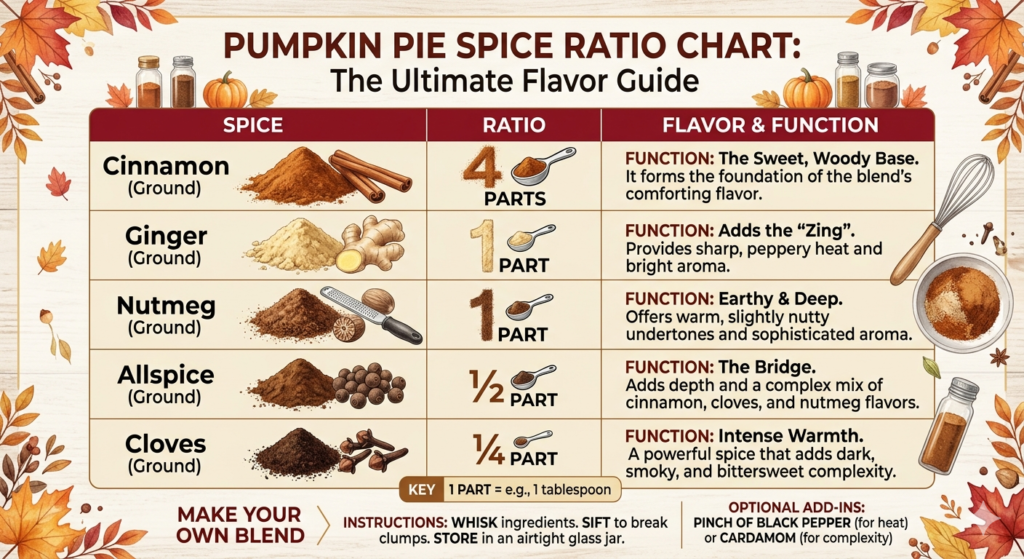
Making your own sugar-free pumpkin spice recipe at home is simple and gives you full control over flavour, freshness, and balance. Instead of buying a pre-made mix, you can combine a few common warming spices in the right proportions to create a fresh, aromatic blend.
The key to a good pumpkin spice is balance: cinnamon forms the base, while the other spices add depth, heat, and complexity.
Homemade Pumpkin Spice Recipe
The Basic Ratio
A reliable “golden ratio” starts with cinnamon as the dominant ingredient:
- 4 parts Cinnamon – provides sweetness and warmth, forming the base
- 1 part Ginger – adds gentle heat and brightness
- 1 part Nutmeg – gives earthy, nutty depth
- ½ part Allspice – bridges sweet and spicy notes
- ¼ part Clove – adds strong aromatic warmth (use sparingly)
Step-by-Step Method
1. Use Fresh Spices
Start with fresh, aromatic spices. Older spices lose their essential oils and result in a dull, weak blend.
2. Measure and Mix
Combine all spices in a small bowl according to the ratio. Whisk or stir well to ensure even distribution and break up any clumps.
3. Optional Light Toasting
For a deeper aroma, you can gently toast the spices to help release their natural oils:
- Place the spice blend in a dry pan over very low heat
- Stir continuously for 30–60 seconds to prevent burning
- Remove immediately once the spices become fragrant
It is important not to overheat the spices, as they can burn quickly. Even slight over-toasting can damage the oils and result in a bitter flavour instead of enhancing aroma.
4. Store Properly
Transfer the finished blend into an airtight glass jar. Store in a cool, dark place away from heat and sunlight to preserve aroma.
5 Tips for Making Perfect Homemade Pumpkin Spice
1. Start with Fresh Spices to make pumpkin spice
The quality of your spice blend needs to be fresh to create a better flavor for a healthy pumpkin spice mix. When pre-ground spices are exposed to air and light they lose aroma, color and potency.
For the best results, consider using whole spices and grinding them yourself just before use. A small spice grinder or even a clean coffee grinder can make a noticeable difference. Freshly ground spices release essential oils that deliver a richer, deeper, and more complex flavor compared to store-bought ground versions.
A great example is nutmeg. When you grate whole nutmeg fresh, its aroma is warm, sweet, and intensely fragrant. In contrast, pre-ground nutmeg often smells dull and lacks the same depth. This small step alone can elevate your entire recipe.
To ensure your spices are still at their best:
- Check expiration dates While spices don’t spoil in the traditional sense, they do lose their effectiveness over time.
- Trust your sense of smell. If a spice smells weak, dusty, or stale, it won’t contribute much to your dish.
- Use recently purchased spices whenever possible, especially for blends where flavor is the focus.
In short, fresher spices mean stronger aroma, better taste, and more vibrant results in every blend or dish you create.
2. Use Professional Techniques to Elevate Flavor
Beyond simply mixing spices together, a few professional techniques can transform your blend from ordinary to truly gourmet. One of the most effective methods is blooming or toasting your spices.
When you lightly heat whole spices, you help release their natural oils. This process alone can help to release most of their aroma and flavor. The result is a deeper, warmer, and more complex taste that you simply can’t achieve with raw spices alone.
How to do it properly:
- Place whole spices like cinnamon sticks and cloves in a dry skillet.
- Heat over medium heat for about 1–2 minutes, stirring or shaking the pan gently.
- As soon as they become fragrant, remove them from the heat immediately to avoid burning.
Once toasted, allow the spices to cool slightly before grinding them. Grinding warm (not hot) spices helps preserve their oils and ensures a smooth, even texture.
This simple step may only take a minute or two, but it can make a big difference turning a basic homemade blend into something that tastes rich, aromatic, and professionally crafted.
3. Sift and Blend Evenly for a Smooth, Consistent Mix
Even with high-quality spices, texture is as much important just as flavor. A well-made spice blend should be smooth, evenly mixed, and free from clumps.
Start by sifting your spices.
Whether you are using store-bought powders or freshly ground spices, sifting them into your mixing bowl helps break up lumps and remove any large and coarse bits. This is especially important for spices like ground ginger, which tends to clump easily due to its natural moisture content.
Focus on proper mixing.
Use a whisk or fork to thoroughly combine the spices. Don’t rush this step and take a minute to blend everything evenly. As you mix, you’ll notice the color becoming uniform, which is a good sign that the flavors are well distributed.
A consistent blend means:
- No overpowering pockets of a single spice
- Even flavor in every recipe you use it in
- A more professional, polished final result
4. Get the Ratios Right
A great spice blend is always about balancing them correctly. The proportions you choose will determine whether your blend tastes warm and inviting or overly sharp and overpowering.
Start with a classic base ratio:
Cinnamon should lead the blend, typically around 3–4 parts cinnamon to 1 part each of ginger, nutmeg, and cloves. This works because cinnamon provides a naturally sweet, warm foundation that ties everything together.
Think of your spice blend like a well-balanced flavor profile, where each ingredient plays a specific role:
What Spices Go With Pumpkin Spice Blend
- Cinnamon – It provides warmth, gentle sweetness, and body. This is the dominant note that holds the blend together.
- Nutmeg – It adds a subtle richness and rounds out the flavor without overpowering.
- Ginger & cloves – These spices bring brightness, spice, and a slight bite that lifts the blend and prevents it from tasting flat.
- Allspice – Use allspice carefully. It is powerful and can easily take over the blend. A small pinch is enough to add complexity and roundness without overwhelming the other spices.
When these elements are balanced correctly, the result is a blend that feels warm, layered, and harmonious, rather than too sharp or too mild.
Taste and Adjust as You Go
This is where your homemade pumpkin spice mix becomes personal. Even with the best pumpkin spice ratio, small adjustments can make a big difference in the final flavor. Always keep tasting as you keep on blending.
Here’s how to guide your adjustments :
- Want more warmth?
Add a little extra cinnamon or nutmeg to enhance sweetness and depth. - Prefer a bit of zing?
Increase the ginger slightly to bring a fresh, lively kick. - Too strong or overly spicy?
Reduce the cloves, then rebalance with more cinnamon to soften the blend. - Does it taste flat or dull?
A tiny pinch of ginger can instantly lift and brighten the flavor.
The key is to make small changes at a time, mixing and tasting after each adjustment. This gradual approach helps you build a blend that is balanced, flavorful, and perfectly suited to your taste.
5. Optional Flavor Boosters. Add Subtle Enhancers for a Gourmet Touch
Once your base blend is balanced, a couple of small, often-overlooked additions can take it to the next level.
- A pinch of freshly ground black pepper
This might sound surprising, but it works really well. Black pepper doesn’t make the blend taste spicy. Instead, it enhances the other spices, making the overall flavor feel deeper, fuller, and more refined. This is one of those “secret ingredients” that people may not notice directly, but they’ll realize the better taste of the blend. - A touch of cardamom (optional)
Cardamom adds a delicate, slightly sweet and floral note that brings extra complexity. Used sparingly, it can give your blend a more sophisticated, aromatic finish without overpowering the classic flavors.
5 Bonus Tips for Superior Results
1. Always make and keep notes of your final blend
Once you achieve the flavor of the healthy homemade pumpkin spice mix you love, write it down immediately. Include exact measurements, any adjustments you made, and even small details like toasting time or spice freshness.
This simple habit ensures you can replicate your perfect homemade pumpkin spice mix every time, instead of starting from scratch. Over time, these notes become your personal library of “tried-and-tested” spice formulas.
2. Keep a clear record of your blend
Always write down the date you made the spice mix and label the jar with both the name of the spice blend and the preparation date. This simple step helps you easily track freshness, so you always know when it’s at its best. It also makes it easier to rotate older batches first, ensuring you’re always cooking with the most aromatic and potent spices.
3. Make a larger batch once you’ve perfected your blend
After you’ve dialed in the exact ratios you love, scale it up and make a bigger batch. This saves time, ensures consistency in your cooking, and is more cost-effective in the long run.
You can make ahead pumpkin spice mix in small batches and store it in airtight spice jars. It will be ready to use anytime you need a warm, aromatic flavor boost of lattes, baking or drinks. his will keep your pantry stocked for a whole season.
4. How to Store Homemade Pumpkin Spice
How you store your spice blend is just as important as how you make it. Even the best-quality spices can lose their strength quickly if they are exposed to the wrong conditions.
Proper storage for long-lasting freshness:
- Always store your homemade spice blend in an airtight spice glass jar or container. Glass is preferred over plastic because it doesn’t absorb odors or affect flavor.
- Keep it in a cool, dark, and dry place, such as a kitchen cupboard or pantry.
- Avoid storing spices near heat sources or strong-smelling foods (like curry powders or cooked dishes), as spices can easily absorb surrounding odors.
- Keep the container away from direct sunlight and heat, which can break down essential oils and reduce potency.
How long does homemade pumpkin spice last?
When stored correctly, shelf life of your homemade pumpkin spice blend will stay fresh and aromatic for about 3–6 months,after which the flavor will gradually start fading.
5. Smart preparation tip:
- It’s best to make small to medium batches rather than very large quantities. This ensures you always use your spice blend while it is still at peak flavor.
8 Homemade Pumpkin Spice Mix Tips – Complete Method Overview
Step | Topic | Key Guidance |
1 | Start with Fresh Spices | Use the freshest spices possible, as pre-ground spices lose potency quickly. Prefer whole spices and grind them yourself for maximum aroma and flavor. Always check expiration dates and smell spices before using—weak or stale aroma means reduced flavor. Freshly ground spices (like nutmeg) are far more fragrant and complex than pre-ground versions. |
2 | Professional Techniques (Blooming & Toasting) | Lightly toast whole spices like cinnamon and cloves in a dry pan for 1–2 minutes until fragrant. This releases essential oils and deepens flavor. Allow spices to cool before grinding to preserve aroma and ensure even texture. |
3 | Sift and Mix Properly | Sift all spices to remove clumps, especially from ingredients like ground ginger. Then whisk or stir thoroughly to ensure even distribution. A uniform blend ensures consistent flavor in every spoonful. |
4 | Get Ratios Right & Customize | Classic base: 3–4 parts cinnamon to 1 part each ginger, nutmeg, and cloves (allspice optional). Cinnamon acts as the backbone. Adjust based on taste—add cinnamon for warmth, ginger for zing, reduce cloves if too strong. Balance warm (cinnamon/nutmeg) and sharp (ginger/cloves) notes. |
5 | Enhancers for Depth | Add a tiny pinch of freshly ground black pepper to enhance complexity without being noticeable. Optionally add a small amount of cardamom for extra aromatic depth. |
6 | Bonus Tip – Make Larger Batches | Once you find your ideal ratio, make a larger batch for convenience and cost savings. Always keep notes of your final recipe so you can reproduce it accurately every time. |
7 | Storage & Usage Tips | Best way to store ground spices, is to use airtight glass jars, keep in a cool, dark, dry place away from heat and strong odors. Avoid plastic containers. Spices stay fresh for about 3–6 months. Experiment beyond baking—use in coffee, oatmeal, roasted vegetables, baked goods, and even savory dishes. |
8 | Record Keeping | Always label jars with the spice name and preparation date. Keeping a record helps track freshness and ensures you use older batches first while flavor is at its peak. |
Substitute for Pumpkin Spice
If you are missing one or more ingredients while making your pumpkin spice blend, you can still achieve a well-balanced flavor of your favorite spice.
The key is understanding that each spice contributes its own unique qualities. Some add warmth and sweetness, while others provide depth, sharpness, or a slight peppery heat. By choosing the right substitute, you can maintain the overall character of the blend even if the flavor changes slightly.
For example, cinnamon usually forms the warm foundation of pumpkin spice, while ginger adds brightness and cloves contribute bold intensity. Replacing one of these spices with a similar ingredient can help preserve balance and complexity.
When using spice substitutions, it is important to make adjustments carefully to maintain a well balanced and enjoyable flavor. Since some spices are much stronger than others, adding too much at once can easily overpower the blend.
For the best results:
- Start with a small amount of the substitute rather than matching the original measurement immediately.
- Taste as you mix so you can monitor how the flavor develops.
- Adjust gradually until the blend tastes smooth, balanced, and well-rounded.
This slow and careful approach helps you create a spice blend that remains flavorful and harmonious.
Can You Make Pumpkin Spice Without Allspice?
Yes, you can absolutely make pumpkin spice without allspice. While allspice adds depth and complexity to traditional pumpkin spice blends, it is not essential for creating a flavorful result.
If you don’t have allspice available, try using:
- A little extra cloves
- Or a small amount of mixed baking spice
These substitutes help recreate the warm, layered flavor that allspice normally provides. Since allspice naturally contains notes similar to cinnamon, cloves, and nutmeg, adding a touch more of these warming spices can help maintain balance in your blend.
When making a pumpkin spice recipe without allspice, it’s best to add substitutes gradually and taste as you mix. Strong spices like cloves can easily overpower the blend if too much is used at once.
Even without allspice, your pumpkin spice blend can still taste warm, aromatic, and perfect for baking, coffee, oatmeal, desserts, and seasonal drinks.
Pumpkin Spice Without Cloves Substitute
If you don’t have cloves, you can still make a flavorful pumpkin spice blend by using a small pinch of cassia or adding a little extra cinnamon instead. Cinnamon helps maintain the warm, comforting character of the blend, although the flavor will be milder, sweeter, and less intense than traditional cloves.
Since cloves are naturally strong and slightly sharp, replacing them with cinnamon creates a smoother and more subtle spice profile that still works well in baking, coffee, oatmeal, and other pumpkin spice recipes.
Pumpkin Spice Without Nutmeg Substitute
If you are out of nutmeg, mace is the best substitute because it comes from the same plant and has a very similar warm, slightly sweet flavor. Mace offers a slightly lighter and more delicate taste, making it an excellent replacement in pumpkin spice blends.
Another option is to use a small pinch of cardamom. While the flavor is different from nutmeg, cardamom adds a pleasant floral depth and aromatic quality that helps maintain the complexity of the blend.
Since both mace and cardamom can be quite noticeable, start with a small amount and adjust gradually until the flavor feels balanced and smooth.
Pumpkin Spice Without Ginger Substitute
If you don’t have ginger, you can still create a balanced and best pumpkin spice mix by adding a little extra cinnamon along with a tiny pinch of white pepper.
The additional cinnamon helps maintain the warm, comforting base of the blend, while the white pepper adds a subtle spicy note that mimics ginger’s gentle heat and brightness.
Because white pepper can become strong quickly, use it sparingly and adjust gradually. This combination helps preserve the overall warmth and complexity of the spice blend without overpowering the other ingredients.
Pumpkin Spice Without Cinnamon Substitute
If cinnamon is unavailable, you can use cardamom (in smaller amounts) or apple pie spice as a substitute. Both options help provide warmth and aroma, although the overall flavor of the blend will be slightly different.
Cardamom has a strong, fragrant flavor with light floral and citrus-like notes, so only a small amount is needed. Apple pie spice can also work well because it already contains several warm spices commonly used in pumpkin spice blends.
Keep in mind that cinnamon is the primary foundation of traditional pumpkin spice, so replacing it will naturally change the taste profile. The blend may become more aromatic and less sweet or familiar, but it can still produce a flavorful and enjoyable result for pumpkin pie spice substitutions, baking, drinks, and desserts.
Pumpkin Spice Substitute Guide:
Missing Ingredient | Best Substitute | Flavor Impact | Helpful Tip |
Cloves | Pinch of cassia or extra cinnamon | Maintains warmth and sweetness, but with a milder flavor | Start with a very small amount to avoid overpowering the blend |
Allspice | Extra cloves or mixed spice | Recreates the warm, layered flavor profile of allspice | Add gradually, as cloves can become too strong quickly |
Nutmeg | Mace or a pinch of cardamom | Adds similar warmth and aromatic depth | Mace is the closest match because it comes from the same plant |
Ginger | Extra cinnamon + tiny pinch of white pepper | Mimics ginger’s warmth with gentle peppery heat | Use white pepper sparingly for balanced flavor |
Cinnamon | Cardamom (half amount) or apple pie spice | Provides aroma and warmth, though the flavor profile changes slightly | Cardamom is stronger than cinnamon, so use less |
Important Note
Cloves and allspice are highly concentrated spices with bold, powerful flavors. When using substitutes for these ingredients, it’s best to begin with a small amount and increase gradually if needed.
Adding too much at once can easily overpower the blend and mask the warmth and balance of the other spices. Tasting as you mix allows you to fine-tune the flavor and create a pumpkin spice blend that remains smooth, balanced, and enjoyable.
5 Essential Storage Tips to Keep Your Homemade Pumpkin Spice Mix Fresh, Potent, and Long-Lasting
Making your own pumpkin spice is a smart way to save money and enjoy a fresher, more vibrant flavor. However, even the best blend can quickly lose its aroma and taste if it isn’t stored properly.
Improper storage can turn a rich, fragrant mix into dull, flavorless dust much sooner than expected.
Here are 5 Common Mistakes to Avoid When Storing Homemade Pumpkin Spice
1. Avoid Using Plastic Containers
Storing spices in plastic containers may seem convenient, but it can reduce the quality of your blend over time. Plastic is slightly porous, which means it can absorb the natural oils and aromas of spices. As a result, your spice blend may lose its strength and freshness more quickly.
In addition, some plastics can transfer a faint chemical-like smell, which can affect delicate spices such as cinnamon and alter their natural flavor.
The better option:
Always store your spices in glass jars with tight-sealing lids. Glass is non-porous, so it helps preserve the essential oils, aroma, and overall quality of your spice blend for a longer period
2. Avoid Storing Spices Near Heat Sources
Placing your spice jar near heat such as next to the stove, oven, or on top of appliances like a dishwasher can quickly reduce its quality. Heat speeds up the breakdown of the natural compounds in spices that are responsible for their flavor, aroma, and strength.
Over time, this exposure causes your spice blend to become dull and less fragrant.
The better option:
Always store your spice blend in a cool, dry cupboard or pantry, away from any heat-producing appliances. This helps preserve the freshness, potency, and full aroma of your spices for longer.
3. Avoid Exposure to Direct Light
Direct light especially sunlight can quickly reduce the quality of your spices. Light speeds up the breakdown of the natural compounds that give spices their flavor, aroma, and vibrant color. Over time, this causes your blend to look faded and taste weaker.
The better option:
If you store spices in clear glass jars, keep them inside a dark cupboard, pantry, or drawer to protect them from light exposure.
If you prefer keeping them visible on a rack, choose opaque or amber-colored glass containers instead. These help block light and preserve the freshness and potency of your spice blend for longer.
4. Avoid Making Large Bulk Batches
It may seem convenient to prepare a large jar of spice blend that lasts for years, but this often reduces quality over time. Once spices are ground, they are exposed to more oxygen, which causes their flavor, aroma, and potency to gradually fade.
Even when stored correctly, ground spices are best used within a limited timeframe to maintain their freshness and impact.
The better option:
Prepare smaller batches that will last about 3 to 6 months. This ensures your blend stays vibrant, with spices like ginger retaining their sharp “zing” and cloves maintaining their warm intensity throughout the season.
5. Forgetting an Airtight Seal
Oxygen is one of the biggest enemies of spice freshness. If your container is not properly sealed, air and moisture can slowly enter and affect the quality of your blend. This often leads to clumping (especially in spices like ground ginger), loss of aroma, and a stale taste over time.
Moisture exposure can even reduce shelf life significantly and damage the overall texture of the mix.
The better option:
Always use a container with a tight-fitting lid and a silicone or rubber gasket. This creates a true airtight seal, helping protect your spices from air and moisture while preserving their freshness, flavor, and aroma for longer.
How to Tell If Your Pumpkin Spice Has Gone Stale (Simple Freshness Tests)
Since ground spices naturally lose their strength over time, it is important to check your blend regularly. You don’t need any special tools. Just use your senses to quickly tell if your pumpkin spice is still fresh or past its prime.
Here are a few simple ways to test it:
Signs Your Pumpkin Spice Has Gone Stale
- The Sniff Test:
Take a small pinch and smell it. Fresh pumpkin spice should have a strong, warm, and slightly pungent aroma This is noticable as soon as you open the jar. If you have to lean in closely to smell it or if it gives off a faint, dusty, or cardboard-like scent, it’s a clear sign that the essential oils have faded, and the blend has lost much of its flavor. - The Color Check:
Fresh spices like cinnamon and ginger should display a rich, deep, and vibrant color. If your blend appears faded, dull, or noticeably lighter than when you first made it, it’s a sign that light and oxygen have broken down the pigments and essential oils, reducing both its visual appeal and flavor quality. - The Rub Test:
Take a small pinch of the spice and gently rub it between your thumb and forefinger. The slight heat from this friction should release a noticeable, aromatic scent. If the smell is weak or barely there, it’s a clear sign the blend has lost its essential oils and is no longer fresh. - The Taste Test:
Place a tiny pinch of the spice on your tongue. A fresh blend should deliver an instant burst of flavor—a slight “zing” from the ginger and a warm, comforting note from the cloves. If it tastes dull, gritty, or nearly flavorless, it’s a sign the blend has lost its potency and won’t add much depth to your baking or drinks. - Texture Check:
Your spice blend should feel dry, fine, and free-flowing. If it appears clumpy, sticky, or slightly damp, it likely has been exposed to moisture. This not only affects texture but can also reduce shelf life and weaken flavor, making the blend less effective in your recipes. - Aroma Strength in Cooking:
When you add your spice blend to hot food or drinks, it should release a rich, noticeable aroma almost instantly. If the scent is weak or barely detectable during cooking, it is a sign the blend has lost its essential oils and overall potency.
If your pumpkin spice fails any of these tests, it’s best to prepare a fresh batch. This ensures your recipes deliver the full depth of flavor, warmth, and aroma you expect in your baking and beverages.
Pumpkin Spice Freshness Check – Quick Guide
Test | What to Do | What Fresh Spice Looks Like | Sign It’s Stale |
Sniff Test | Open the jar and smell | Strong, warm, aromatic scent | Faint, dusty, or cardboard-like smell |
Color Check | Observe the blend visually | Rich, deep, vibrant brown color | Dull, faded, or lighter appearance |
Rub Test | Rub a pinch between fingers | Releases a strong aroma when warmed | Little to no scent released |
Taste Test | Taste a tiny pinch | Immediate zing (ginger) and warmth (cloves) | Flat, gritty, or flavorless |
Texture Check | Feel the spice between fingers | Dry, fine, and free-flowing | Clumpy, sticky, or slightly damp |
Aroma in Cooking | Add to hot food/drink | Strong aroma released instantly | Weak or barely noticeable scent |
Tip: If your pumpkin spice fails any of these tests, it’s best to make a fresh batch to ensure your recipes have rich flavor and aroma.
Adjusting Pumpkin Spice Blend for Different Uses
Go beyond traditional uses:
Never limit your pumpkin spice recipe to just baking. A well-made spice blend becomes far more versatile when you start experimenting
- Stir into pumpkin spice coffee recipe or lattes for a warm, spiced twist
- Add to oatmeal or breakfast bowls for gentle sweetness and aroma
- Sprinkle over roasted vegetables to enhance depth and natural sweetness
- Mix into baked goods such as muffins, cookies, or bread for balanced warmth
- Use in savoury dishes like soups, curries, or roasted meats to add subtle spice complexity
One of the key advantages of making pumpkin spice at home is that you can adjust the ratios to suit different recipes. Small changes can significantly alter the flavour profile. This allows the spice blend to be more tailored, balanced, or intense depending on its use.
For Stronger Warmth
To create a more intense and warming spice profile, increase the proportion of Ginger or Clove.
Ginger adds a sharp, zesty heat, while cloves contribute deep, rich warmth. This variation works especially well in drinks such as chai, hot chocolate, or pumpkin spice coffee, where you crave for a stronger, more noticeable heat.
For a Sweeter Aroma
To enhance sweetness and fragrance, increase Cinnamon or add a small pinch of cardamom.
Cinnamon naturally enhances sweetness without added sugar, while cardamom introduces a light floral and slightly citrus-like note. This combination is ideal for baked goods such as cookies, cakes, muffins, and sweet breads.
For Savoury Dishes
For savoury applications, reduce the amount of cinnamon slightly so it does not dominate the dish. Then increase Nutmeg or Allspice to create a more earthy and balanced flavour.
This adjustment works well in soups, stews, roasted vegetables, and spiced rice dishes, where subtle warmth is preferred over sweetness.
Why Does My Pumpkin Spice Mix Taste Bitter?
Pumpkin spice should have a warm, sweet, and comforting aroma. It should smell rich and inviting, not sharp, harsh, or medicinal. If your pumpkin spice blend tastes bitter, the problem is usually caused by an imbalance of the stronger spices or by poor-quality ingredients.
1. Too Much Clove or Allspice
The most common cause of bitterness in homemade pumpkin spice is using too much Clove or Allspice. These spices are extremely potent and naturally contain strong aromatic compounds that can quickly overpower the blend.
Cloves, in particular, contain a compound called eugenol, which gives them their intense flavour and aroma. In small amounts, cloves add warmth and depth. However, when overused, they create a bitter, medicinal taste and may even leave a slightly numbing sensation on the tongue.
Allspice can cause a similar issue because it already carries flavour notes resembling cloves, cinnamon, and nutmeg combined. Using too much can make the blend taste heavy, sharp, and unpleasantly spicy.
Even a small measuring mistake can dramatically affect the final flavour. In most pumpkin spice recipes, cloves should be the smallest component of the blend.
If your blend tastes bitter:
- Add more Cinnamon to soften and sweeten the flavour.
- Increase the amount of Nutmeg or Ginger slightly to rebalance the spice profile.
- Reduce the cloves significantly in future batches.
- Mix the spice blend into sugar, cream, milk, or pumpkin puree before judging the final flavour, since spices alone taste stronger and harsher when dry.
A balanced pumpkin spice blend should taste smooth, warm, lightly sweet, and aromatic, with no single spice dominating the mixture.
2. Too Much Nutmeg
Nutmeg adds warmth, sweetness, and a rich nutty aroma to pumpkin spice blends, but using too much of nutmeg can create bitterness and an overly sharp flavour. Although nutmeg is usually associated with sweet desserts and creamy dishes, it naturally contains woody, earthy, and slightly bitter flavour compounds that become more noticeable in large amounts.
One of these compounds is sabinene, which contributes spicy and woody notes but can also introduce camphoreous or bitter characteristics when overused. Freshly grated nutmeg is especially potent because its aromatic oils are more concentrated than those found in many pre-ground commercial varieties. As a result, a heavy hand with fresh nutmeg can quickly overpower the blend and create an unpleasant aftertaste.
Nutmeg also contains myristicin, a naturally occurring compound responsible for some of its intense aroma and flavour. In small amounts, it contributes depth and warmth, but excessive quantities can make the spice blend taste harsh, heavy, and slightly medicinal.
How to Fix It
If your pumpkin spice tastes bitter from too much nutmeg:
- Add more Cinnamon to soften and sweeten the flavour.
- Increase Ginger slightly to brighten the blend.
- Dilute the mixture by preparing another batch with little or no nutmeg and combining the two together.
- If the spice is already in a recipe, balance the bitterness with cream, butter, milk, sugar, or vanilla extract.
A useful guideline for homemade pumpkin spice is maintaining roughly a 4:1 ratio of cinnamon to nutmeg. This keeps the blend warm and balanced while preventing nutmeg’s bitter and woody notes from becoming overpowering.
3. Too Much Ginger
Ginger is an important part of pumpkin spice because it adds warmth, brightness, and a gentle spicy kick. However, when too much dried ginger is used, the blend can develop a sharp, harsh, or slightly acrid bitterness.
Unlike cinnamon, which is naturally sweet and mellow, dried ginger has a more intense and concentrated heat. In raw spice blends, especially before cooking or baking, this sharpness can taste overly strong and unbalanced. Excess ginger may create a dry, peppery sensation that overpowers the smoother and sweeter spices in the mixture.
Freshly ground or highly potent ginger powder can intensify this effect even more. In some cases, the bitterness becomes noticeable because the spice has not yet been softened by sugar, fats, milk, pumpkin puree, or heat during cooking.
How to Fix It
If your pumpkin spice contains too much ginger:
- Add more Cinnamon to restore sweetness and warmth.
- Increase the blend slightly with additional Nutmeg to create a smoother flavour profile.
- Dilute the mixture by making another batch with little or no ginger and combining them together.
- If the blend is already in a recipe, ingredients such as sugar, vanilla extract, butter, milk, or cream can help soften ginger’s sharp edges.
A well-balanced pumpkin spice blend should have gentle warmth and complexity, not an aggressive spicy bite. Ginger should brighten the blend, not dominate it.
4. Stale or Low-Quality Spices
One often overlooked cause of bitterness in pumpkin spice blends is the use of old or low-quality ingredients. Over time, spices lose their natural aromatic oils, which are responsible for their sweetness, warmth, and complexity. When these oils fade, what remains is a flatter, duller flavour that can taste dusty, musty, or even slightly bitter.
In some cases, spices that have been stored for too long may also develop an unpleasant edge as their delicate compounds degrade. Instead of the bright, aromatic notes you expect, the blend can take on a stale, astringent character that disrupts the balance of flavours.
This issue is especially common when spices have been kept in open containers, exposed to heat, light, or moisture, or stored for more than a year after opening. Even spices that are technically “safe” to use may no longer provide the quality needed for a well-balanced blend.
How to Identify the Problem
A simple way to check is to smell each spice individually. Fresh spices should smell strong, warm, and naturally sweet. If they smell faint, dusty, or lack aroma, they are likely past their best quality.
How to Fix It
- Replace old spices, especially Cinnamon, Ginger, Nutmeg, and Clove, if they are more than a year old after opening.
- Always choose fresh, high-quality spices for blending.
- Store spices in airtight containers away from heat, light, and humidity to preserve their natural oils.
- Before mixing, perform a quick “sniff test” to ensure each spice still smells vibrant and aromatic.
Fresh spices are essential for a balanced pumpkin spice blend. Without them, even the correct ratios can still result in a flat or bitter taste.
5. Over-Toasting the Spices
A less obvious but very common cause of bitterness in pumpkin spice is over-toasting the spices before grinding or mixing. Some recipes suggest lightly “blooming” spices in a dry pan to enhance their aroma, but this step requires very careful timing and low heat.
Cinnamon, Ginger, and other ground spices contain natural sugars and volatile oils that are highly sensitive to heat. When exposed to a hot pan for too long, even by 30–60 seconds, these compounds can begin to burn. Instead of developing a deeper aroma, the spices can turn acrid, smoky, and bitter similar to the taste of burnt coffee.
Once the oils are damaged by excessive heat, the bitterness becomes permanent and carries through the entire blend, no matter how well the other spices are balanced.
How to Fix It
- If you are toasting whole spices, always use low heat and keep the time very short (around 30–60 seconds maximum).
- Stir constantly to prevent hot spots in the pan.
- Remove the spices immediately once they become fragrant. Do not wait for colour changes.
- For a more reliable result, you can skip toasting entirely and use the spices raw for a cleaner, more traditional pumpkin spice profile.
Properly handled, toasting should enhance warmth and aroma not introduce bitterness.
6. Interaction with Sweeteners
Sometimes bitterness in pumpkin spice is not caused by the spices alone, but by how they interact with the sweeteners used in a recipe such as pies, lattes, or baked goods.
Certain low-calorie or artificial sweeteners, including Stevia and saccharin, can react with the natural compounds in spices (especially tannin-like and aromatic compounds found in spices such as cinnamon, ginger, and cloves). This interaction can produce a lingering, sharp, or unpleasant bitter aftertaste that becomes more noticeable after cooking or as the dish cools.
This happens because these sweeteners do not provide the same rounded flavour profile as traditional sugars. Instead of balancing the spices, they can highlight sharper edges in the blend, making bitterness more noticeable.
How to Fix It
- Replace artificial sweeteners with natural options like brown sugar, honey, or Maple syrup.
- Brown sugar works especially well because its molasses content adds depth and helps smooth out sharp spice notes.
- Maple syrup provides warmth and richness that blends naturally with pumpkin spice.
- If bitterness is already present, adding a small amount of fat (such as cream, milk, or butter) can also help soften and round the flavour.
Natural sweeteners generally create a more balanced and harmonious flavour because they complement the warm spice profile rather than amplifying its sharp edges.

Pumpkin Spice Lost Its Smell — How to Fix It
When pumpkin spice loses its aroma, the main reason is usually the loss of volatile essential oils in the spices. These oils are responsible for the warm, sweet, and fragrant character of the blend. Once they evaporate due to time, heat, air exposure, or poor storage, the spice becomes weak and flat.
In most cases, you cannot fully restore the original strength of old spices. However, there are a few ways to partially revive the aroma or improve the blend.
1. Try the “Blooming” Technique
If your pumpkin spice has only become muted (not completely stale), you can sometimes revive part of its aroma by gently reactivating the remaining essential oils.
Gentle “Blooming” Method (Dry Heat)
Blooming technique uses very low heat to help release trapped aromatic compounds:
- Place the spice blend in a clean, dry pan
- Keep the heat very low at all times
- Warm for 30–60 seconds, stirring continuously
- Remove immediately as soon as you notice the aroma returning
The goal is not to cook the spices, but to gently warm them just enough to release any remaining fragrance.
Be careful: spices such as Cinnamon and Ginger can turn bitter very quickly if overheated. Even a short burst of excessive heat can burn the natural oils and create an unpleasant, acrid taste instead of improving the aroma.
Used correctly, this method can give a temporary boost in fragrance, but it will not fully restore spices that have already lost most of their volatile oils.
2. Add Fresh Spices to Revive the Blend
If the aroma of your pumpkin spice has significantly faded, gentle “blooming” will not be enough to bring it back. In this case, the most reliable solution is to refresh the blend with new, high-quality spices.
Refreshing a Weak Pumpkin Spice Blend
To restore a balanced and aromatic profile, rebuild the mixture by adding fresh spices in small, controlled amounts:
- Add freshly ground Cinnamon to reintroduce natural sweetness, warmth, and fragrance
- Add a small amount of fresh Ginger to lift and brighten the overall aroma
- Add a pinch of Nutmeg to restore depth and roundness
Why This Works
Fresh spices contain intact volatile oils, which are responsible for the strong aroma and flavour. When these are added to an old or muted blend, they help rebuild the missing fragrance layers and restore balance between sweetness, warmth, and spice intensity.
Start with small additions and adjust gradually. The goal is not to overpower the old blend, but to re-establish harmony and aroma strength.
3. Rebuild the Blend (Best Long-Term Fix)
If the mix is very old or nearly scentless, the best option is to create a new batch and combine it with the old one. This reduces waste while restoring flavour.
Use It for “Low-Impact” Cooking
If your pumpkin spice is too faint for high-flavour applications like lattes, pies, or frosting, you do not need to discard it. Instead, repurpose it in dishes where it plays a supporting rather than a central role.
Best Approach
- Use the weakened spice blend in cooked or baked recipes where heat can help bring out any remaining aroma and flavour.
- Pair it with stronger base ingredients so the spice blend plays a supporting role rather than being the dominant flavour.
Good Examples
- Oatmeal or porridge, where the spices blend into the base and add gentle warmth
- Pancake or waffle batter, where baking heat helps release mild aroma
- Muffins or quick breads, where spices support sweetness and structure
- Roasted sweet potatoes or carrots, where caramelisation enhances the remaining spice notes
A weakened pumpkin spice blend may no longer be strong enough to act as the main flavouring, but it is still useful. When used appropriately, it can continue to contribute light warmth and complexity instead of being discarded.
Impu Irani is a cookbook author behind Leena Spices, where he shares practical, easy-to-follow guides on homemade spice blends, herbs, and natural cooking. His work helps home cooks create fresh, flavorful meals using simple ingredients and traditional methods. Download his free Spice Blending eBook and start your journey to cleaner cooking today!
Disclosure Note
We are committed to creating high-quality, helpful content for our readers. We do not accept payment in exchange for writing our articles, and we personally cover the costs of running this website, including hosting, tools, and maintenance.
To support the site, we display ads and may earn a small commission from affiliate links if you choose to make a purchase—at no extra cost to you.
Your support helps us continue sharing valuable content with the community.
If you’d like to support us, here are a few simple and free ways:
- Share our content with your friends and family
- Engage with us on social media
- Follow us on Facebook
You can also learn more by visiting our disclaimer page:
https://leenaspices.co.nz/disclaimer/
As a thank you, feel free to download our Free Spice Recipe eBook.
Frequently Asked Questions (FAQ) – Homemade Pumpkin Spice
What exactly is pumpkin spice?
Pumpkin spice is a blend of warm, aromatic spices typically used in pumpkin pie and other autumn-inspired dishes. The standard mix includes cinnamon, ginger, nutmeg, cloves, and allspice. Despite its name, it usually contains no pumpkin; the term comes from its traditional use in pumpkin desserts.
Can I make pumpkin spice at home?
Yes. Making your own pumpkin spice is straightforward and gives you control over flavor, freshness, and quality. A standard homemade blend uses 3 tablespoons cinnamon, 2 teaspoons each of ginger and nutmeg, and 1 teaspoon each of cloves and allspice. Adjusting the ratios allows you to customize it for sweet or savory dishes.
Why should I make pumpkin spice at home instead of buying it?
Homemade pumpkin spice offers several advantages:
- Flavor control: Adjust proportions to suit your taste.
- Fresher aroma: Spices retain more essential oils when freshly ground.
- No additives: Store-bought mixes can include fillers or anti-caking agents.
- Cost-effective: Bulk spices are usually cheaper than pre-mixed blends.
- Versatility: Adaptable for desserts, drinks, or savory dishes.
How long does homemade pumpkin spice last?
Homemade pumpkin spice typically stays fresh for about 6 to 12 months when stored properly in an airtight container away from heat, moisture, and direct sunlight. However, the flavour and aroma are strongest within the first few months because the essential oils in the spices gradually fade over time.
To maintain freshness, store the blend in a sealed glass jar in a cool, dark pantry. If the spice starts to smell weak, dusty, or flat, it is a sign that the spices have begun losing their potency.
Can pumpkin spice be used in savory dishes?
Absolutely. While commonly associated with sweet recipes, pumpkin spice can enhance savory foods such as roasted vegetables, soups, stews, and grain dishes. For savory applications, reduce the cinnamon slightly and increase allspice or nutmeg to maintain balance.
What Are Some Uses for Pumpkin Spice Besides Pie?
Pumpkin spice is far more versatile than many people realise. Beyond pumpkin pie, it can be used in both sweet and savoury dishes.
Popular uses include:
- Coffee, lattes, and hot chocolate
- Oatmeal and breakfast bowls
- Pancakes, waffles, and muffins
- Cookies, cakes, and sweet breads
- Roasted vegetables and soups
- Spiced nuts or granola
- Curries and roasted meat rubs
Its warm, aromatic flavour works especially well in autumn and winter recipes.
How much pumpkin spice should I use in recipes?
Typical usage ranges from 1–2 teaspoons per standard recipe, such as muffins, cookies, or pie filling. For drinks, ½–1 teaspoon per cup is sufficient. Adjust based on personal taste and the size of the recipe.
Can I substitute individual spices if I don’t have all of them?
Yes, but it will alter the flavor. Cinnamon and ginger are essential for the warm base, while nutmeg, cloves, and allspice add depth. If you omit a spice, consider increasing another to maintain balance.
Can pumpkin spice be used year-round?
Yes. While most popular in the fall, pumpkin spice adds warmth and complexity to recipes any time of year. It works in baked goods, beverages, and even savory dishes beyond the traditional autumn season.
Is homemade pumpkin spice vegan?
Yes. All pumpkin spice ingredients are plant-based. It is naturally vegan and suitable for all dietary preferences.
Can I adjust pumpkin spice for stronger flavor or sweetness?
Yes. Increase ginger or cloves for more warmth, add extra cinnamon or a pinch of cardamom for a sweeter aroma, or modify ratios to suit specific recipes. Customizing the blend allows you to create a flavor profile that matches your preference.
How Do You Use Pumpkin Spice on Roasted Vegetables?
Pumpkin spice can add warmth and depth to roasted vegetables when used carefully. It works especially well with naturally sweet vegetables such as sweet potatoes, carrots, pumpkin, and squash.
For best results:
- Toss vegetables with olive oil, salt, and a small amount of pumpkin spice
- Roast until caramelised and tender
- Use a lighter hand with sweeter spices like cinnamon to avoid overpowering the dish
Adding a touch of maple syrup or honey can further enhance the warm spice profile.
Can I Use Different Ratios in Homemade Pumpkin Spice?
Yes. One of the biggest advantages of making pumpkin spice at home is the ability to customise the ratios based on personal taste and recipe type.
For example:
- More Ginger creates extra warmth and spice
- More Cinnamon gives a sweeter and softer flavour
- Extra Nutmeg adds richness and depth
- Less cloves creates a smoother, less intense blend
Small adjustments can completely change the character of the spice mix.
Is Homemade Pumpkin Spice Healthier Than Store-Bought?
Homemade pumpkin spice can be healthier because you control exactly what goes into the blend. Many store-bought versions may contain fillers, anti-caking agents, artificial flavourings, or added sugar.
By making it yourself, you can:
- Use only pure spices
- Avoid preservatives and additives
- Choose organic ingredients if desired
- Adjust sodium or sugar levels by recipe
Fresh homemade blends also tend to have stronger natural flavour and aroma.
Can I Make Pumpkin Spice Without Cloves?
Yes. Although Clove adds depth and warmth, it is not absolutely required. Some people find cloves too strong, bitter, or medicinal.
If you prefer a milder blend:
- Reduce the cloves significantly
- Omit them completely
- Increase cinnamon or nutmeg slightly to maintain balance
The result will be a smoother, sweeter pumpkin spice blend that still works well in baking and drinks.
Conclusion
Homemade pumpkin spice is more than just a seasonal flavour—it is a practical way to bring freshness, control, and versatility into everyday cooking and baking. By understanding the role of each spice in the blend, you can adjust the balance to match your personal taste and the specific dish you are preparing.
From warm autumn drinks and baked goods to roasted vegetables and savoury recipes, pumpkin spice adds depth, aroma, and a comforting seasonal character. Each spice contributes something different, creating a layered flavour profile that enhances both sweet and savoury dishes.
Making your own blend also ensures better quality and cleaner ingredients, since you can avoid unnecessary additives and use fresh, high-quality spices. It also gives you the flexibility to customise the intensity, sweetness, or warmth depending on how the blend will be used.
Whether you follow a traditional recipe or experiment with your own variations, preparing pumpkin spice at home connects you to a long-standing culinary tradition while improving the flavour of your cooking.
Medical Disclaimer:
The information provided in this article is for educational and informational purposes only and is not intended as medical advice. Always consult a qualified healthcare provider before starting any new dietary supplement, herbal remedy, or wellness routine, especially if you have underlying health conditions, are pregnant or breastfeeding, or are taking prescription medications.
This is very interesting, You are a very
skilled blogger. I’ve joined your feed and look forward to seeking more of your fantastic post.
Also, I’ve shared your web site in my social
networks!
We’re a bunch of volunteers and opening a brand new scheme in our community.
Your site offered us with valuable information to work on. You’ve
performed a formidable task and our entire group will be grateful to you.
No matter if some one searches for his required thing,
thus he/she wants to be available that in detail, so that thing is maintained over
here.
What’s up, this weekend is nice in favor of me, because this
time i am reading this impressive informative paragraph here at my home.
I feel this is one of the most important info for me. And i’m happy studying your article.
However should observation on few normal issues, The site taste is ideal, the articles is really
excellent : D. Excellent task, cheers
Howdy! I could have sworn I’ve been to this blog before
but after going through some of the posts I realized it’s new to me.
Nonetheless, I’m definitely happy I came across it and I’ll be bookmarking it and checking back often!