
Impu Irani is the cookbook author behind Leena Spices , where he shares easy homemade spice blend recipes and practical cooking tips. Read more about him at the end of this post.
Table of Contents
ToggleKey Takeaways: Quick Guide to Dried Kawakawa
What is Kawakawa?
Kawakawa (Piper excelsum) is a treasured native plant of New Zealand, deeply connected to traditional Rongoā Māori healing practices.
What does dried Kawakawa taste like?
Kawakawa has a warm, peppery flavor with fresh hints of basil and lemongrass, followed by a gentle tingling sensation on the tongue that makes it truly unique.
How do I dry Kawakawa leaves for cooking?
Clean the leaves thoroughly, then dry them in a well-ventilated, shaded area. You can also use a food dehydrator on a low setting (around 40–45°C) until the leaves become crisp and fully dried.
How should dried Kawakawa be stored?
Store the leaves whole in an airtight, light-proof container and keep them in a cool, dark cupboard. When stored correctly, they maintain their peak potency for up to 12 months.
Culinary Uses:
Kawakawa is often enjoyed in soothing herbal teas (Wai Rākau), as well as in native-style finishing salts, infused oils, and rich savory marinades that add warmth and depth to dishes.
Safety Note: It is generally considered safe when used in moderation. However, if you are pregnant, breastfeeding, or taking prescription medications, it is best to consult a qualified healthcare professional before use.

What is Kawakawa?
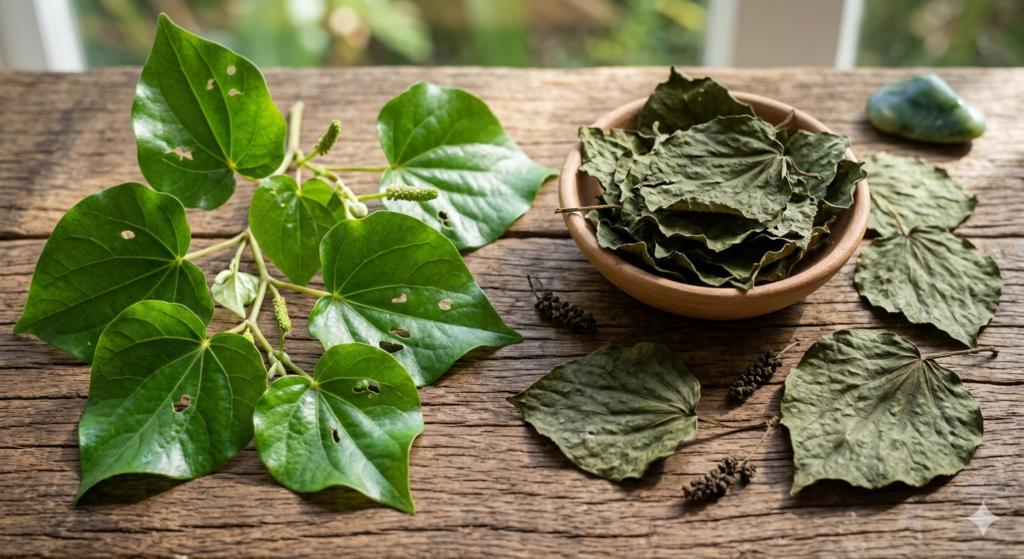
Kawakawa (Piper excelsum), often known as New Zealand pepper tree, is a native evergreen shrub or small tree that holds deep cultural, medicinal, and culinary significance in Aotearoa (New Zealand). Belonging to the pepper family (Piperaceae), Kawakawa is instantly recognizable by its glossy, heart-shaped leaves—often dotted with holes made by the kawakawa looper moth caterpillar, which many Māori regard as a sign of the plant’s potency.
Historical records, including those shared by Te Papa Tongarewa (the Museum of New Zealand), show that kawakawa leaves were commonly used in herbal infusions to support digestion and were also applied externally to help soothe skin irritations.
In Māori tradition, Kawakawa is considered a taonga (treasured plant) and has long been central to Rongoā Māori traditional uses. It has been used for generations to help with a variety of ailments, both as an internal remedy and as a topical treatment.
The plant thrives in the understory of New Zealand’s coastal and lowland forests, preferring moist, semi-shaded environments. It can grow as a shrub or a small tree and produces small spikes of yellowish flowers, followed by bright orange fruit during summer. Interestingly, Kawakawa is dioecious, meaning male and female plants are separate.
Culinary and herbal uses of Kawakawa have grown in popularity in modern times. Its leaves, buds, and fruit can be used fresh or dried. When dried or lightly toasted, the leaves develop a peppery, slightly bitter flavor reminiscent of a mix between black pepper and basil. Kawakawa is now enjoyed in teas, infusions, soups, marinades, spice blends, and seasonings, offering both a unique taste and a connection to New Zealand’s natural heritage.
This makes it a versatile ingredient that works well in both savoury dishes and herbal blends. Balancing warm, rich flavours with lighter, refreshing herbs is a common technique used across many cuisines, including the mint- and oregano-led profile of traditional Turkish spice blend
A Note from Leena Spices: After working with New Zealand’s native herbs for many years, we have learned that dried Kawakawa offers a very different experience from fresh leaves in the kitchen. Fresh Kawakawa is excellent for teas and quick infusions, but properly dried leaves develop a richer, warmer flavor with subtle peppery notes, hints of sweet basil, and a touch of citrus.
In this guide, I’ll show you how to get the most out of dried Kawakawa. You’ll discover practical tips, flavor-pairing ideas, and simple techniques to help you use this unique native herb safely and confidently in everyday cooking.
7 Creative Ways to Use Dried Kawakawa in Your Kitchen
1. Healing Kawakawa Tea Recipe (Wai Rākau)
A traditional, soothing herbal tea often enjoyed for its warming, comforting qualities—especially on cool days or after meals.
- Prep time: 2 mins | Brew time: 5–10 mins
- Yield: 1 cup
Ingredients
- 1 teaspoon dried Kawakawa leaves (lightly crumbled)
- 1 cup (250 ml) freshly boiled water
- 1 thin slice fresh ginger (optional, for extra warmth)
- 1 teaspoon mānuka honey or a squeeze of lemon (optional, to taste)
Instructions
- Prepare the herbs: Add the crumbled dried Kawakawa leaves and optional ginger to a mug or tea infuser.
- Add hot water: Pour freshly boiled water over the herbs, making sure they are fully submerged.
- Steep: Let it sit for 5–10 minutes, depending on how strong you like it. Longer steeping brings out deeper, peppery, aromatic notes.
- Strain and enjoy: Remove the leaves, then add honey or lemon if desired. Sip warm and enjoy the gentle, earthy flavor.
Tip: Start with a small amount of leaves if you’re new to Kawakawa; its unique peppery-herbal flavor can be quite potent.
Learning to appreciate a touch of bitterness is a classic technique in flavour building, helping to create more balanced and complex profiles.
You can see how this works in practice in our guide to making authentic Sri Lankan curry powder
2. Gourmet Kawakawa Finishing Salt
A distinctive native New Zealand seasoning that brings earthy, peppery depth to roasted vegetables, grilled meats, wild game, or even fresh tomatoes.
- Prep time: 5 mins | Cook time: None
- Yield: approx. ½ cup
Ingredients
- ½ cup flaky sea salt (Marlborough or Maldon flakes work well)
- 1 tablespoon dried Kawakawa leaves (fully crisp and dry)
- 1 teaspoon dried orange zest (optional, for a citrus lift)
Instructions
- Prepare the Kawakawa: Add the dried leaves to a mortar and pestle and gently crush them into fine flakes. Avoid grinding them into a powder—you want texture, not dust.
- Mix the base: Add the flaky sea salt and optional orange zest to the mortar.
- Combine gently: Lightly toss and press everything together so the natural oils from the Kawakawa coat the salt crystals.
- Store: Transfer the mixture into a clean, airtight glass jar. Use as a finishing sprinkle to add a subtle native flavor to your dishes.
3. Artisanal Kawakawa-Infused Olive Oil
A fragrant, versatile infused oil that adds a gentle native character to everyday cooking. Drizzle it over warm artisan bread, fresh salads, roasted vegetables, or use it as a flavorful marinade base.
- Prep time: 5 mins | Infusion time: 1–2 hours
- Yield: 1 cup
Ingredients
- 1 cup high-quality extra virgin olive oil
- 2 tablespoons dried Kawakawa leaves (whole or lightly torn)
Instructions
- Combine ingredients: Add the olive oil and dried Kawakawa leaves to a small, heavy-bottomed saucepan.
- Gentle warming: Place on the lowest possible heat. The goal is a slow infusion—warm enough to release flavor, but never hot enough to fry or bubble the leaves.
- Infuse slowly: Let the mixture steep on low heat for 1–2 hours, checking occasionally to ensure it stays gently warm.
- Cool and strain: Remove from heat and allow the oil to cool completely. Strain through a fine sieve or cheesecloth into a clean glass bottle, discarding the leaves.
While infusing is easy, getting the ratios perfect can be tricky. To avoid a bitter or overly medicinal flavor, check out our interactive Kawakawa and Horopito Cooking Ratio Calculator before you begin.
4. Refreshing Kawakawa Sparkling Spritzer
A crisp, sparkling mocktail that highlights Kawakawa’s gentle peppery warmth, balanced with bright citrus. Perfect for warm afternoons or as an elegant non-alcoholic drink for gatherings.
- Prep time: 5 mins | Steep & chill time: 20 mins
- Yield: 1 large glass (or 2 small servings)
Ingredients
- ½ teaspoon dried Kawakawa leaves
- 1 cup (250 ml) boiling water
- 1 tablespoon Mānuka honey
- 250 ml sparkling water (chilled)
- 1 lemon, thinly sliced
- 2 cups ice
Instructions
- Brew the base: Place the dried Kawakawa leaves in a mug or small teapot and pour over the boiling water.
- Sweeten: Stir in the Mānuka honey while the liquid is still hot until fully dissolved.
- Chill: Let the mixture cool to room temperature, then refrigerate for 10–15 minutes. Once chilled, strain out the leaves.
- Assemble: Fill a glass with ice, pour in the chilled Kawakawa tea base, top with sparkling water, and add lemon slices. Stir gently and serve immediately.
5. Spiced Butternut Pumpkin & Kawakawa Cake
A moist, comforting autumn cake where the natural sweetness of butternut pumpkin meets the warm, gently peppery, citrus-like depth of dried Kawakawa.
- Prep time: 20 mins | Bake time: 45 mins
- Yield: 1 standard loaf or 8-inch round cake (serves 8–10)
Ingredients
- 1 ½ cups butternut pumpkin purée (cooked and mashed)
- 2 – 3 tablespoons dried Kawakawa leaves (finely ground or crumbled)
- 2 cups all-purpose flour
- 1 teaspoon baking soda
- ½ teaspoon baking powder
- ½ teaspoon salt
- 1 teaspoon ground cinnamon
- ½ teaspoon ground ginger
- ½ cup unsalted butter (softened)
- 1 cup brown sugar
- 2 large eggs
- ¼ cup milk or buttermilk
Instructions
- Preheat and prepare: Preheat the oven to 175°C (350°F). Grease and line a loaf pan or 8-inch round cake tin with baking paper.
- Mix dry ingredients: In a bowl, whisk together flour, baking soda, baking powder, salt, cinnamon, ginger, and finely ground Kawakawa.
- Cream butter and sugar: In a separate large bowl, beat butter and brown sugar until light and fluffy. Add eggs one at a time, mixing well, then stir in the pumpkin purée.
- Combine: Gradually add the dry mixture and milk, alternating between the two, mixing gently until just combined. Avoid overmixing to keep the cake soft.
- Bake: Pour batter into the prepared tin and smooth the top. Bake for 40–45 minutes, or until a skewer inserted into the center comes out clean.
- Cool and serve: Let the cake cool in the tin for 10 minutes, then transfer to a wire rack to cool completely. Enjoy as is, or serve with cream cheese frosting or a warm cup of Kawakawa tea.
6. Savory Kawakawa, Cheese & Onion Scones
A classic Kiwi-style scone with a gourmet herbal twist. The richness of cheddar cheese and the gentle sharpness of onion blend beautifully with the warm, peppery character of dried Kawakawa.
- Prep time: 15 mins | Bake time: 12–15 mins
- Yield: 6–8 large scones
Ingredients
- 1 tablespoon dried Kawakawa leaves (finely crumbled)
- 2 cups all-purpose flour
- 4 teaspoons baking powder
- ½ teaspoon salt
- 50 g cold unsalted butter (cubed)
- 1 cup sharp cheddar cheese (grated, plus extra for topping)
- ½ cup finely chopped onion or spring onions
- ¾ to 1 cup milk (plus a little extra for brushing)
Instructions
- Preheat and prepare: Heat oven to 215°C (420°F) and line a baking tray with baking paper.
- Mix dry ingredients: In a large bowl, sift together flour, baking powder, and salt. Stir in the crumbled Kawakawa leaves.
- Rub in butter: Add cold butter and gently rub it into the flour mixture using your fingertips until it resembles fine breadcrumbs.
- Add fillings: Stir in cheddar cheese and chopped onion until evenly combined.
- Form the dough: Make a well in the center and add ¾ cup milk. Mix lightly with a knife until a soft dough forms, adding a little more milk if needed. Avoid overmixing.
- Shape and cut: Turn onto a floured surface, gently press into a 2–3 cm thick round, and cut into 6–8 pieces.
- Bake: Place on the tray, brush tops with milk, and sprinkle with extra cheese. Bake for 12–15 minutes until golden and risen. Serve warm with butter.
7. Gourmet Kawakawa & Zesty Citrus Finishing Butter
Prep Time: 10 mins | Chill Time: 1 hour | Yield: 1 Log of Compound Butter
While fresh kawakawa can make compound butter watery, expertly dried and finely crushed kawakawa flakes absorb perfectly into the fat molecules, releasing a rich, lingering warmth without altering the texture.
Ingredients:
- 125g Premium New Zealand salted butter (softened at room temperature)
- 1 tsp Finely crushed dried Kawakawa leaves
- 1 tsp Fresh lemon or lime zest (finely grated)
- ½ tsp Garlic powder
- A pinch of cracked black pepper
Method:
- Prep the Kawakawa: Ensure your dried kawakawa leaves are thoroughly crushed into a fine flake or powder using a mortar and pestle.
- Combine: In a medium mixing bowl, combine the softened butter, fine kawakawa flakes, citrus zest, garlic powder, and black pepper. Use a fork to whip the ingredients together until completely uniform in color.
- Shape and Log: Spoon the mixture onto a sheet of baking paper or plastic wrap. Shape it roughly into a log, roll it up tightly, and twist the ends to seal.
- Chill: Place the log in the fridge for at least 1 hour to allow the essential oils of the kawakawa to infuse deeply into the butter.
Leena’s Pro-Tip: Slice a thick round of this butter and place it over a hot, freshly grilled steak or a bowl of steamed green vegetables right before serving. The heat melts the fat, instantly releasing a fragrant, aromatic steam of native bush pepper and bright citrus!


What Does Dried Kawakawa Taste Like?
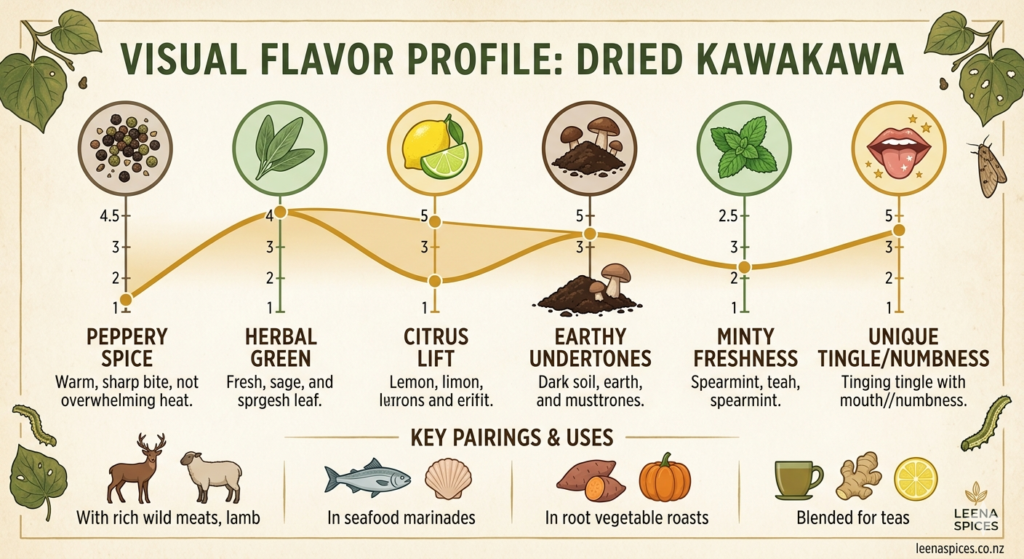
Dried Kawakawa has a distinctive peppery bite balanced by fresh, green, and herbaceous notes. Its flavor is often compared to a mix of black pepper, basil, and lemongrass, with subtle undertones of ginger, nutmeg, or even vanilla depending on how it’s dried.
The taste is not overwhelmingly strong but rather warming and aromatic, making it well-suited to both savory and herbal applications. Some people notice a slight tingling or numbing sensation on the tongue, similar to the effect of Sichuan peppercorns, followed by a clean, lingering herbal finish.
When brewed as a tea, dried Kawakawa produces a refreshing, slightly pungent infusion with a mild bitterness, which is sometimes interpreted as “bitter bitter.” In cooking, the dried leaves provide an earthy, peppery depth that enhances soups, marinades, seasonings, and spice blends without overpowering other ingredients.
In short, dried Kawakawa offers a complex yet balanced flavor: peppery, herbal, and gently spicy, with a touch of bitterness that makes it both unique and versatile.
Feature | Description |
Flavor Profile | Features a distinctive peppery bite beautifully balanced by fresh, green, and herbaceous notes. |
Complex Taste Notes | Often compared to an intricate mix of black pepper, sweet basil, and refreshing lemongrass, with subtle undertones of ginger, nutmeg, or even vanilla depending on how the leaves are dried. |
Warming & Aromatic | The taste is not overwhelmingly hot or strong, but instead delivers a comforting warmth that works beautifully in both savory dishes and herbal preparations. |
Signature Tingle | Creates a slight tingling or mild numbing sensation on the tongue, similar to Sichuan peppercorns, followed by a clean, lingering herbal finish. |
As an Herbal Tea | When brewed, it produces a refreshing, slightly pungent infusion with a mild traditional bitterness, often affectionately described as a clean “bitter-bitter” taste. |
Culinary Versatility | The dried leaves add an earthy, peppery depth that enhances soups, marinades, seasonings, and custom spice blends without overpowering other ingredients. |
How to Pick the Best Kawakawa Leaves for Cooking
If you live in New Zealand and have access to wild, sustainably grown kawakawa, harvesting and drying your own leaves can be a very rewarding experience. It not only connects you to the plant but also gives you control over freshness and quality.
To get the best flavour and potency while respecting the plant, it’s important to follow a few traditional guidelines when selecting your leaves:
Look for Kawakawa looper moth holes (a traditional tip)
If you come across a wild kawakawa bush, you’ll likely notice its heart-shaped leaves marked with small holes. These are made by the native kawakawa looper moth caterpillar (Cleora scriptaria).
Rather than being a flaw, these leaves are highly valued in traditional Rongoā Māori. When the caterpillar feeds on the leaf, the plant responds by activating its natural defence system, increasing the levels of essential oils and beneficial compounds in the remaining tissue.As a result, leaves with these small holes are often considered more flavourful and potent, with a stronger peppery character.
When kawakawa leaves are nibbled, the plant responds by activating its natural defence system, increasing the concentration of essential oils within the leaf tissue. This response is part of what gives the leaves their stronger flavour and potency.
Modern research supports this traditional understanding. A study from the University of Auckland identified more than 60 bioactive compounds in kawakawa leaves, highlighting how closely traditional harvesting practices align with current scientific findings
Harvest Sustainably (Kawakawa Protocol)
When harvesting kawakawa, it’s important to respect the plant and follow sustainable practices. Take only a few leaves from each bush, and avoid stripping any branch completely so the plant can continue to thrive.
A helpful tip is to pick leaves from the side of the bush that faces the morning sun. These leaves are often more aromatic and may contain higher levels of natural oils.
Select Mature, Upper Kawakawa Leaves
Choose fully developed, heart-shaped leaves from the middle or upper parts of the plant. These tend to have the best flavour and quality.
Avoid picking very young leaves at the tips, as they still need time to grow. It’s also best to skip older, yellowing leaves near the base of the plant, as they can lose both flavour and potency.
Avoid Roadsides and Spray Zones
Make sure you harvest kawakawa from clean, unpolluted areas. Avoid plants growing near busy roads, railway lines, or farmland where they may be exposed to exhaust fumes, chemical sprays, or pesticide drift.
By choosing your leaves carefully and harvesting with intention, you can create a dried kawakawa supply that is high in quality, rich in natural compounds, and full of its distinctive peppery flavour.
| Topic | Details |
|---|---|
| Main Consideration | Deciding whether to forage wild kawakawa or buy it dried depends on your location, access to plants, and willingness to follow traditional harvesting practices. |
| Foraging Wild Kawakawa | A rewarding way to connect with nature and traditional Māori knowledge, especially for people living in New Zealand with access to healthy plants. |
| Where Kawakawa Grows | Kawakawa (Piper excelsum) grows mainly in the North Island and upper South Island, including areas such as Banks Peninsula. It thrives in damp, shaded environments like coastal forests, bush edges, lowland native forests, and near rivers or streams. |
| Public Land Rules | Removing plant material from DOC land, national parks, and reserves is generally prohibited without a permit for cultural or scientific purposes. |
| Local Council Restrictions | Many local parks and walkways restrict or prohibit foraging. Always check local council regulations before harvesting. |
| Private Property Harvesting | Always ask the landowner for permission before collecting kawakawa on private land. |
| Ethical Harvesting Practices | Follow tikanga (Māori protocol) by taking only what you need, avoiding overharvesting, and treating the plant with respect. Mature upper leaves with small insect holes are often preferred. |
| Benefits of Buying Dried Kawakawa | Convenient and practical, especially for people living in urban areas, overseas, or regions where kawakawa does not naturally grow. |
| Food Safety Advantage | Commercially sourced kawakawa is less likely to be exposed to roadside pollution, pesticides, or animal runoff, making it a safer option. |
| Controlled Drying Quality | Professionally dried kawakawa is processed carefully to preserve flavour, aroma, colour, and natural oils while reducing the risk of mold. |
| Convenience | Ready to use immediately in teas, baking, spice blends, and cooking without the need for identification, harvesting, or drying. |
| Best Choice for Foraging | Ideal if you have legal access to clean, healthy plants on private land and want a deeper connection to traditional harvesting practices. |
| Best Choice for Buying | Best for people seeking reliability, convenience, food safety, and consistent flavour in everyday cooking and herbal use. |
| Final Verdict | Foraging offers a meaningful cultural and nature-based experience, while buying premium dried kawakawa provides a safer, easier, and more consistent option for most people. |
How do you dry kawakawa leaves for cooking?
Drying Kawakawa leaves is a simple process, but doing it correctly helps preserve both their flavor and beneficial properties. Here’s how to do it:
- Harvest
Choose healthy, mature leaves that are free from damage or disease. Early morning, after the dew has evaporated, is the best time to pick. - Clean
Rinse the leaves gently under cool running water to remove dust or insects. Pat them completely dry with a clean cloth or paper towel as moisture can cause mold during drying. - Drying Methods
- Air Drying (Traditional Method):
Spread the leaves in a single layer on a mesh rack, tray, or clean paper in a warm, dry, and well-ventilated space. Keep them out of direct sunlight to prevent loss of flavor and color. Depending on humidity, this can take 1–2 weeks. - Dehydrator (Best for Even Results):
Set the dehydrator to a low temperature, around 40–45°C (104–113°F). Dry for 4–6 hours, or until the leaves are crisp and crumble easily. - Oven Drying (Quick Method):
Place the leaves on a baking tray at the oven’s lowest setting, ideally around 50°C (120°F). Leave the door slightly open to allow moisture to escape. Check every 30 minutes until dry. - Microwave (Emergency Option):
Sandwich the leaves between paper towels and microwave on HIGH for 30–40 seconds. This works quickly but may reduce flavor compared to slower methods.
How to Grind Dried Kawakawa Without Losing Flavor
Grinding dried Kawakawa is one of the most important steps in bringing out its distinctive flavor and aroma. When ground correctly, the leaves release their warm, peppery character along with the earthy, woodsy notes that make this native New Zealand herb so unique.
However, the grinding process requires a gentle touch. Much of Kawakawa’s flavor comes from naturally occurring aromatic oils, which are sensitive to heat. If the leaves become too warm during grinding, these compounds can dissipate, reducing both the herb’s fragrance and its overall flavor intensity. The result is a powder that tastes flatter and less vibrant than it should.
Using the right grinding technique helps preserve these delicate aromas, allowing you to capture the full character of Kawakawa and achieve the best possible results in your cooking.
Mortar and Pestle vs. Electric Blade Grinder
Many home cooks automatically reach for an electric spice or coffee grinder when turning dried Kawakawa into a powder. While this method is quick and convenient, it can affect the herb’s flavor if not used carefully.
The challenge is heat. High-speed blade grinders create friction as the blades spin, causing the grinding chamber to warm up. This heat can drive off some of the aromatic compounds responsible for Kawakawa’s distinctive fragrance and flavor. If you’ve ever opened a grinder and been greeted by an intense burst of aroma, you’re experiencing some of those volatile oils being released into the air rather than remaining in the finished powder.
A mortar and pestle works differently. Instead of cutting the leaves at high speed, it crushes them slowly and gently, generating very little heat. This traditional method helps preserve more of Kawakawa’s natural aroma while also giving you greater control over the final texture, whether you want a coarse blend or a fine powder.
If you choose to use an electric grinder, grind in short pulses rather than running it continuously. This helps minimize heat buildup and retains more of the herb’s delicate flavor compounds. For the most aromatic and flavorful results, however, a mortar and pestle remains the preferred option.
How do I store dried kawakawa to maximize shelf life?
The freshness and potency of dried Kawakawa depend on how well it’s stored. Several key factors influence its longevity:
- Air Exposure – When exposed to oxygen, Kawakawa’s essential oils slowly break down, leading to a loss of both flavor and medicinal strength. Always keep the leaves in an airtight container with a secure lid.
- Light – Direct sunlight causes the leaves to fade in color and reduces their active compounds. For best results, store Kawakawa in a dark cupboard or use opaque or amber glass jars.
- Heat – High temperatures accelerate the loss of volatile oils, which are responsible for Kawakawa’s peppery aroma and benefits. Store the dried leaves in a cool, dry place, away from ovens or stoves.
- Moisture – Even small amounts of moisture can cause clumping, mold, or spoilage. Make sure the leaves are completely dry and brittle before sealing them in storage.
- Label and Track – Mark each jar with the drying date. This makes it easy to monitor freshness and rotate older batches first.
Shelf Life of Kawakawa Leaves:
When stored under these conditions, dried Kawakawa will maintain its flavor and properties for 6–12 months. With exceptional care, it may remain usable for up to 18 months, though potency naturally decreases over time.
To keep your herbs fresh and potent, store them away from heat, moisture, and direct sunlight. This helps preserve both their colour and flavour over time.
If you want to dive deeper into proper storage techniques, you can explore our detailed guide on extending shelf life in this Nasi Goreng spice blend storage guide
Pro Tip:
Store the leaves whole whenever possible. Crushing or grinding them releases the essential oils, which can fade quickly. Instead, grind or crumble just before use to capture the freshest flavor and aroma.
How do I use dried kawakawa in cooking?
Dried kawakawa has a unique and layered flavour that really stands out. It offers a mild peppery warmth, balanced with earthy herbal notes and a subtle hint of citrus. This combination makes it a versatile ingredient you can use in many different ways.
If you’re interested in making your own New Zealand-inspired spice rubs, marinades, or even herbal teas at home, kawakawa is a great place to start. Here’s how you can use it like an experienced blend maker:
1. Complementary Herbs & Spices
Horopito:
Horopito, often called New Zealand’s native pepper tree, pairs beautifully with kawakawa if you’re looking to add authentic local heat to your dishes. When combined, these two create a layered spice profile, warm, slightly fiery, and gently woody.
It works as a great alternative to regular black pepper, but with a lot more depth and character, making your blends feel more distinctive and uniquely New Zealand.
Citrus Profiles:
Kawakawa naturally carries light citrus notes, and these become even more noticeable when you pair it with ingredients like lemon pepper, lemongrass, dried orange peel, or lemon myrtle. These bright, zesty flavours lift the overall profile and add a refreshing edge.
The citrus elements help balance kawakawa’s earthy depth, creating a well-rounded blend that feels both fresh and grounded.
If you enjoy creating these fresh, zesty profiles, you might also like exploring how similar flavours come together in our guide to crafting an authentic Filipino spice blend at home.
Ginger & Nutmeg:
For sweet baking or comforting winter teas, kawakawa pairs beautifully with warming spices like ground ginger, nutmeg, and cinnamon. These spices highlight its naturally aromatic qualities and add a cosy, soothing feel.
The result is a gentle, well-balanced flavour that’s perfect for colder days or whenever you want something warm and comforting.
2. Best Protein Pairings
Kawakawa works especially well with a range of proteins, adding depth without overwhelming the natural flavours.
With rich meats like venison, duck, lamb, and pork, its peppery, slightly earthy character helps cut through the fat and balance the richness. For best results, mix kawakawa with sea salt and use it as a simple dry rub before roasting.
It also pairs beautifully with fresh seafood. A light sprinkle of finely crumbled kawakawa over white fish, salmon, or pan-seared scallops adds a subtle, gourmet touch while still letting the natural flavour of the seafood shine.
3. Everyday Vegetables & Sides
Kawakawa is a great way to add extra flavour to simple vegetable dishes and everyday sides.
It pairs especially well with sweet root vegetables like kūmara (New Zealand sweet potato), carrots, pumpkin, and butternut squash. Toss the vegetables in a little olive oil and a pinch of dried kawakawa before roasting. The gentle peppery and citrus notes help balance their natural sweetness and bring out a deeper flavour.
You can also turn it into a simple native-style herb butter. Melt good-quality butter, then stir in finely crumbled kawakawa, a pinch of garlic powder, and a little sea salt. Let it cool until it firms up again. This butter is perfect over hot steaks, baked potatoes, or corn on the cob, adding a subtle herbal and peppery finish to everyday meals.
4. Mediterranean Classics
Kawakawa can also work surprisingly well in classic Mediterranean-style blends. Adding a small pinch to familiar combinations like garlic, rosemary, and thyme gives traditional roasts a subtle New Zealand twist.
Its gentle peppery warmth blends in easily, adding a bit more depth and making the overall flavour more interesting without overpowering the dish.
5. Ground Powder
You can crush or grind dried kawakawa leaves into a coarse flake or fine powder. Use it sparingly in soups, stews, and sauces, or sprinkle a little over roasted vegetables to add a gentle peppery, herbal touch.
What are the health benefits of kawakawa?
Kawakawa (Piper excelsum) has long been valued in rongoā Māori (traditional Māori medicine) and is now gaining recognition in modern herbal practices. Both traditional use and emerging research suggest a wide range of potential health benefits:
1. Digestive Support
Kawakawa has traditionally been used to soothe stomach discomfort, indigestion, bloating, and constipation. It can act as a gentle digestive stimulant and may help regulate bowel movements.
2. Anti-inflammatory Properties
The leaves contain natural compounds such as myristicin, pellitorine, and yangambin, which may help reduce inflammation. This has made Kawakawa a go-to remedy for supporting joint health, easing arthritis, and calming inflammatory skin conditions.
3. Pain Relief
Kawakawa provides mild numbing effects and has been used for toothache, bruises, and general aches. Its analgesic qualities make it useful both internally (as tea) and externally (as poultices or balms).
4. Antimicrobial & Skin Healing
Applied topically, Kawakawa has been used to treat cuts, boils, rashes, and skin conditions like eczema. Its antimicrobial action supports wound healing and skin repair.
5. Circulatory & Heart Health
Traditionally, Kawakawa was considered a tonic for improving blood circulation. Some of its active compounds are thought to support cardiovascular function and overall vitality.
6. Urinary & Bladder Health
In Māori medicine, Kawakawa was often used as a diuretic to support the bladder and urinary system.
7. Antioxidant Protection
The leaves are rich in antioxidants, which help protect the body from oxidative stress and may support long-term metabolic health.
8. Mood & Energy Support
Kawakawa naturally contains dopamine, which may contribute to mood balance, energy, and overall well-being.
Important Note: While Kawakawa has a long history of use, it should be taken in moderation, as it may have mild laxative or sedative effects. Always consult a qualified healthcare professional before using Kawakawa for medicinal purposes, especially if you are pregnant, breastfeeding, or taking other medications.
Kawakawa Side Effects & Safety Precautions
Kawakawa is a well-known traditional herb that has been used safely in New Zealand for generations. However, like many medicinal plants, it contains active natural compounds, so it’s still important to use it with care.
Keeping a few simple precautions in mind can help you enjoy its benefits safely and responsibly.
Contains Myristicin
Kawakawa naturally contains a compound called myristicin, which is also found in spices like nutmeg. When used in normal culinary amounts, such as in teas or as a seasoning, it is considered safe.
However, like many potent plant compounds, it’s best to avoid consuming very large amounts over long periods. Using kawakawa in moderation is the safest approach.
Pregnancy and Breastfeeding
As with many medicinal herbs, there is limited research on the safety of kawakawa during pregnancy and breastfeeding. Because of this, it’s generally recommended to avoid using it during these times as a precaution.
Mild Numbing Sensation
If you chew a kawakawa leaf or drink a strong brew, you may notice a slight tingling or numbing feeling on your tongue. This is a normal reaction caused by the plant’s natural oils, similar to the sensation from Sichuan pepper.
The effect is temporary and usually fades quickly. Otherwise seek medical advice.
Medication Interactions
If you are taking prescription medications, especially blood thinners or drugs processed by the liver, check with a healthcare professional before using kawakawa regularly. The same applies if you have surgery planned. This helps ensure there are no potential interactions and that it’s safe for your individual situation.
Kawakawa is generally safe when used in everyday cooking, but it is still a biologically active plant. This means its natural compounds can have noticeable effects, especially when consumed in concentrated forms.
Research and laboratory studies, including those highlighted by the New Zealand Ministry of Education, show how kawakawa extracts interact with cells. This helps explain why moderation is important, particularly when using it in strong herbal infusions
Where to Buy Authentic New Zealand Kawakawa Online
Because Kawakawa is a treasured native plant (taonga) of New Zealand, it’s important to buy it from suppliers who follow respectful and sustainable harvesting practices.
If you live outside New Zealand, or you do not have access to fresh Kawakawa plants for foraging, you can still find high-quality dried Kawakawa leaves online from trusted sellers.
We highly recommend supporting local Rongoā Māori practitioners or organic herb growers who carefully wildcraft or sustainably grow Kawakawa leaves with respect for the plant and the environment.
Looking to upgrade your spice cabinet with exciting new flavors?
While we don’t currently stock pure Kawakawa at Leena Spices, we are passionate about clean, authentic, filler-free cooking. If you enjoy discovering unique herbs and spices, download our Free Leena Spices Recipe Cookbook & Spice Guide below and learn how to create flavorful, world-class spice blends right in your own kitchen.
Download a Free Leena Spices Recipes Cookbook

Frequently Asked Questions About Dried Kawakawa
Can I use dried Kawakawa instead of fresh in recipes?
Yes! Dried Kawakawa is more concentrated, so start with smaller amounts than you would fresh leaves. It works well in teas, spice blends, baked goods, and savory dishes.
Does Kawakawa have any side effects?
When used in moderation, it is generally safe. Excessive consumption may cause mild laxative or sedative effects. Always consult a healthcare professional if pregnant, breastfeeding, or on medication.
Can I grind dried Kawakawa into a powder?
Absolutely. Grinding increases its surface area and flavor intensity. For best results, only grind just before use to preserve aroma and essential oils.
How long does Kawakawa tea stay fresh?
Brewed Kawakawa tea is best enjoyed immediately. It can be stored in the fridge for up to 24 hours, but the flavor and aroma are strongest when fresh.
Can I use dried Kawakawa in savory and sweet recipes?
Yes! It pairs beautifully with meats, seafood, root vegetables, cheeses, and even desserts like custards, cakes, and spiced shortbreads for a subtle herbal twist.
Is Kawakawa used in traditional medicine only, or does it have modern applications?
While it’s a cornerstone of Māori rongoā, modern herbalists and chefs use it for culinary, wellness, and topical applications, including teas, infusions, oils, and skin remedies.
What is the best way to add Kawakawa flavor without overpowering a dish?
Use small amounts (¼–½ teaspoon of powdered leaves) initially, taste, and adjust. Its peppery and slightly numbing profile is potent, so a little goes a long way.
Can I gift homemade Kawakawa products?
Yes! Infused oils, flavored salts, or scones made with Kawakawa make thoughtful, unique gifts. Just ensure your dried leaves are fresh and stored properly before use.
Conclusion
Dried Kawakawa is a versatile and treasured New Zealand herb that brings both flavor and wellness benefits to your kitchen. From peppery teas and refreshing spritzers to savory dishes, baked goods, and infused oils, its aromatic, slightly warming notes elevate a wide range of recipes. Beyond its culinary uses, Kawakawa has a long history in Māori traditional medicine for supporting digestion, easing minor pain, and promoting skin and circulatory health. By storing it properly and using it thoughtfully, you can enjoy its unique taste and potential benefits for months. Remember, while Kawakawa is a powerful herb, always consult a healthcare professional before using it medicinally, especially if you are pregnant, breastfeeding, or on medication. Explore, experiment, and let Kawakawa inspire your cooking and wellbeing.
Mastering unique regional ingredients doesn’t stop with the New Zealand bush. If you want to expand your pantry with more complex, vibrant heat profiles, explore our comprehensive guide on How to Cook with Gochugaru.
The content on this blog, including information about Kawakawa, nutrition, and health benefits, is provided for educational and informational purposes only. It is not intended as medical advice, diagnosis, or treatment.
Always consult a qualified healthcare professional or your doctor before starting any new diet, supplement, or health regimen, especially if you are pregnant, breastfeeding, have a medical condition, or are taking medications.
Leena Spices and its team do not accept any liability for any adverse effects or consequences resulting from the use of the information provided on this blog.
Impu Irani is a cookbook author behind Leena Spices, where he shares practical, easy-to-follow guides on homemade spice blends, herbs, and natural cooking. His work helps home cooks create fresh, flavorful meals using simple ingredients and traditional methods. Download his free Spice Blending eBook and start your journey to cleaner cooking today!
Disclosure Note
We are committed to creating high-quality, helpful content for our readers. We do not accept payment in exchange for writing our articles, and we personally cover the costs of running this website, including hosting, tools, and maintenance.
To support the site, we display ads and may earn a small commission from affiliate links if you choose to make a purchase—at no extra cost to you.
Your support helps us continue sharing valuable content with the community.
If you’d like to support us, here are a few simple and free ways:
- Share our content with your friends and family
- Engage with us on social media
- Follow us on Facebook
You can also learn more by visiting our disclaimer page:
https://leenaspices.co.nz/disclaimer/
As a thank you, feel free to download our Free Spice Recipe eBook.
Download a Free Leena Spices Recipes Cookbook