Impu Irani is the cookbook author behind Leena Spices , where he shares easy homemade spice blend recipes and practical cooking tips. Read more about him at the end of this post.
Table of Contents
ToggleKey Takeaways
What is the main difference between vegetable masala and garam masala?
Vegetable masala is a complete seasoning blend used early in cooking for rich, earthy flavor, while garam masala is a finishing spice added at the end for warmth and aroma.
Can I use garam masala instead of vegetable masala?
You can, but the flavor will differ. Garam masala adds aroma, not the full-bodied base flavor that vegetable masala provides.
Which one should beginners buy first?
Start with vegetable masala—it’s an all-in-one blend perfect for everyday curries. Add garam masala later for extra depth and fragrance.
Why are both used in the same dish sometimes?
Because they complement each other—vegetable masala builds the foundation, while garam masala adds the finishing touch for aroma and warmth.
Does garam masala contain turmeric or chili powder?
No. Garam masala focuses on warming spices like cardamom, cinnamon, and cloves, while vegetable masala includes turmeric and chili for color and heat.
What Is Vegetable Masala Made Of?
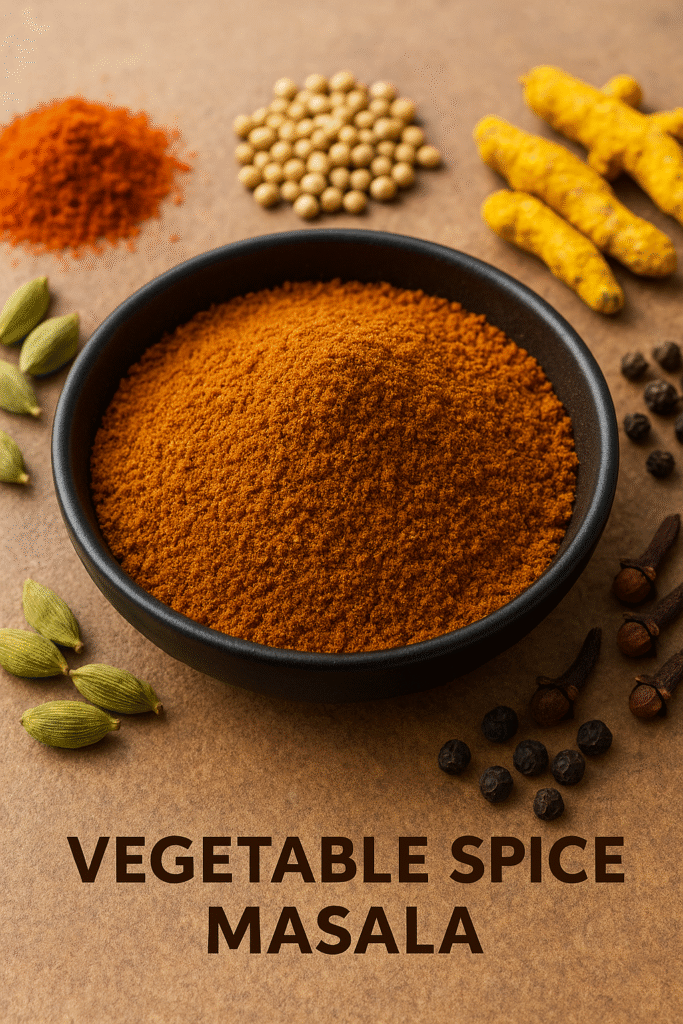
Vegetable masala is a fragrant and versatile spice blend that brings rich depth and warmth to vegetarian and vegan dishes. It’s crafted from a balanced mix of aromatic spices and herbs that work together to enhance the natural flavors of vegetables.
A traditional vegetable masala typically includes:
- Asafoetida – Adds a savory, onion-like aroma that deepens the flavor.
- Bay Leaves – Contribute a mild earthy fragrance.
- Black Pepper – Offers a subtle heat and sharpness.
- Cardamom – Adds a hint of sweet, floral spice.
- Cilantro (Coriander leaves or seeds) – Provides a citrusy, fresh note.
- Cinnamon – Brings gentle sweetness and warmth.
- Cloves – Impart a strong, slightly sweet aroma.
- Coriander – A key ingredient that adds a nutty, lemony base flavor.
- Cumin – Gives an earthy, smoky depth.
- Fenugreek Leaves (Kasuri Methi) – Add a touch of bitterness and a unique herbal aroma.
- Garlic Powder – Enhances savory depth.
- Ginger Powder – Adds warmth and mild spice.
- Mango Powder (Amchur) – Introduces tanginess that balances the richness of other spices.
- Nutmeg – Adds a warm, sweet-spicy aroma.
- Paprika – Provides mild heat and vibrant color.
- Turmeric – Gives the blend its golden hue and earthy undertone.
How do I Make a Homemade Vegetable Masala Blend at Home
Making your own vegetable masala at home is simple and rewarding. It lets you control the freshness, aroma, and intensity of your spices — ensuring every dish bursts with authentic flavor. Follow this easy recipe to create your own aromatic blend:
Ingredients
- Asafoetida – 1 g
- Bay Leaves – 4 g
- Black Pepper – 1 g
- Cardamom – 1 g
- Cilantro (Coriander leaves or seeds) – 1 g
- Cinnamon – 4 g
- Cloves – 4 g
- Coriander – 43 g
- Cumin – 22 g
- Fenugreek Leaves – 1 g
- Garlic Powder – 5 g
- Ginger Powder – 5 g
- Mango Powder (Amchur) – 2 g
- Nutmeg – 1 g
- Paprika – 1 g
- Turmeric – 4 g
Instructions
- Dry Roast the Whole Spices
In a pan on low heat, lightly roast coriander, cumin, black pepper, cinnamon, cloves, cardamom, and bay leaves. Stir continuously for 2–3 minutes until they release their aroma. Be careful not to burn them. - Cool and Grind
Allow the roasted spices to cool completely. Once cooled, transfer them to a spice grinder and grind to a fine or slightly coarse powder — depending on your preference. - Add the Powders
Mix in the garlic powder, ginger powder, turmeric, paprika, asafoetida, mango powder, nutmeg, fenugreek leaves, and cilantro. Stir well until everything is evenly blended. - Store Properly
Transfer your vegetable masala to an airtight glass jar. Store it in a cool, dark place away from moisture and sunlight. When stored properly, it stays fresh and aromatic for up to 6 months.
Usage Tip
Use 1–2 teaspoons of this homemade vegetable masala per dish. It’s perfect for vegetable curries, stir-fries, lentil soups, and gravy-based dishes. A little goes a long way in adding rich, layered flavor.

What Is a Simple Vegetable Masala Curry Recipe?
Simple Vegetable Masala Curry Recipe (Cauliflower, Peas & Potato Masala – Aloo Gobi)
If you’re looking for an easy, flavorful Indian curry that’s both comforting and wholesome, this Vegetable Masala Curry is a perfect choice. Made with cauliflower, potatoes, and peas — and seasoned with homemade vegetable masala — this dish delivers rich aroma, balanced spice, and hearty satisfaction. You can also use any combination of vegetables you like, making it a versatile everyday recipe.
Ingredients
- 1 medium cauliflower, cut into small florets
- 2 large potatoes, cut into small cubes
- ½ cup peas (fresh or frozen)
- 1 medium onion, finely chopped
- 2 tablespoons oil
- 1 teaspoon vegetable masala
- 1 teaspoon tomato puree
- ½ teaspoon cumin seeds
- Salt to taste
- Fresh cilantro for garnish
Method
- Prepare the Vegetables
Wash all the vegetables and set them aside to drain. - Heat the Oil
In a wok or deep pan, heat oil over medium heat. Add cumin seeds and let them sizzle until fragrant. - Sauté the Onions
Add the chopped onions and sauté for 3–4 minutes, or until they turn light golden brown. - Add the Vegetables
Stir in the cauliflower and potatoes. Sauté for 1–2 minutes to coat them well in the oil and spices. - Add the Spices
Sprinkle in the vegetable masala and stir for another 1–2 minutes to release its aroma. - Cook Covered
Reduce the heat to low, cover the pan, and let the vegetables cook until tender. Stir occasionally to prevent sticking. - Add the Peas
Once the cauliflower and potatoes are soft, add the peas and cook for another 5 minutes. - Finish with Tomato Puree and Salt
Increase the heat slightly, stir in the tomato puree and salt, and cook uncovered for about 5 minutes until the flavors blend. - Garnish and Serve
Turn off the heat, garnish with freshly chopped cilantro, and serve hot with naan, roti, rice, or bread.
When Should You Add Vegetable Masala to a Curry?
Getting the timing right when adding vegetable masala can make all the difference between a good curry and an unforgettable one. The key lies in knowing when to introduce the spices so they release their full aroma and blend beautifully with the other ingredients.
Here’s how to do it right:
1. Add Masala After the Onion-Tomato Base
For most vegetable curries, the best time to add vegetable masala is after you’ve sautéed your aromatics — such as onions, garlic, and ginger.
Once they’re soft and lightly golden (after about 5–7 minutes of cooking in oil or ghee), sprinkle in the masala and stir for 30–60 seconds.
This short cooking step, known as blooming the spices, allows the fat-soluble flavor compounds to release into the oil, deepening the curry’s flavor base.
2. Build Layered Flavor
To create a more complex and balanced flavor — especially in mixed or fusion curries — try adding the masala in two stages:
- Half early on: Add during the sautéing stage to develop body and warmth.
- Half near the end: Add about 5–10 minutes before finishing the dish to bring out brighter, fresher spice notes.
This two-step technique ensures the curry tastes both rich and aromatic, with layers of flavor that unfold as you eat.
3. Avoid Burning the Spices
Never add dry masala directly into very hot oil or an empty pan — it can burn in seconds, turning bitter.
Always ensure there’s a bit of moisture, like sautéed onions, ginger-garlic paste, or tomato puree, before adding the spice blend.
If the masala starts sticking to the bottom of the pan, add a splash of water or tomato puree immediately. This prevents burning and helps the spices cook gently.
4. For Dry or Roasted Dishes
When making dry vegetable dishes or grilled recipes, mix the masala with a spoonful of oil or water to make a paste before coating the vegetables. You can also sprinkle a little masala in the last 5 minutes of cooking to enhance aroma without overpowering the dish.
The Golden Rule
Vegetable Masala (or Sabji Masala) is a foundation spice blend — it needs to be cooked to unlock its full potential.
Unlike Garam Masala, which is typically added at the end for aroma, Vegetable Masala belongs in the early to mid-stages of cooking, when the flavors have time to develop and meld together beautifully.
What Vegetables Pair Best with Vegetable Masala Spice?
Vegetable masala is a versatile spice blend that complements a wide variety of vegetables. The best choices are those that hold their texture during cooking and absorb the aromatic flavors of the masala without turning mushy. The goal is to create a beautiful balance of sweetness, crunch, and spice — resulting in a curry that’s hearty, colorful, and full of depth.
Top Vegetables That Pair Perfectly with Vegetable Masala
- Potatoes – Their starchy texture soaks up masala flavors wonderfully, making them a classic base for many Indian curries.
- Cauliflower – Adds a mild, earthy flavor and holds up beautifully in simmering sauces.
- Carrots – Bring natural sweetness and a pop of color that balances the spice heat.
- Green Beans – Stay crisp and add freshness and crunch to rich, spiced gravies.
- Peas – Offer sweetness and vibrant color contrast, lightening up the dish.
- Bell Peppers (Capsicum) – Add tangy sweetness, texture, and beautiful color variety to masala dishes.
- Zucchini – Works well when added toward the end of cooking to prevent over-softening.
- Broccoli – Introduces a slightly nutty, bitter balance that complements creamy or tomato-based masalas.
- Cabbage – Excellent for quick stir-fry masala dishes; lightly sautéed cabbage develops a rustic flavor.
- Chickpeas (Optional) – Absorb masala deeply while adding a hearty protein boost.
- Eggplant (Aubergine) – Its creamy texture absorbs smoky, spicy notes perfectly, ideal for dishes like baingan bharta or eggplant curry.
- Spinach or Silverbeet – Add earthy, mineral-rich flavor and tone down the heat; silverbeet makes a great Kiwi substitute for palak.
- Pumpkin or Squash – Their sweet, dense flesh pairs beautifully with the warmth of masala, making comforting dishes like pumpkin curry.
- Sweet Potato (Kumara) – Adds a richer sweetness and creamy texture, ideal for fusion-style masala curries.
- Okra (Bhindi) – A traditional favorite, lending a distinctive earthy flavor that complements dry masala dishes.
- Mushrooms – Their meaty texture works perfectly in semi-dry or roasted masala preparations.
- Paneer (Indian Cottage Cheese) – While not a vegetable, it’s an excellent protein companion that absorbs masala flavors beautifully.
Pro Tip:
For the best texture, add firm vegetables early (like potatoes and carrots) and softer ones later (like zucchini or spinach). This ensures even cooking and a curry that’s full of life, color, and balanced flavor.
How Long Does Homemade Vegetable Masala Last in Storage?
Homemade vegetable masala can stay fresh and flavorful for months when stored properly. While it doesn’t exactly “spoil” like fresh food, ground spices gradually lose their potency and aroma as their natural oils evaporate.
Here’s everything you need to know about keeping your masala blend at its best.
Shelf Life of Homemade Vegetable Masala
- Optimal Freshness: 3 to 6 months
- Maximum Potency: Up to 1 year
After six months, you may notice a gradual loss of aroma and flavor. The blend will still be safe to use but may require slightly more to achieve the same intensity.
Why Freshness Matters
Homemade blends, made from freshly roasted and ground whole spices, start off much more aromatic than store-bought versions. However, because they lack preservatives and anti-caking agents, they also lose their vibrancy faster.
Store-bought pre-ground masalas may already be a few months old, meaning their peak flavor window is usually just 4–6 months after purchase.
Storage Tips for Maximum Freshness
- Use an Airtight Container
Store your masala in a sealed glass jar or stainless steel tin to prevent exposure to air and moisture. - Keep It Cool and Dark
Ideal temperature: 15–20°C (59–68°F).
Keep away from stoves, ovens, and direct sunlight — a pantry or dark cupboard is best. - Avoid Humidity
Moisture is the enemy of dry spices.- Add a few grains of uncooked rice or a food-safe silica packet to absorb excess humidity.
- Avoid refrigerating unless you live in a very humid climate.
- Use Clean, Dry Spoons
Never use a wet or food-stained spoon — even a drop of moisture can lead to clumping or mold. - Store in Smaller Portions
- Keep a small jar near your stove for daily use and replenish it weekly.
- Store the rest in a sealed bulk container away from heat.
This prevents frequent exposure to air and light.
- Label Your Jar
Write the date you made the masala and note any ingredient variations. This helps you track freshness and tweak future batches.
How to Tell If Your Masala Has Gone Off
Watch for these signs that it’s time to refresh your batch:
- ❌ Faint or no aroma when you open the jar
- ❌ Dull, faded color (good masala should be vibrant)
- ❌ Clumping or caking (sign of moisture)
- ❌ Musty or off smell
- ❌ Weak flavor when cooked
Quick Test: Rub a pinch between your fingers and smell it. If there’s little to no fragrance, the flavor oils have faded.
Safety Note: Properly stored dry spices rarely become unsafe, but discard immediately if you see mold or the blend smells musty.
Pro Tips for Long-Lasting Freshness
- ✅ Make Small Batches: Prepare about ½ cup every 3–4 months for peak flavor.
- ✅ Keep Away from Appliances: Avoid storing above the stove or near dishwashers and ovens — heat and steam shorten shelf life.
- ✅ Handle with Care: Keep containers tightly sealed between uses.
How to Revive Old Masala
If your masala has lost some of its punch but isn’t completely flat, you can gently refresh it with a dry roast:
- Heat a clean, dry pan on medium-low heat.
- Add the old masala and stir constantly for 30–60 seconds.
- Remove as soon as it becomes aromatic — don’t let it burn.
- Cool completely before transferring back to the container.
This simple step can bring tired spices back to life for another few weeks of flavorful cooking.
Related Posts You May Like
The Ultimate Guide to Garam Masala: How to Use, Make, and Benefit from This Indian Spice Blend
1 Secret of Asian Spice Blend That Will Transform Your Cooking
7 Irresistible Daal Secrets for Beginners: Easy Lentil Soup Recipes, Homemade Masala Tadka Tips
10 Flavor-Packed Tips of Using Butter Chicken Spice Blend at Home
What is The Difference Between Vegetable Masala and Garam Masala?
The difference between Vegetable Masala and Garam Masala lies in their ingredients, purpose, flavor profile, and how they’re used in cooking. While both are essential Indian spice blends, they serve very different roles in your kitchen.
1. Composition
Vegetable Masala:
- Specifically crafted for vegetable-based dishes such as sabzi, aloo gobi, or pav bhaji.
- Common ingredients include coriander, cumin, turmeric, red chili, and amchur (dried mango powder), which create a savory, earthy, and slightly tangy flavor.
- Sometimes includes fenugreek or mustard seeds for depth and balance.
- Designed to deliver a complete, ready-to-use seasoning for vegetables.
Garam Masala:
- A universal Indian spice blend used in both vegetarian and non-vegetarian dishes.
- Focuses on warming, aromatic spices like cinnamon, cloves, cardamom, black pepper, nutmeg, and mace.
- Contains no turmeric, making it darker and more aromatic.
- Its purpose is not tanginess or spice heat, but warmth, depth, and aroma.
2. Purpose
Vegetable Masala:
- Acts as the main seasoning base for vegetable curries, stir-fries, and sabzis.
- Enhances the natural sweetness or earthiness of vegetables.
- Added early during cooking (after sautéing onions and garlic) to develop flavor from the start.
Garam Masala:
- A finishing spice blend used across dishes like butter chicken, dal makhani, or paneer curries.
- Typically added toward the end of cooking to preserve its aromatic oils.
- Adds warmth and complexity, enhancing the existing spices rather than forming the base flavor.
3. Flavor Profile
Vegetable Masala:
- Taste: Savory, earthy, tangy, and slightly spicy.
- Character: Bold, full-bodied, and balanced.
- Aroma: Warm and curry-like.
Garam Masala:
- Taste: Sweet-spicy, aromatic, and subtly warm.
- Character: Deep, fragrant, and refined.
- Aroma: Sweet-floral and intensely aromatic.
4. Culinary Use
Feature | Vegetable Masala | Garam Masala |
When to Add | Early in cooking (with onions and oil) | Late in cooking (finishing or garnish) |
Contains Chili | Yes | No |
Contains Turmeric | Yes | No |
Color | Yellow or orange-brown | Deep brown |
Primary Role | Main seasoning | Flavor enhancer |
Flavor Type | Savory, earthy, complete | Warm, aromatic, subtle |
Used Alone | Yes – complete seasoning | No – used with other spices |
5. Summary of Use
Vegetable Masala – The Workhorse:
This is your all-in-one seasoning for any vegetable curry. It provides color, body, and depth using core spices like coriander, cumin, turmeric, and chili powder. Perfect for quick, flavorful meals without needing multiple spices.While you can use vegetable masala in a pinch, it will alter the color and profile of your dish. For a more seamless flavor match, look at these alternative Garam Masala substitutes
Garam Masala – The Finishing Touch:
This aromatic blend adds a final burst of warmth and fragrance. A pinch sprinkled just before serving transforms the dish from good to exceptional. It’s not meant to cook long—it’s meant to elevate flavor.
6. Which Should You Buy First?
Buy Vegetable Masala First If:
- You mainly cook vegetable-based dishes.
- You prefer an all-in-one seasoning.
- You’re a beginner looking for simplicity.
Buy Garam Masala First If:
- You cook a variety of Indian dishes (dal, paneer, chicken curries).
- You already have turmeric, cumin, and coriander at home.
- You want one versatile, finishing blend.
Best Choice: Have both!
They complement each other beautifully — Vegetable Masala builds the base flavor, and Garam Masala adds the aromatic finish.
7. Common Dishes Using Each
Vegetable Masala Is Perfect For:
- Mixed Vegetable Curry (Sabzi)
- Aloo Gobi (Potato & Cauliflower)
- Bhindi Masala (Okra)
- Baingan Bharta (Roasted Eggplant)
- Vegetable Biryani Base
Garam Masala Is Perfect For:
- Butter Chicken (finishing spice)
- Dal Makhani (final touch)
- Biryani (layering aroma)
- Kebabs (in marinades)
- Samosa Filling (warm depth)
Key Takeaway
Vegetable Masala builds the body and foundation of your curry.
Garam Masala adds the soul, warmth, and aroma at the end.
Together, they create the perfect harmony of flavor in authentic Indian cooking.
FAQs
Can I make vegetable masala and garam masala at home?
Yes! Both can be made from scratch using whole spices. Vegetable masala typically includes coriander, cumin, turmeric, chili, and dried mango powder, while garam masala focuses on warming spices like cardamom, cinnamon, cloves, and nutmeg. Freshly roasted and ground blends deliver the best aroma.
How should I store garam masala compared to vegetable masala?
Both should be kept in airtight containers, away from heat and sunlight. Vegetable masala, which contains chili and turmeric, lasts 3–6 months for optimal freshness, while garam masala can retain its aroma slightly longer if stored properly.
Can I combine vegetable masala and garam masala in the same dish?
Absolutely. For a layered, authentic flavor, use vegetable masala early in cooking to form the base and add garam masala at the end for aroma and warmth. This technique is common in many traditional Indian curries.
Are vegetable masala and garam masala spicy?
Vegetable masala has moderate heat due to chili powder, while garam masala is typically mild in heat, offering aromatic warmth instead of spiciness. Adjust the amount of chili or spice according to your preference.
Can these masalas be used in non-vegetable dishes?
Yes. Vegetable masala works best with vegetables but can also enhance legumes or grains. Garam masala is versatile and can be used in meat, fish, lentils, or even rice dishes to add aromatic depth.
Do I need both masalas in my pantry?
While you can cook with just one, having both allows you to create authentic Indian dishes. Vegetable masala builds the base flavor, and garam masala adds the final aromatic layer that elevates the dish.
Medical Disclaimer:
The information provided in this article is for educational and informational purposes only and is not intended as medical advice. Always consult a qualified healthcare provider before starting any new dietary supplement, herbal remedy, or wellness routine, especially if you have underlying health conditions, are pregnant or breastfeeding, or are taking prescription medications.
Impu Irani is a cookbook author behind Leena Spices, where he shares practical, easy-to-follow guides on homemade spice blends, herbs, and natural cooking. His work helps home cooks create fresh, flavorful meals using simple ingredients and traditional methods. Download his free Spice Blending eBook and start your journey to cleaner cooking today!
Disclosure Note
We are committed to creating high-quality, helpful content for our readers. We do not accept payment in exchange for writing our articles, and we personally cover the costs of running this website, including hosting, tools, and maintenance.
To support the site, we display ads and may earn a small commission from affiliate links if you choose to make a purchase—at no extra cost to you.
Your support helps us continue sharing valuable content with the community.
If you’d like to support us, here are a few simple and free ways:
- Share our content with your friends and family
- Engage with us on social media
- Follow us on Facebook
You can also learn more by visiting our disclaimer page:
https://leenaspices.co.nz/disclaimer/
As a thank you, feel free to download our Free Spice Recipe eBook.
Download a Free Leena Spices Recipes Cookbook