Table of Contents
ToggleKey Takeaways
What makes Massaman curry different from other curries?
Its unique blend of warm spices, mild heat, and creamy coconut base creates a rich, slightly sweet, and deeply comforting flavor.What is the single most important step for deep flavor?
It is the double-fry method. You must sear the beef first for the Maillard reaction, then fry the paste in cracked coconut cream. Skipping either step results in a “flat” curry that lacks that signature roasted depth.Why is balancing flavors of an authentic Massaman beef curry?
The perfect mix of sweet, salty, and tangy elements creates a harmonious and well-rounded curry.What makes the texture of Massaman curry so satisfying?
Ingredients like potatoes and peanuts add creaminess and crunch, making every bite more enjoyable.How do I prevent my beef from becoming “woody” or dry?
Use patience and fat. Choose a well-marbled cut like chuck or short rib, and never let the curry reach a rolling boil. A gentle, lazy simmer is the only way to transform tough fibers into a succulent, melt-in-your-mouth texture.Can I use pre-ground spices to save time?
You can, but you lose the “soul” of the dish. Toasting whole spices for just 60 seconds before grinding them reawakens dormant oils, creating an explosive aroma that pre-ground powders simply can’t match.Is Massaman actually better as a “make-ahead” meal?
Absolutely. Massaman is a molecular masterpiece that improves with age. Letting it rest overnight allows the spices to “marry” and the beef to fully absorb the aromatic fats, making the second day’s bowl even more divine.When is the best time to do the final taste test?
Always at the very end. As the sauce reduces, the salt and sugar concentrate. Balancing your tamarind, fish sauce, and palm sugar in the final 10 minutes ensures your flavor harmony is precise and not overpowered.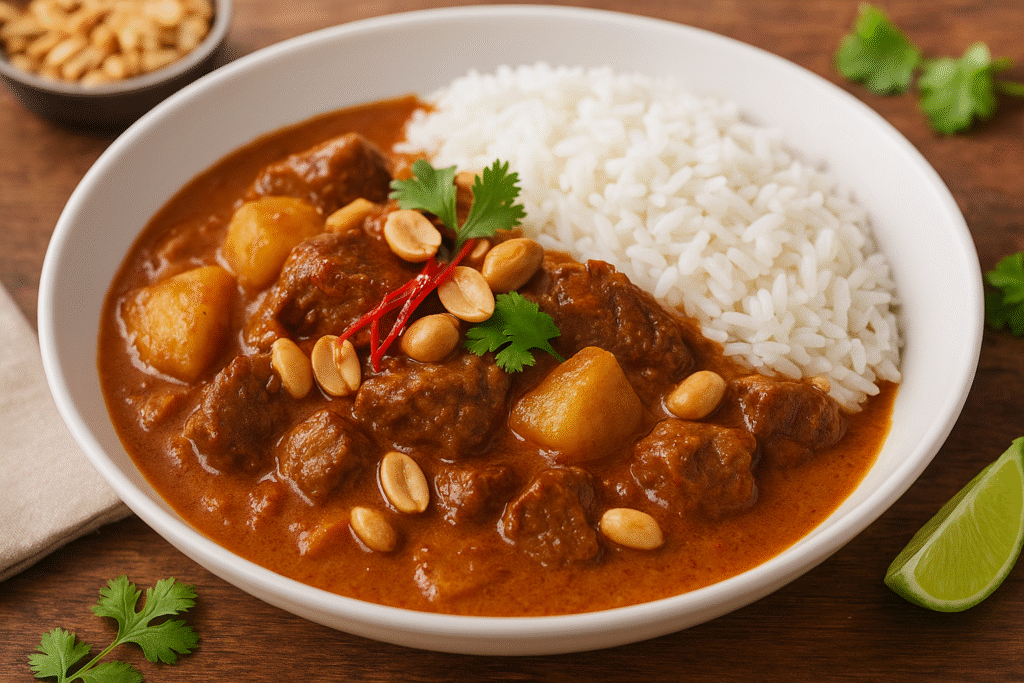
Introduction
Few dishes can match the comforting warmth and rich taste of authentic Massaman beef curry. With its silky coconut sauce, tender beef, and aromatic layers of spices, this Thai curry paste is the classic ultimate comfort food.
The secret to an extraordinary Massaman isn’t just following a recipe. It is mastering the techniques and flavor principles that actually define the dish. Yet many home cooks struggle to perfect their cooking . Too often, the curry ends up flat, the beef tough, or the sauce overly thick.
In this guide, Leena Spices reveal 7 irresistible secrets that will elevate your Massaman beef curry from ordinary to authentic restaurant-quality right in your own kitchen. These tips combine traditional Thai methods with practical home-cooking techniques, ensuring every bite is tender, aromatic, and perfectly balanced.
What You’ll Discover:
- The “Low and Slow” Essential: Why the cut of meat is essential.
- The Fat-Splitting Technique: How to properly fry curry paste in coconut cream for maximum fragrance.
- The Trinity of Balance: Perfecting the ratio of palm sugar, tamarind, and fish sauce.
- The Texture Secret: Why toasted peanuts and potatoes aren’t just garnishes, but structural elements.
- What Is Massaman Curry?

Impu Irani is the cookbook author behind Leena Spices , where he shares easy homemade spice blend recipes and practical cooking tips. Read more about him at the end of this post.
Why did CNN name Massaman-based curry the #1 most delicious food in the world?
In 2021 CNN named Massaman curry the world’s #1 most delicious food primarily because of its exceptional balance of flavors and universal appeal. According to CNN’s “World’s 50 Best Foods” list, Massaman curry stood out as:
- Complex Yet Comforting Taste
Unlike many curries that lean heavily spicy, Massaman blends warm spices (like cinnamon and cardamom) with creamy coconut milk, creating a dish that feels both rich and comforting. - The “Spicy, Coconutty, Sweet, and Savory” Tetrad: Unlike many dishes that lead with one note, Massaman hits all four major flavor pillars simultaneously. The tang of tamarind, the richness of coconut, the saltiness of fish sauce, and the caramel sweetness of palm sugar create a symphony on the palate.
- Wide Accessibility and Appeal
CNN even noted that “even the packet sauce… can make… cooks look like a Michelin potential”, highlighting how it is widely considered the ultimate comfort food. - The Texture of a “Culinary Hug”: CNN highlighted the “melt-in-your-mouth” quality of the slow-cooked beef and the silkiness of the peanut-infused sauce. It is widely considered the ultimate comfort food.
- Universal Appeal: Because its heat is mild and warming rather than aggressive, Massaman is accessible to almost everyone, regardless of their spice tolerance.
The Ultimate Flavor Fusion: Massaman is a masterful bridge between cultures. It combines bright Thai aromatics (lemongrass and galangal) with “warm” Middle Eastern spices (cardamom, cinnamon, and cloves), creating a profile that is both exotic and deeply comforting.
7 Secrets to the Perfect Authentic Massaman Beef Curry — At a Glance
Secret | Key Details | Why It Matters |
Choose the Right Cut of Beef | Use fatty, collagen-rich cuts: chuck roast, bone-in short ribs, or brisket. Avoid lean cuts. Always sear the beef first for a deep golden crust. | Provides melt-in-your-mouth tenderness and naturally thickens the sauce. Builds rich umami flavor through the Maillard reaction. |
Use Quality Curry Paste & Fry It Properly | Choose authentic Thai paste (Maesri or Mae Ploy recommended). Fry in thick coconut cream until the oil separates and the paste becomes fragrant and darker (3–5 minutes). Add fresh garlic, ginger, and lemongrass for extra boost. | “Cracking the coconut cream” blooms the spices and creates deep, layered restaurant-quality flavor. |
Toast Whole Spices | Lightly toast cinnamon sticks, cardamom pods, and cloves in a dry pan for 60–90 seconds. Split spices: bloom half early, add half near the end of cooking. | Releases essential oils for warmer, more aromatic depth and brighter top notes. |
Simmer Low and Slow | Cook 2–2.5 hours stovetop, 7–8 hours in slow cooker, or 45 min high pressure in Instant Pot + natural release. Partially cook beef in stock first if possible. | Allows beef to become fork-tender, flavors to fully develop, and sauce to thicken naturally into silky consistency. |
Use Waxy Potatoes & Add at the Right Time | Choose Yukon Gold or other waxy potatoes. Add them 30–40 minutes before the beef is finished. Cut into even 1.5–2 inch chunks. | Potatoes absorb the curry sauce beautifully while staying intact and creamy instead of turning mushy or grainy. |
Be Patient – Don’t Rush the Process | Massaman curry is not a quick meal. Gentle simmering is essential for tender meat and rich sauce. | Rushing results in tough beef and underdeveloped, thin sauce. |
Let It Rest Overnight | Cool and refrigerate for several hours or overnight before reheating. | Flavors meld and deepen. The sauce becomes richer, thicker, and more aromatic — often better on day 2 or 3. |
Secret 1: The 3 Best Beef Cuts for a Flawless, Melt-in-Your-Mouth for Authentic Massaman Beef Curry
Why Fat and Collagen Matter
The secret lies in marbling (fat) and connective tissue (collagen).As the curry slowly simmers:- Collagen melts into gelatin, transforming the beef into tender, fork-ready morsels.
- Gelatin naturally thickens the sauce, giving it a rich, velvety body without any starch or thickeners.
- Fat carries flavor, adding depth, luxurious richness, and a silky mouthfeel to every bite.
Best Cut of Beef for Massaman Curry
For consistent, high-quality results, use these collagen-rich braising cuts:- Chuck roast – The most reliable option. Well-marbled and perfect for slow cooking.
- Bone-in beef short ribs – Deep, rich flavor from the bone and exceptional tenderness. Ideal for premium results.
- Beef brisket – Holds its structure during long cooking while becoming fork-tender and flavorful.
Avoid Lean Cuts
Using lean beef will result in tough, dry curry. Cuts to skip include:- Sirloin
- Eye of Round
- Rump
- Dry out quickly – leaving your beef tough and unappealing
- Become chewy – no slow-cooked melt-in-your-mouth texture
- Fail to enrich the sauce – the curry loses depth and silkiness
The Secret to Authentic Massaman Beef Curry: The Maillard Reaction
Creating a rich, authentic Massaman beef curry depends on the Maillard reaction. This chemical process occurs when amino acids and natural sugars react under high heat, transforming simple ingredients into a masterpiece of deep color, intoxicating aroma, and complex flavor.To achieve a truly professional result, this transformation must happen in two essential stages:1. Searing the Beef
The foundation of the dish starts with the meat. By searing the beef over high heat, you trigger intense caramelization on the surface. This forms a savory crust that ensures the seared meat has a roasted, robust depth rather than the flat, uninspired taste of beef that has simply been boiled.2. Frying the Curry Paste
The second layer of complexity comes from “cracking” the coconut cream and frying the curry paste in its fat. As the paste heats, the aromatics and sugars brown, releasing their essential oils. This process intensifies the fragrance and develops the nutty, slightly sweet complexity that defines a world-class Massaman.Why Searing Makes a Huge Difference • Builds a rich umami base — the foundation of deep, savory curry flavor • Adds caramelized depth — balances the sweetness of coconut milk and palm sugar • Creates browned bits (fond) — these little flavor nuggets cling to the pan and elevate your curry pastePro Tip: After searing, cook your curry paste in the same pan. This way, every bit of caramelized flavor is incorporated into the sauce, giving your Massaman curry a richness you can taste in every bite.How to Sear Beef for Maximum Flavor
- Cut beef into large chunks (about 1.5–2 inches)
- Pat dry to remove moisture (essential for browning)
- Heat oil or thick coconut cream in a heavy pan until hot
- Sear in small batches (avoid overcrowding)
- Let each side develop a deep golden-brown crust
- Remove and set aside
| Feature | Best Choice | Why It Matters |
| Beef Cut | Chuck roast, short ribs, or brisket | Rich in collagen and marbling, which breaks down into gelatin for tender, melt-in-your-mouth beef and a naturally thick, silky sauce |
| Preparation | Large chunks (1.5–2 inches) | Holds structure during long cooking and prevents the beef from falling apart too early |
| How to Cook Tender Beef | Sear over high heat (Maillard reaction) | Develops deep, savory umami flavor and creates a caramelized crust that enhances the entire curry |
| What to Avoid | Lean cuts (sirloin, eye of round, fillet) | Lack fat and collagen, resulting in dry, tough meat and a thin, less flavorful sauce |
Secret 2: Use This 5-Minute Mastery Trick for an Unbelievably Bold and Aromatic Masaaman Curry Paste
Massaman Curry Paste
Massaman curry paste is the heart of this rich Thai coconut curry. While it can be time-consuming to make from scratch, it is the single most important ingredient for achieving deep, authentic flavor.
This paste is known for its aromatic, slightly sweet, and warmly spiced profile. A well-made Massaman curry paste combines traditional spices like cinnamon, cardamom, cloves, nutmeg, coriander, and cumin with fresh Thai aromatics such as lemongrass, galangal, garlic, and shallots. The result is a beautifully balanced base that defines the dish.
When choosing a curry paste, quality matters more than convenience. Many commercial options contain fillers and preservatives that can dull the flavor. For the best results, use a trusted Thai brand like Maesri or Mae Ploy, or make your own paste at home for maximum freshness and depth.
What Makes Massaman Curry Paste Unique
Massaman curry stands apart from other Thai curries because of its distinctive spice profile and layered flavor.
Unlike red or green curry pastes, which rely heavily on fresh chili heat, Massaman curry is built around warm, dry spices more commonly associated with Middle Eastern and Indian cooking. This gives it a deeper, more complex character with less emphasis on heat and more on aroma and richness.
Key flavor notes include:
This unique fusion of spices and aromatics creates Massaman curry’s signature taste. It is rich, gently spiced, slightly sweet, and deeply comforting.
Homemade vs. Store-Bought: What Works Best?
Homemade Massaman Curry Paste (Best for Maximum Flavor)
Making Massaman curry paste from scratch gives you complete control over the final flavor and delivers the most authentic results.
Benefits of homemade paste:
- Full control over spice balance and heat level
- Superior freshness and more vibrant aroma
- Deeper, more complex flavor from freshly prepared ingredients
When you toast and grind whole spices yourself, they release essential oils that significantly enhance both aroma and taste. This step creates a depth of flavor that pre-made pastes simply cannot match, making your curry richer, fresher, and more layered.
Store-Bought Massaman Curry Paste (Convenient and Reliable)
A high-quality store-bought Massaman curry paste is a practical, time-saving option. Especially for busy home cooks who still want authentic flavor.
Trusted brands include:
These are widely used by both home cooks and professional chefs because they:
- Use authentic Thai ingredients
- Avoid unnecessary fillers and artificial additives
- Deliver consistent, well-balanced flavor
Choosing a reputable brand ensures you get the rich, aromatic base that Massaman curry is known for without compromising on quality.
What to Avoid in Massaman Curry Paste
Steer clear of low-quality pastes that include:
- Artificial colors or flavor enhancers
- Excess salt or fillers
- Vague or heavily processed ingredient lists
Using these pastes results in a flat, one-dimensional curry that misses the rich, layered depth that makes authentic Massaman curry so special.
Pro Tip: Elevate Store-Bought Paste
Even high-quality store-bought paste can be upgraded for more depth and freshness. While frying, add:
- Freshly minced garlic
- Grated ginger or galangal
- A bruised stalk of lemongrass
These additions enhance aroma, brightness, and complexity, bringing your paste closer to the richness of a homemade version.
The Most Important Step: Fry the Paste Properly
Selecting a high-quality paste is only half the battle but how you cook it makes all the difference.
The key technique is “cracking the coconut cream”: frying the paste in thick coconut cream until it releases its oils and aroma. To unlock the true soul of Massaman, you must move beyond simply stirring. Begin by simmering a small amount of thick coconut cream until it “cracks” and the natural oils separate.
This step transforms your curry from:
- Average and flat
to - Rich, layered, restaurant-quality Massaman curry.
How to “Crack” Coconut Cream (Step-by-Step)
- Spoon thick coconut cream (not coconut milk) into a hot pan
- Heat over medium heat until it begins to bubble
- Continue cooking until the oil separates from the cream
- Add the curry paste directly into this separated oil
- Fry for 3–5 minutes, stirring constantly
How to Know the Paste Is Ready
Your Massaman curry paste is perfectly cooked when you notice:
- Slight darkening of the paste
- Rich, deep toasted and fragrant aroma — no raw or sharp smells
- Oil turning jewel toned orange-red as it separates from the spices
- Glossy texture, with the paste slightly pulling away from the pan
This crucial step binds the fat-soluble spices to the coconut oil, ensuring every spoonful of your Thai curry with coconut milk carries a velvety, multi-dimensional warmth that lingers on the palate.
Why Proper Frying Matters
Frying your Massaman curry paste correctly is crucial because it:
- Blooms the Spices – Heat unlocks the essential oils in spices like cinnamon, cardamom, and cloves, releasing their full aromatic and flavor potential.
- Removes Raw Taste – Ingredients such as dried chilies and shrimp paste can taste harsh if undercooked; frying mellows them, creating a smooth, balanced curry base.
This step transforms ordinary paste into a rich, restaurant-quality foundation.
The Golden Rule for Massaman Curry Paste
Never add raw curry paste directly to liquid.
If you skip frying and just boil it:
- Flavors stay dull and undeveloped
- The curry tastes flat and muddy
- No amount of later seasoning can rescue it
Frying first is non-negotiable It is the foundation of deep, layered flavor.
Final Flavor-Building Step
Once the curry paste is fully fried:
- Return your seared beef to the pan
- Toss and coat each piece thoroughly in the paste
This step ensures every bite is infused with rich, layered, spiced flavor from the very beginning.
| Aspect | What to Do | Why It Matters |
| Choose a High-Quality Paste | Use authentic Thai brands like Maesri or Mae Ploy, or make your own from scratch. Avoid overly processed pastes with artificial additives or fillers. | A quality paste delivers the signature Massaman flavor—warm spices like cinnamon, cardamom, cloves, and nutmeg balanced with rich aromatics. Low-quality pastes result in flat, one-dimensional curry. |
| Use Coconut Cream (Not Milk) | Start with thick coconut cream and heat it until it begins to separate before adding the paste. | Higher fat content allows proper frying and flavor development, creating a richer and more authentic curry base. |
| Fry Until the Oil Separates | Cook the paste in coconut cream for 3–5 minutes, stirring constantly, until it darkens slightly and becomes intensely fragrant. | This traditional technique—“cracking the coconut cream”—blooms the spices, deepens color, and builds layered, restaurant-quality flavor. |
| Fully Bloom the Paste | Ensure the paste becomes glossy and aromatic before adding any liquid. Do not rush this step. | Proper blooming removes any raw, harsh taste and unlocks essential oils, maximizing aroma and depth. |
| Enhance Store-Bought Paste | Add fresh garlic, ginger (or galangal), and bruised lemongrass while frying the paste. | Elevates jarred paste with fresh, vibrant notes, bringing it closer to homemade quality. |
| Use the Same Pan After Searing | Fry the curry paste in the same pan used to sear the beef. | Captures the browned bits (fond), adding extra umami and depth to the curry base. |
Secret 3: 5 Minutes to Master the Art of Toasting Spices for a Breathtaking Aroma
Toast Your Whole Spices for Maximum Aroma
If you want your Massaman curry to taste like it came from a top Thai kitchen, toasting your spices is essential. This quick, simple step delivers a dramatic boost in both aroma and flavor complexity.
- While the curry paste provides the body of the dish, whole spices are what give Massaman its unmistakable, intoxicating scent.
- If your home-cooked curry ever tastes “flat” compared to a high-end Thai restaurant it is often due to under-toasted spices.
Mastering the gentle heat activation of your aromatics transforms a standard meal into a signature, restaurant-quality dish.
Why Toasting Spices Matters
Whole spices like cinnamon sticks, cardamom pods, cloves, cumin seeds, and coriander contain essential oils locked inside their structure. Toasting unlocks their full potential:
- Releases Essential Oils: Heat draws out the natural oils that give each spice its character.
- Enhances Flavor: Spices become warmer, richer, and more complex.
- Boosts Aroma: Intensifies the fragrance, creating that signature restaurant-quality scent.
Skip this step, and even the highest-quality spices can taste flat, dusty, or muted.
How to Toast Spices Properly (60–90 Seconds)
Toasting spices is quick but transformative. Within less than 2 minutes you can elevate your Massaman curry to restaurant-quality.
Method:
- Place whole spices in a dry skillet (no oil).
- Heat over medium heat.
- Toast for 60–90 seconds, stirring or shaking the pan constantly.
- Remove immediately once:
- They release a fragrant aroma
- They darken slightly
Important Tips:
- No oil—dry heat is essential to unlock essential oils.
- Avoid overheating—burnt spices taste bitter.
- Cool quickly—transfer to a plate or bowl to stop the cooking process instantly.
This simple step unlocks the full flavor and aroma of your spices, making your curry smell and taste extraordinary.
Which Spices to Toast for Massaman Curry
To unlock maximum aroma and flavor, focus on these key whole spices:
- Cinnamon sticks – warm, sweet base note
- Cardamom pods – lightly crush after toasting to release oils
- Cloves – pungent and aromatic, adding depth
- Dried chilies – subtle heat and color
- Coriander seeds and cumin seeds – earthy, nutty undertones
Even if you are using a store-bought curry paste, adding freshly toasted whole spices will give your Massaman curry a richer, more complex flavor and a restaurant-quality aroma.
Pro Chef Technique: Two-Stage Spice Layering
Professional chefs elevate Massaman curry by layering spices in two strategic stages:
Stage 1 – Build the Base (Deep “Bass Notes”)
- Add half of your toasted whole spices while frying the curry paste in coconut cream.
- Benefits:
- Infuses the curry throughout the cooking process
- Creates a deep, slow-developed flavor base that underpins the dish
This technique ensures the curry’s warmth and aroma are present in every bite, not just on the surface.
Stage 2 – Finish with Aroma (Bright “Top Notes”)
- Add the remaining toasted spices about 10 minutes before the curry finishes cooking.
- Benefits:
- Preserves the delicate, volatile aromas of spices like cardamom and cinnamon
- Adds a fresh, fragrant lift that makes the curry smell irresistible just before serving
This final layer gives your Massaman curry that signature restaurant-quality aroma and brightness.
Aspect | Action / Technique | Why It Matters / Benefit |
Why Toast Spices | Toast whole spices before adding to curry | Unlocks full flavor and aroma; transforms a flat curry into a signature, restaurant-quality dish |
Flavor Contribution | Whole spices (cinnamon, cardamom, cloves, cumin, coriander) provide depth beyond curry paste | Adds warm, rich, and layered flavor; intoxicating aroma; character to the dish |
Effect of Skipping Toasting | Using un-toasted spices | Spices taste flat, dusty, or muted even if high quality |
How to Toast (60–90 sec) | Dry skillet, medium heat, stir/shake constantly; remove when fragrant and slightly darkened | Releases essential oils, enhances flavor, boosts aroma |
Important Tips | No oil; avoid overheating; cool immediately on a plate | Dry heat preserves flavor; prevents bitterness; stops cooking instantly |
Spices to Toast | Cinnamon sticks, cardamom pods (lightly crushed after toasting), cloves, dried chilies, coriander & cumin seeds | Each spice adds unique notes: base warmth, aromatic depth, subtle heat, earthy undertones |
Pro Chef Technique: Stage 1 – Build the Base (“Bass Notes”) | Add half of toasted spices while frying curry paste in coconut cream | Infuses flavor throughout cooking; creates deep, slow-developed base flavor |
Pro Chef Technique: Stage 2 – Finish with Aroma (“Top Notes”) | Add remaining toasted spices 10 minutes before finishing curry | Preserves delicate aromas; adds fresh, fragrant lift; ensures restaurant-quality aroma and brightness |
Master Your Massaman: The Pro Kit
If you’re looking to buy Massaman spice blend online, choosing a high-quality mix can make all the difference in achieving that rich, restaurant-style flavor at home. A well-crafted Thai curry spice blend brings together warm spices, aromatics, and subtle sweetness that define this classic dish.
For the most authentic taste, many home cooks prefer using an authentic Massaman curry paste, which delivers deep, layered flavor without the need to source dozens of individual spices. If you’re wondering about Massaman seasoning where to buy, trusted online marketplaces like Amazon offer a wide variety of options, making it easy to find blends that suit your taste and cooking style.
When searching for the best Thai curry spices, look for products with clean ingredient lists, no unnecessary additives, and strong customer reviews. This ensures you get bold, aromatic flavors that truly elevate your Massaman curry from good to unforgettable.
Secret 4: 1 Crucial Low-and-Slow Technique for a Succulent, Restaurant-Quality Curry
Massaman is a slow-cooked beef curry masterpiece. Over time, gentle heat transforms tough cuts of beef into tender, melt-in-your-mouth bites while creating a rich, velvety sauce full of deep, layered flavors. For true restaurant-quality results, embrace the low-and-slow cooking method.
Why Slow Cooking Matters
A gentle, extended simmer allows three key transformations:
- Tenderizes the Beef
Collagen in cuts like chuck or short ribs slowly turns into gelatin, giving you that signature fork-tender, melt-in-your-mouth texture. - Builds Deep Flavor
Spices, curry paste, coconut milk, palm sugar, and fish sauce gradually meld together, creating a rich, balanced, and complex taste. - Thickens the Sauce Naturally
As the liquid reduces and gelatin is released, the sauce becomes silky, glossy, and perfectly clingy—no extra thickeners needed.
Recommended Cooking Times (For Best Results)
Pick the method that suits your kitchen, but always use gentle heat and allow enough time for the flavors and textures to develop:
- Stovetop: 2–2.5 hours on a very low simmer
- Oven (325°F / 160°C): 2–3 hours, covered
- Slow Cooker: 7–8 hours on low
- Instant Pot: 45 minutes on high pressure, then allow a full natural release
Pro Technique: Build Flavor in Stages
Step 1: Pre-Cook the Beef (Optional but Recommended)
Simmer your seared beef in a small amount of stock or water for 45–60 minutes before adding it to the curry.
Benefits:
- Creates a rich, gelatin-filled broth that enhances the curry
- Gives the beef a head start on becoming tender
- Helps you control the final texture for perfectly fork-tender meat
Step 2: Add Potatoes at the Right Time
To keep your potatoes tender yet intact, add them during the last 30–40 minutes of cooking.
Benefits:
- Ensures the beef is fully tender
- Prevents potatoes from falling apart, keeping them perfectly cooked and flavorful
How to Know When It’s Done
Your Massaman slow-cooked beef curry is ready when:
- The beef is fork-tender and easily pulls apart
- The sauce coats the back of a spoon
- A thin layer of aromatic oil rises to the surface
That glossy finish isn’t just for looks. It signals fully developed, rich flavor, so don’t skim it off.
| Step / Aspect | What to Do | Why It Matters |
| Step 1: Pre-Cook the Beef (Optional) | Simmer seared beef in a little stock or water for 45–60 minutes before adding to the curry | Creates a rich, gelatin-packed broth, jumpstarts tenderizing, and helps control final texture |
| Step 2: Add Potatoes at the Right Time | Add potatoes during the last 30–40 minutes of cooking | Ensures beef becomes fully tender while keeping potatoes intact and perfectly cooked |
| Slow Cooking Method | Use gentle, extended heat on stovetop, oven, slow cooker, or Instant Pot | Tenderizes beef, melds spices and coconut milk, and naturally thickens sauce without extra thickeners |
| Recommended Cooking Times | – Stovetop: 2–2.5 hrs low simmer- Oven: 2–3 hrs at 325°F / 160°C, covered- Slow Cooker: 7–8 hrs low- Instant Pot: 45 min high pressure + natural release | Ensures beef is fall-apart tender and sauce develops deep, balanced flavor |
| How to Know It’s Done | – Beef is fork-tender- Sauce coats the back of a spoon- Aromatic oil forms on top | Signals fully cooked, rich, velvety curry with glossy, flavorful sauce |


Secret 5: The 4-Pillar Rule for Achieving Absolute Flavor Harmony
What sets Massaman curry apart from other Thai paste curries is its perfect harmony of flavors. It is the gentle symphony of sweet, savory, tangy, and aromatic notes all working together. Achieving that balance is what transforms a good curry into an exceptional one.
Thai chefs refer to this as the “four-flavor balance,” and in Massaman curry, three of these flavors take center stage:
- Sweetness – Traditionally provided by palm sugar, which gives a rich, caramel-like sweetness that complements the warm spices. If you don’t have palm sugar, brown sugar is a great substitute, offering similar depth and warmth.
- Saltiness – Fish sauce provides the essential savory backbone and umami that define Thai cuisine. For a milder flavor or a vegetarian version, light soy sauce works well to maintain balance without overpowering the dish.
- Tanginess – A touch of tamarind paste brightens the curry, cutting through the richness of coconut milk and beef fat. This prevents the sauce from feeling heavy or one-dimensional.
How to Taste and Adjust Like a Chef
Flavor balancing in Massaman curry isn’t a single step at the end. It is an ongoing dialogue between you and the pot. Here’s a practical framework to get it right:
- Taste in Sequence
Start by evaluating saltiness. Determine if the curry seasoned enough to taste complete. Next, check sweetness for the balance of salt and spices. Finally, assess acidity. Does the curry feel rich but lively, or heavy and dull? Each adjustment affects the others, so work through them in order. - Make Small Adjustments
The difference between perfectly balanced and overly sweet can be as little as half a teaspoon of palm sugar. Add a little, stir thoroughly, and taste again before adding more. - Taste at Serving Temperature
Flavor perception changes as food cools. A curry that seems slightly under-seasoned while simmering often tastes perfectly balanced in the bowl. Always taste your curry at the temperature your guests will eat it. - Use the “One More Taste” Rule
Once you think the curry is balanced, let it rest off the heat for five minutes and taste it again. Resting allows the flavors to settle and integrate. This final taste will reveal whether it’s truly ready.
5 Tricks for Tasting Food Like a Master Chef
The Benchmark for Perfect Balance
A truly taste food balanced Massaman curry should:
- Taste rich without feeling heavy
- Be complex without being confusing
- Be satisfying without any single flavor dominating
- Here’s a condensed version of your “Taste and Adjust Like a Chef” content in a clear, easy-to-follow table:
Step / Aspect | What to Do | Why It Matters |
Taste in Sequence | 1. Salt → 2. Sweet → 3. Acidity | Each flavor affects the others; tasting in order ensures balance. |
Make Small Adjustments | Add seasoning gradually (e.g., ½ tsp palm sugar), stir, and taste again | Prevents over-seasoning; ensures precision without overpowering the curry. |
Taste at Serving Temperature | Taste curry at the temperature it will be eaten | Flavors change as it cools; ensures true final balance. |
One More Taste Rule | Rest curry 5 minutes off heat, then taste again | Allows flavors to settle and integrate fully before serving. |
Balance Benchmark | Rich, complex, satisfying, no single flavor dominates | Indicates perfectly harmonized Massaman curry; flavors should feel seamless. |
Flavor Pillars | Sweet (palm sugar), Salty (fish sauce), Tangy (tamarind) | These are the “Golden Trio” that define Massaman curry’s signature balance. |
Secret 6: Use 2 Key Ingredients to Create a Masterful, Multi-Dimensional Mouthfeel
Potatoes and peanuts provide the structural “soul” to Massaman. To reach culinary perfection, your potatoes should be waxy enough to hold their shape but soft enough to absorb the spiced gravy like a sponge. Meanwhile, the peanuts offer a bold, toasted crunch that cuts through the silkiness of the coconut milk.
In Massaman curry, potatoes aren’t just a filler. Potatoes are an essential part of the dish’s texture and flavor. When cooked properly, they absorb the rich, spiced coconut sauce like a sponge, providing a soft, buttery contrast to the tender beef.
However, using the wrong type of potato or adding them at the wrong time can quickly spoil the curry, turning what should be silky and smooth into a grainy, over-thickened mess.
Why Potato Choice Matters
Not all potatoes perform the same in a slow-cooked curry. The key factor is their starch content.
Best Choices: Waxy Potatoes
- Varieties: Yukon Gold, Red potatoes, New (baby) potatoes
- Why:
- Hold their shape during long cooking
- Develop a creamy, smooth interior
- Absorb the curry’s rich flavors without falling apart
What to Avoid: Starchy Potatoes
Potatoes to skip: Russet (Idaho) potatoes, baking potatoes
Why:
- Break down quickly in liquid
- Release excess starch
- Make the sauce grainy, cloudy, and overly thick
Timing Is Critical (The 30–40 Minute Rule)
When to add: 30–40 minutes before the curry is finished
Why it matters:
- Potatoes cook until tender but stay intact
- They soak up the curry’s rich flavors
- The sauce stays smooth and velvety
How to Cut Potatoes for Best Results
- Cut into large, even chunks (1.5–2 inches)
- Avoid small pieces—they overcook and fall apart
- Leave the skin on (for Yukon Gold or red potatoes) for:
- Better structure
- Added flavor
Pro Tip: Lightly Fry for Extra Texture
Method: Lightly pan-fry potato chunks before adding to the curry
Benefits:
- Creates a thin outer layer for better shape retention
- Adds a subtle, roasted flavor for a more refined, restaurant-style finish
- Here’s a clean, easy-to-follow table summarizing all the key points about potatoes in Massaman curry:
Aspect | What to Do | Why It Matters |
Potato Type – Best Choice | Hold shape during long cooking, develop creamy interior, absorb curry flavors without falling apart | |
Potato Type – Avoid | Starchy potatoes: Russet (Idaho), baking potatoes | Break down quickly, release excess starch, make sauce grainy and overly thick |
Timing | Add 30–40 minutes before curry is done | Ensures potatoes cook tender but stay intact, soak up flavors, and keep sauce smooth and velvety |
Cutting Method | Large even chunks (1.5–2 inches); leave skin on for Yukon Gold/Red | Prevents overcooking and breaking apart, adds structure and extra flavor |
Extra Texture (Optional) | Lightly pan-fry chunks before adding to curry | Creates a thin outer layer for shape retention and adds subtle roasted flavor for restaurant-style finish |
Secret 7: The 24-Hour Rule for an Unbelievably Deep and Harmonious Curry
You’ve done everything right, seared the beef, fried the curry paste, toasted the spices, balanced the flavors, and timed the potatoes perfectly. The curry is ready, and its aroma alone is irresistible. But here’s the final secret. “Come back tomorrow.”
This isn’t just a cooking myth. There is real science behind why Massaman curry develops richer, deeper, and more harmonious flavors after resting overnight.
What Happens When Curry Rests Overnight
Even after the heat is turned off, Massaman curry continues to transform through a series of chemical and physical processes:
1. Fat Redistribution and Flavor Infusion
Coconut milk is an emulsion, with fat suspended in liquid. As the curry cools, the coconut fat slowly moves through the sauce, carrying fat-soluble compounds from spices like cinnamon, cardamom, cloves, and nutmeg. This natural movement evenly redistributes flavors, ensuring every bite is consistently rich and aromatic.
2. Beef Fiber Relaxation
Even after braising, the beef continues to transform as it rests. As it cools in the curry, the muscle fibers relax and reabsorb the surrounding coconut-rich sauce. Essentially, the beef “drinks” the flavorful liquid, becoming more tender and deeply seasoned than when it first came off the heat.
3. Flavor Compound Development
Aromatics and caramelized compounds created during cooking continue interacting over time. The flavors that might have seemed separate or sharp immediately after cooking gradually meld into a unified, harmonious whole, softening harsh edges and balancing sweet, salty, and tangy notes.
4. Natural Sauce Concentration
As the curry cools, the sauce thickens slightly due to gelatin from the beef. When gently reheated, the gelatin melts back into the sauce, creating a richer, silkier texture than freshly made curry.
How Long to Rest Your Curry
- Minimum rest — 2–3 hours: Even a short rest allows flavors to meld and improves overall balance. Ideal for same-day meal prep.
- Optimal rest — overnight (8–12 hours): This is when the curry reaches peak flavor and texture. Refrigerate it overnight to enjoy a richer, more aromatic, perfectly harmonized dish.
- Extended rest — up to 3 days: Massaman curry continues to develop for up to three days. Many Thai restaurants make it a day ahead to achieve maximum depth and complexity.
Reheating Without Losing Quality
How you reheat matters as much as letting it rest:
- Low and slow is key: Reheat gently on the stovetop over the lowest heat to prevent breaking the coconut emulsion or tightening the beef.
- Adjust consistency: Add a splash of coconut milk or stock if the sauce has thickened too much. Stir gently to maintain a silky texture.
- Taste and rebalance: Refrigeration can dull flavors. A squeeze of tamarind, a few drops of fish sauce, or a pinch of sugar can restore perfect balance.
- Avoid microwaving the whole batch: Microwaves heat unevenly. If you must use one for individual portions, use 50% power and stir frequently.
Why Massaman Beef Curry Tastes Better the Next Day?
Aspect | What to Do | Why It Matters |
Resting Time | Let the curry cool and rest for several hours or overnight in the refrigerator. | Flavors continue to meld and deepen as spices fully infuse the beef and potatoes. |
Flavor Development | Allow the dish to sit before reheating. | The sauce becomes richer, thicker, and more aromatic with better balance between sweet, spicy, and savory notes. |
Texture Improvement | Reheat gently the next day. | Sauce clings better to the meat and potatoes, creating a more luxurious, cohesive mouthfeel. |
Storage Guidelines | Store in airtight containers in the fridge for up to 4 days or freeze for up to 3 months. | Maintains quality and food safety while making the curry ideal for meal prep. |
Reheating Tips | Reheat slowly on the stovetop over low heat or in the microwave with a splash of coconut milk or water. | Prevents separation and preserves the silky texture without drying out the beef. |
Practical Benefit | Make ahead for busy nights, dinner parties, or next-day meals. | Many home cooks and chefs actually prefer the taste on day 2 or 3. |
Tips for Perfecting Your Massaman Curry
Creating an authentic, rich Massaman curry at home is easier when you follow a few simple tips:
Choose the Right Meat
- Use beef chuck, brisket, or short ribs for tender, melt-in-your-mouth texture.
- For chicken, bone-in thighs or drumsticks work best to absorb the curry flavors without drying out.
- Lamb or goat is ideal for a richer, deeper taste.
Balance Your Flavors
- Massaman curry is known for its mild sweetness and warmth. Taste as you go and adjust with tamarind paste for tanginess, palm sugar for sweetness, or fish sauce for saltiness.
Simmer Slowly
- Low and slow cooking allows the spices to fully infuse the meat and vegetables. Avoid high heat to prevent coconut milk from separating.
Layer Your Ingredients
- Add hard vegetables like potatoes and carrots early.
- Add softer vegetables or delicate ingredients near the end to maintain texture.
Fresh Garnishes Matter
- Top with roasted peanuts, fresh cilantro, or a squeeze of lemon or lime juice to brighten the curry and add texture contrast.
Make Ahead
- Massaman curry actually tastes better the next day as the flavors meld. Store in the fridge for up to 3 days or freeze for longer storage.
What Meats and Vegetables Go Best with Massaman Curry?
Massaman curry is incredibly versatile. It pairs well with tender meats, hearty vegetables, and even vegetarian alternatives. The key is to choose ingredients that can absorb the curry’s rich, aromatic sauce and hold up during slow cooking.
Best Meats for Massaman Curry
- Beef (Most Traditional)
The classic choice for Massaman curry. Cuts like chuck, brisket, or short ribs work perfectly because their connective tissue breaks down during simmering, creating melt-in-your-mouth tenderness and enriching the sauce with deep, savory flavor. - Chicken
Opt for bone-in thighs or drumsticks. They stay juicy, absorb the curry flavors beautifully, and won’t dry out during long cooking. - Lamb or Goat
Common in southern Thai and Muslim versions, these meats have bold flavors that pair wonderfully with the warming spices and sweet-salty sauce of Massaman curry. Lamb shanks or shoulder cuts become especially tender and flavorful when slow-cooked. - Pork or Duck (Modern Variations)
Both meats work well for non-traditional versions. Pork shoulder develops great texture, while duck adds richness and a slightly gamey depth that contrasts beautifully with coconut milk. - Vegetarian Alternatives
If you prefer a meat-free option, extra-firm tofu or young jackfruit make great substitutes.- Fry tofu first so it holds its shape and soaks up the curry sauce.
- Jackfruit mimics the tender, shredded texture of braised meat, making it ideal for vegan Massaman curries.
Best Vegetables for Massaman Curry
The traditional Massaman curry keeps it simple, relying on a few key vegetables that balance sweetness, texture, and richness.
- Potatoes (Essential)
The true heart of any Massaman curry. Starchy varieties like Russet, Yukon Gold, or Yellow potatoes absorb the coconut milk and spices beautifully, becoming soft and creamy while helping to thicken the sauce. - Onions (or Shallots)
Large chunks of white, yellow, or brown onions melt into the curry as it cooks, adding natural sweetness and depth. - Sweet Potatoes or Pumpkin
These add gentle sweetness and vibrant color, enhancing the curry’s comforting, creamy texture. - Carrots
A popular modern addition for extra color and mild sweetness that balances the spices. - Bell Peppers and Green Beans
These are often added toward the end of cooking for a bit of crunch and freshness. - Peanuts or Cashews (Optional)
Though technically legumes, roasted peanuts are a classic garnish. They add nuttiness and texture that pair perfectly with the curry’s creamy sauce.
Serving Suggestions for Massaman Curry
Massaman curry is versatile and pairs wonderfully with a variety of sides and accompaniments:
- Steamed Jasmine Rice: The classic choice, perfect for soaking up the rich, aromatic sauce.
- Rice Noodles: Soft noodles make a comforting, slightly different twist.
- Bread or Roti: Use flatbreads to scoop up the curry for a casual, fun meal.
- Fresh Vegetables on the Side: Lightly steamed greens, cucumber, or Thai-style salads balance the richness of the curry.
- Garnishes: Crushed roasted peanuts, fresh coriander, or lime wedges enhance both flavor and presentation.
Pro Tip: Serve your Massaman curry in a shallow bowl to showcase the colorful vegetables and tender meat. This makes it inviting, visually appealing, and perfect for sharing with family or guests.
Final Thought
Making the perfect Massaman beef curry at home isn’t about complicated techniques or rare ingredients. It is about understanding a few key principles and respecting the rhythm of the cooking process. Every step, from selecting the right cut of beef to carefully toasting spices, timing the potatoes, and balancing the flavors, contributes to a dish that’s greater than the sum of its parts.
Following these 7 irresistible secrets ensures that each bite is perfectly balanced, aromatic, and tender, capturing the essence of a restaurant-quality Massaman curry.
Related Posts You May Want to Read
15 Magnesium-Rich Herbs and Spices: Are You Getting Enough?
What Is Ground Galangal Powder? Top 10 Must-Try Thai, Indonesian & Malaysian Dishes
Homemade Thai Seven Spice Mix: Easy Authentic Recipe to Try at Home
What is Thai Red Curry Spice Blend?
Homemade vs Store-Bought Thai Yellow Curry Paste: Which RecipeTastes More Authentic?
FAQs About Massaman Curry
What is Massaman Curry Paste made of?
Massaman is a unique “fusion” paste. It combines Thai aromatics (lemongrass, galangal, shallots, garlic, and dried chilies) with Middle Eastern/Indian spices (toasted cinnamon, cardamom, cloves, cumin, and coriander seeds). This unique combination gives it a warm, slightly sweet, and deeply aromatic flavor.
What does Massaman Curry taste like?
Massaman curry has a mild, creamy, and slightly sweet flavor with subtle tanginess. It’s less spicy than most Thai curries and is known for its warm, comforting notes from spices like cinnamon and cardamom, combined with the richness of coconut milk.
How spicy is Massaman Curry Paste?
On a scale of 1 to 10, Massaman usually sits at a 2 or 3. While it uses dried red chilies, the heat is tempered by the high fat content of the coconut milk and the sweetness of the palm sugar. It provides a gentle, warming glow rather than a fiery “kick.”
Is Massaman curry paste the same as seasoning?
No, Massaman curry is a concentrated blend of fresh and dried ingredients used as a base for cooking, while seasoning usually refers to dry spices or salt added to enhance flavor.
What is the difference between Massaman and Red Curry Paste?
The main difference lies in flavor and spice level. Massaman curry paste is milder, slightly sweet, and rich with warm spices like cinnamon and cloves. Red curry paste, on the other hand, is spicier, sharper, and more focused on chili heat and fresh herbs.
While both use dried red chilies, the difference lies in the spices. Red curry is bright and herbal, focusing on lemongrass and ginger. Massaman is darker and earthier, heavily featuring “dried” spices like cinnamon and cardamom.
What is a substitute for Massaman Curry Paste?
If you don’t have Massaman curry paste, you can use red curry paste mixed with ground spices like cumin, cinnamon, and a touch of sugar or peanut butter to mimic its flavor. While not identical, it creates a similar warm and slightly sweet profile.
Can I make Massaman Curry Paste without shrimp paste?
Yes, you can make a vegetarian or vegan version by skipping shrimp paste. To maintain depth of flavor, you can substitute with soy sauce, miso paste, or a pinch of seaweed powder for that umami richness.
Can I make Massaman curry ahead of time?
Yes! Massaman curry tastes even better the next day as the flavors deepen. Store in an airtight container in the fridge for up to 3 days or freeze for up to 2 months. Reheat gently over low heat before serving.
Is Massaman curry gluten-free?
Traditional Massaman curry ingredients including coconut milk, spices, meat, and vegetables are naturally gluten-free. Just double-check any store-bought spice blends or curry pastes to ensure no wheat-based additives.
Can I make a vegetarian or vegan version of Massaman curry?
Yes! Substitute meat with extra-firm tofu, tempeh, or jackfruit. Use vegetable stock instead of beef stock and make sure your Massaman spice blend or paste contains no fish sauce for a fully vegan dish.
Medical Disclaimer:
The information provided in this article is for educational and informational purposes only and is not intended as medical advice. Always consult a qualified healthcare provider before starting any new dietary supplement, herbal remedy, or wellness routine, especially if you have underlying health conditions, are pregnant or breastfeeding, or are taking prescription medications.
Impu Irani is a cookbook author behind Leena Spices, where he shares practical, easy-to-follow guides on homemade spice blends, herbs, and natural cooking. His work helps home cooks create fresh, flavorful meals using simple ingredients and traditional methods. Download his free Spice Blending eBook and start your journey to cleaner cooking today!
Disclosure Note
We are committed to creating high-quality, helpful content for our readers. We do not accept payment in exchange for writing our articles, and we personally cover the costs of running this website, including hosting, tools, and maintenance.
To support the site, we display ads and may earn a small commission from affiliate links if you choose to make a purchase—at no extra cost to you.
Your support helps us continue sharing valuable content with the community.
If you’d like to support us, here are a few simple and free ways:
- Share our content with your friends and family
- Engage with us on social media
- Follow us on Facebook
You can also learn more by visiting our disclaimer page:
https://leenaspices.co.nz/disclaimer/
As a thank you, feel free to download our Free Spice Recipe eBook.
Download a Free Leena Spices Recipes Cookbook